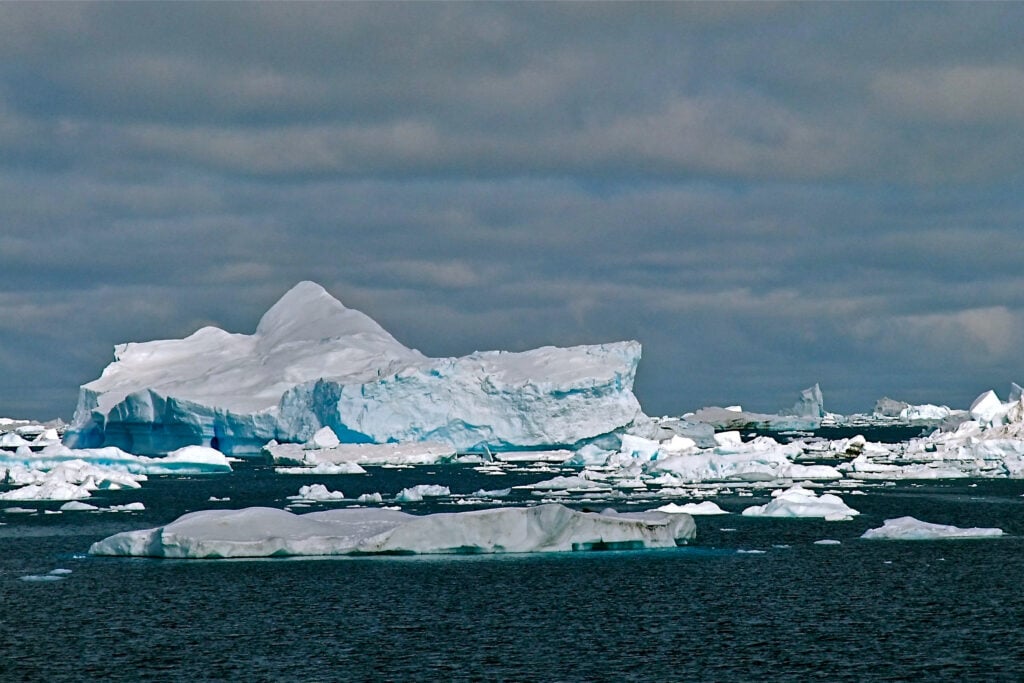
A vast, freshwater-rich layer of the Southern Ocean known as the Antarctic Intermediate Water has abruptly reversed decades of freshening, becoming significantly saltier, denser, and deeper since 2016. Researchers analyzing data from the Argo program attribute the shift to a sudden decline in Antarctic sea ice, warning the change could accelerate deep-ocean warming and alter global climate patterns.
The Antarctic Intermediate Water sits roughly 700 to 1,200 meters beneath the surface, spanning much of the Southern Hemisphere. For decades, this water mass acted as a vital buffer, storing carbon, supplying oxygen, and driving global ocean currents while forming a barrier that limited how much heat absorbed at the surface could move into the ocean depths. For as long as we’ve had reliable measurements, the Antarctic intermediate water had been growing steadily lighter and fresher.
That predictable rhythm broke in 2016. Following a record-high extent in 2014, Antarctic sea ice plummeted to record lows, choking off the massive freshwater surge that once matched triple the Amazon River’s annual flow. With meltwater supplies dropping to roughly double the Amazon’s flow, the long-term trend inverted within a matter of years.
Argo Fleet Data Reveals Rapid Salinity Reversal
To confirm the shift, an international research team drew on 20 years of data from the global Argo program, a network of around 4,000 robotic floats that sample the upper oceans. The team analyzed this data along with satellite and atmospheric datasets.
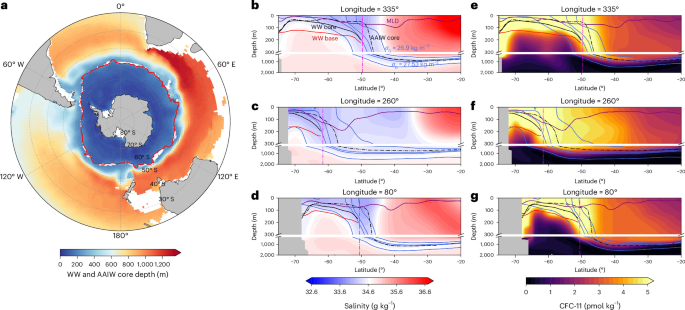
The research confirmed a sharp reversal toward saltier, denser, and deeper water. The physical changes in a vast layer of the Southern Ocean extend from 2,300 to 4,000 feet deep and encircle Antarctica.
The last time the AAIW switched was at the end of the last interglacial period, around 130,000 years ago, when there was very little ice in the Antarctic. That transition took thousands of years, not two decades.
Associate Professor Bishakhdatta Gayen, University of Melbourne and IISc
While similar ocean shifts appear in sediment records from past ice ages, those ancient transitions unfolded over centuries or longer. The current transformation has taken place in a single decade, pointing to a rapid pace of change in the polar marine environment.
Consequences for Global Heat Storage and Ocean Circulation
Researchers warn that the altered properties of the Antarctic Intermediate Water could disrupt the upper limb of the ocean’s global overturning circulation. Because the layer helps regulate how heat moves between the surface and the abyss, its increased density may push excess heat past its usual boundaries.
The ocean absorbs over 90 per cent of all heat released into the environment by human activities, with most of that heat stored in the upper ocean. A weakened AAIW layer could push more excess heat deeper. That would mean existing models are underestimating deep-ocean warming and therefore miscalculating regional sea level rise and long-term ocean and land surface temperatures.
Kaushik Mishra
Scientists note that a sustained shift in this water mass could influence atmospheric circulation, weather and storm track in the Southern Hemisphere. However, the impact can cascade globally.
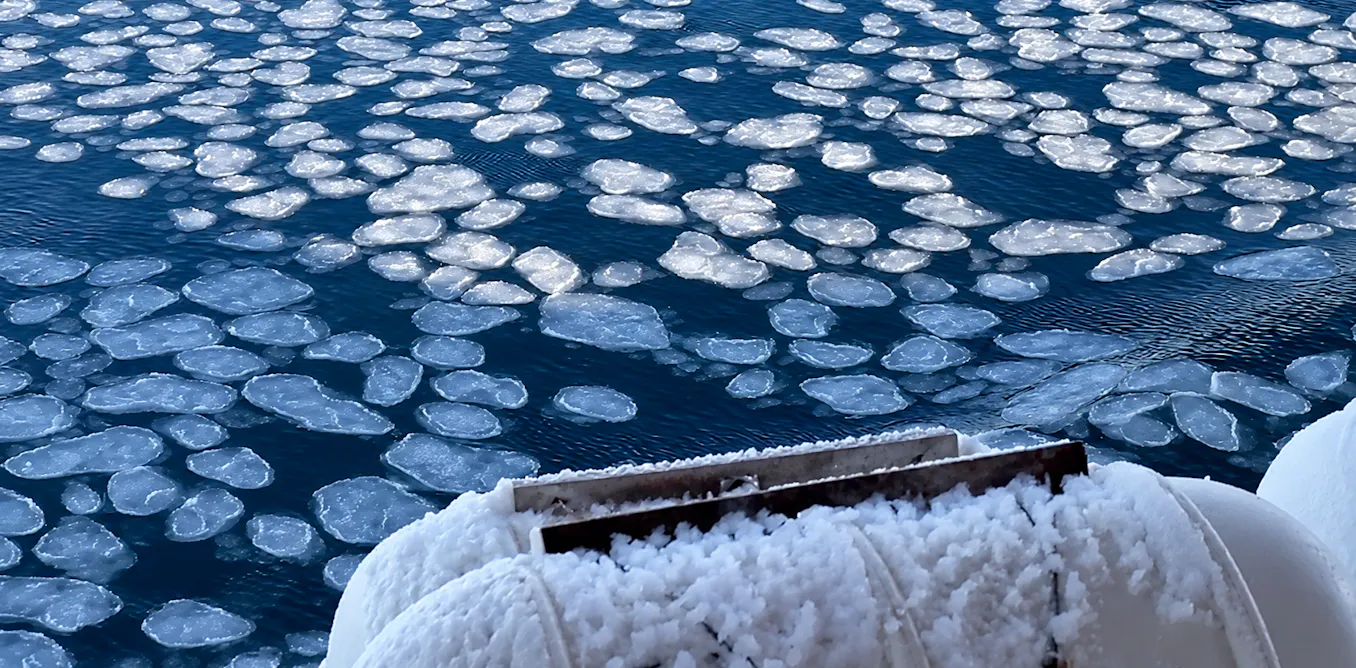
Uncertainty and the Need for Continued Monitoring
Experts caution that it remains unclear whether the newly measured state represents a permanent shift or a temporary fluctuation. Because observational records are relatively short, distinguishing between long-term reorganization and transient variability requires continuous data collection.
The Southern Ocean is the key juncture for all the world’s oceans. It’s the major site where old waters are reprocessed into new, so this could have global consequences.
Michael Meredith, oceanographer with the British Antarctic Survey
Researchers stress that climate models used to guide environmental policy must catch up to the rapid loss of Antarctic sea ice. Sustaining global ocean observation programs remains essential to determining how far these changes will spread and whether the low sea-ice state will persist across coming decades.
Related reading
SpaceX launches 27 Starlink satellites on Falcon 9 from Vandenberg
SpaceX launched 27 Starlink satellites into low Earth orbit aboard a Falcon 9 rocket from Vandenberg Space Force...

Airbus to Build Two of Four More Galileo Satellites
The European Space Agency has awarded contracts to Airbus and Thales Alenia Space to build four additional Galileo...

Webb Study Compares Interstellar Comet 3I/ATLAS With Solar System Icy Bodies
Water ice with a deuterium-to-hydrogen ratio of 0.98 percent was detected by the James Webb Space Telescope in...

Brown engineers build brain-inspired camera for low-visibility environments
Drawing power measured in only tens of milliwatts, Engineers at Brown University have built a brain-inspired imaging system...