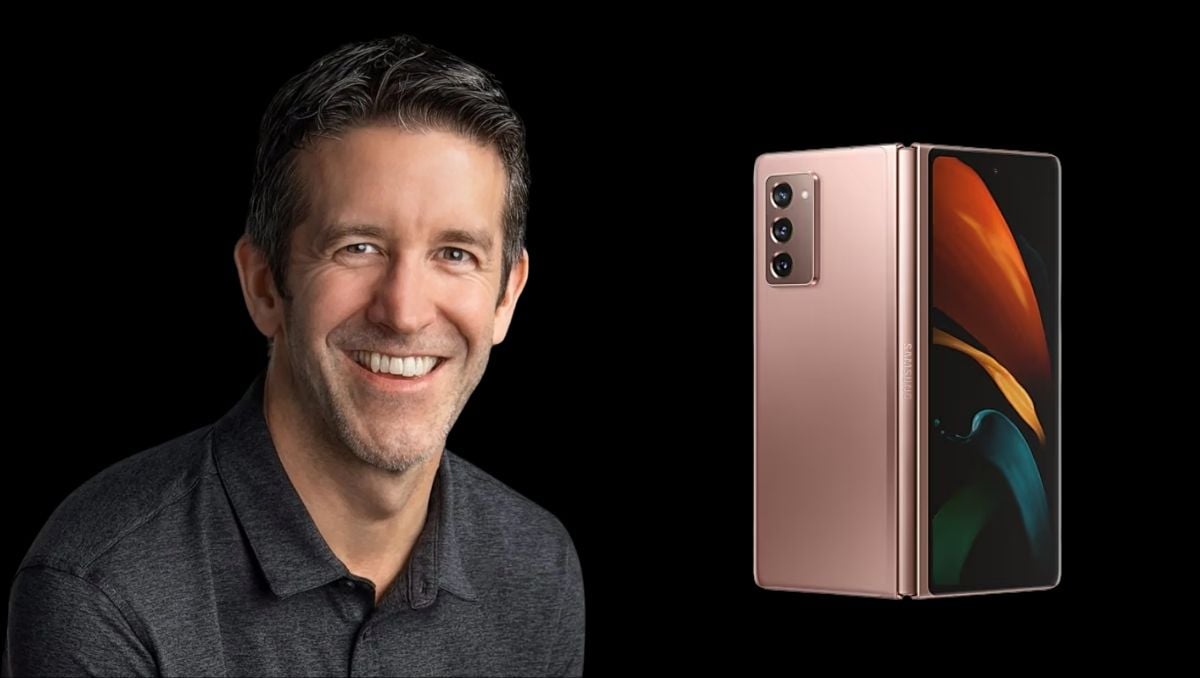
Apple’s newly appointed Chief Executive Officer, John Ternus, has landed the cover of TIME magazine’s Best Inventions of 2026 issue, spotlighting his leadership transition alongside the debut of the long-awaited foldable iPhone Duo.
The recognition arrives just weeks after Ternus stepped into the top role succeeding Tim Cook in September. Marking a generational shift for the company, the cover feature ties the new CEO directly to the engineering origins of Apple’s newest form factor.
Apple’s new CEO, John Ternus, is on the cover of TIME’s 2026 Best Inventions issue. We spoke to him about Duo: Apple’s long-awaited foldable phone. Plus: his company’s approach to geopolitical tensions and supply chains, child safety, and AI https://t.co/OCsHLk0d8k pic.twitter.com/qhY0WWHLXF
The 15-Year Patent History Behind the iPhone Duo
While the foldable phone market has expanded since competitors launched early models in 2019, Apple’s path began much earlier. Back in 2011, John Ternus and five fellow engineers filed a patent exploring how electronic devices could fold while housing essential internal hardware like batteries and circuit boards.
Flexible displays were still an emerging technology at the time, but the team recognized where the industry was heading. It felt clear that we were going to eventually get to a place where OLED displays were going to be flexible,
Ternus recalled in his interview with the publication.
Rather than rush a device to market, Apple held back while monitoring early consumer offerings.
Apple had been exploring foldable technology long before the iPhone Duo was introduced. Engineers creating foldable smartphones have historically found that reducing the display bend’s visible crease represents a primary hurdle. Apple Wanted Its Foldable iPhone to Be Different, as the company’s journey towards a foldable iPhone began long before the category became a mainstream smartphone trend.
Engineering Out the Crease and Refining Hardware Collaboration
To solve the durability issues and visible display creases plaguing first-generation foldables, Apple leaned heavily on its internal product design teams. Richard Dinh, Vice President of Product Design, discussed early debates over whether to adopt a surface material already common among competitors. Ternus urged the team to keep searching for a better alternative.
The other examples in the world felt kind of cheap and crappy.
John Ternus, Chief Executive Officer, via Mashable India
The resulting iPhone Duo features a custom polymer surface with a nanotexture finish, built over a complex hinge containing more than 100 precision components. Early user reports suggest the fold crease is barely noticeable. Under the hood, the device packs an A20 Pro chip, a titanium frame, and a brand-new display engine built using advanced Apple silicon to smooth transitions between the 7.6-inch folding inner display and the 5.4-inch outer screen.
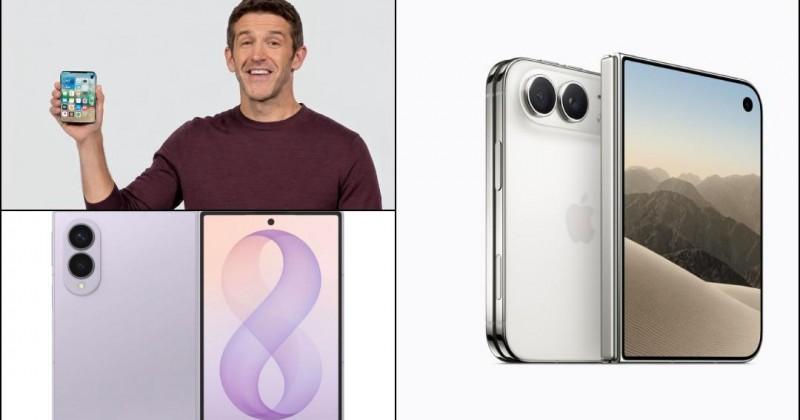
Ternus emphasizes that this level of cross-functional polish stems from a unique internal culture. And the engineers have a deep appreciation for design.
Describing it as a really powerful collaboration, he noted that the engineering and design groups work hand in hand from the very beginning rather than throwing concepts over a wall.
The conversation also touched on the company’s broader approach to artificial intelligence. Ternus addressed Apple’s AI strategy, including the decision to use Google’s Gemini to help power the new Siri AI experience. When asked about relying on technology from another company, the CEO noted that Apple does not need to build every single component itself, choosing instead to focus on areas where it can deliver a distinct contribution. Explaining that Siri utilizes all the details of your life stored on your device to help people, Ternus pointed out that users can uniquely combine that personal context to accomplish tasks, acquire knowledge, and solve problems in ways no other assistant can match.
Pricing, Pre-Orders, and Market Availability
Consumer demand for the device has proven intense. Following pre-orders opening on October 16 at 5:30 pm IST, initial inventory faced extraordinary demand, with subsequent orders pushed out to late January 2027. Interested customers can book the hardware through Apple’s official online store and authorized retail channels.
| Storage Variant | Indian Pricing |
|---|---|
| Base 256GB Model | ₹2,99,900 |
| Highest-End 2TB Variant | ₹4,49,900 |
Related reading

NASA’s Perseverance Rover Sets Off-World Driving Record
NASA’s Perseverance rover has shattered the off-world driving record, traveling 28.1 miles across Mars in just five and...
Indian textile workers record tasks to train AI robot replacements
Textile and domestic workers across southern India are wearing GoPros and smart headsets to record daily chores, capturing...
Nvidia CEO Unveils Digital Twin Vision For Manufacturing
As industrial automation shifts from digital screens to the physical world, specialized robotics and edge compute systems are...
Publishers Pivot to AI, Subscriptions, and Team Reorgs
Publishers are aggressively rewriting their strategies to survive the Google Zero post-search era by launching LLM subscriptions, reorganizing...