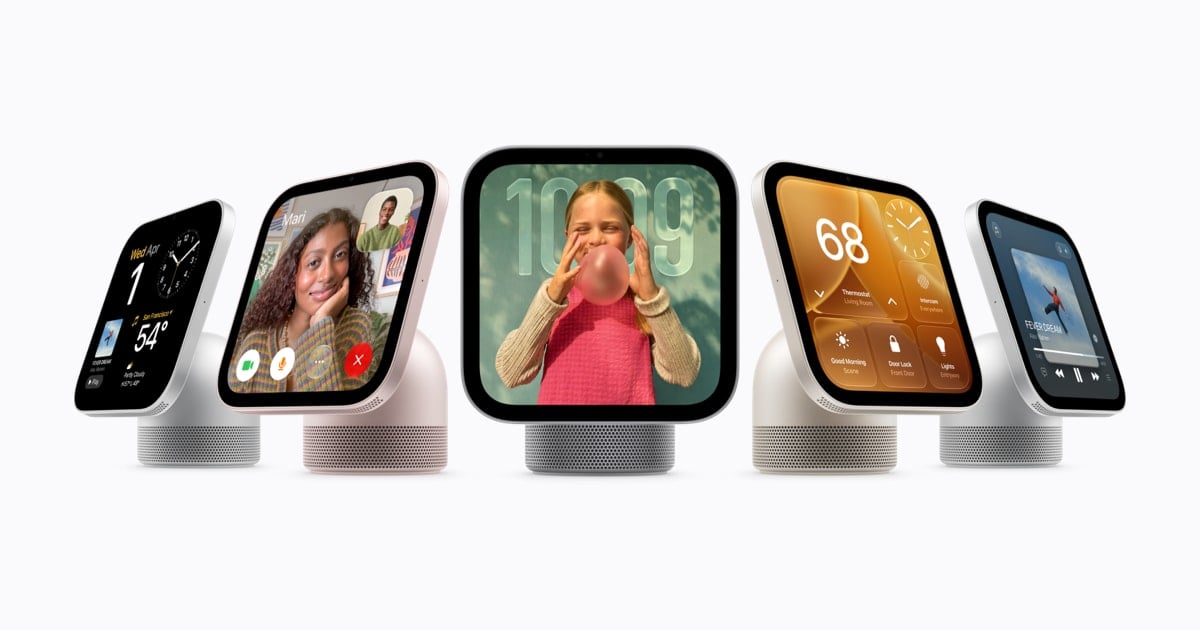
Apple unveiled the HomeView, a 7-inch smart home display powered by Siri AI and built with local facial recognition, alongside a redesigned HomePod mini and Apple TV 4K during an October 13, 2026 event in New York City, marking the company’s major hardware push into connected households.
Apple has officially entered the competitive connected home device arena with Apple HomeView, a tabletop and wall-mountable smart display designed to anchor a wider ecosystem of home automation accessories. Priced at $299, the device features a square 7-inch Liquid Retina display atop an aluminum speaker base. Preorders opened on October 13, 2026, with shipments scheduled to begin on November 13 across eight countries, including the US, UK, Canada, Australia, New Zealand, Singapore, South Africa, and India.
With Amazon featuring its Echo Show lineup and Google providing the Nest Hub, HomeView creates a much more head-to-head rivalry for Apple against both established smart display competitors. Aiming for a larger footprint in smart homes, Apple has positioned the $299 price tag of HomeView higher than Google’s Nest Hub at $99.99 and Amazon’s Echo Show 8 at $199.99. Thanks to its square form factor, the device avoids feeling as bulky as larger alternatives like Amazon’s Echo Show 11 or Google’s Nest Hub Max, allowing it to rest comfortably on kitchen counters.
Siri Uses Facial Recognition to Identify Household Members
The central driver behind the HomeView is an upgraded iteration of Siri powered by Apple Intelligence. Unlike traditional smart displays that treat all household occupants equally, the HomeView utilizes an internal camera and facial recognition capabilities to identify individual users. The system can recognize up to six household members, automatically adjusting widgets, apps, and personal data feeds when someone approaches the screen. Apple Music—featuring synchronized lyrics and animated album art—alongside Apple Podcasts, Apple News, Apple TV, and compatible third-party audio and video apps, can all be enjoyed ideally on HomeView. Because the Siri app uses iCloud to privately sync history across a user’s products, interactions initiated on HomeView can flow naturally into the Siri app, allowing individuals to resume discussions on Apple Vision Pro, iPhone, iPad, Mac, or Apple Watch.
When a recognized user is present, the device can pull personal context from text messages, calendars, and emails stored on a paired iPhone via a personal search index.
That will give you what’s more relevant, what’s more timely, what’s important to you, because it’s coming from your iPhone.
Kaiann Drance, Apple’s vice president of product marketing for home products, via RTE
To address privacy concerns in communal spaces like kitchens, Apple established strict security protocols. Private data from apps like Messages and Calendar is only surfaced when the enrolled user is recognized by their face and their paired iPhone or iPad is present on the same home network and has been recently unlocked. No private user data is stored directly on the HomeView hardware, and requests processed through Siri AI utilize either on-device processing or Private Cloud Compute. Apple and all other parties are kept from accessing or storing information processed through Private Cloud Compute.
Hardware Ecosystem and Apple Home Collection Accessories
Alongside the freestanding tabletop model, Apple introduced a wall-mounted version of the HomeView that features a flat, square wall plate while sharing the $299 price tag. The hardware operates on Apple’s A18 chip and functions as a Matter controller and Thread Border Router, allowing it to manage a broad array of smart home devices. HomeView offers an exceptional listening experience through a custom-engineered acoustic system, with two custom full-range drivers in the display and a down-firing woofer and two force-cancelling passive radiators built into the base.
The launch coincides with the introduction of the Apple Home Collection—a new lineup of security and home automation accessories developed in collaboration with LG Electronics and Schneider Electric. Users will hear a chime from their HomeView when someone is at the door, and the devices can all be set up with a tap and managed through the Home app on an iPhone or through Siri and HomeView.
- LG Indoor Cam Plug-In: Priced at $200, featuring automatic tilting capabilities.
- LG Outdoor Cam: Priced at $300, supporting low-light color night vision.
- LG Video Doorbell Wired: Priced at $250, featuring dual cameras and a 2.5K resolution top view.
- LG Floodlight Cam: Priced at $400, equipped with dual adaptive floodlights.
- Smart Deadbolt Lock: Priced at $350, supporting Ultra Wideband unlocking via an iPhone or Apple Watch.
- Smart Thermostats: Offered by both LG and Schneider Electric at $200 each, alongside $40 temperature and humidity sensors.
- Power Mount Accessories: Schneider Home offers the Power Mount USB-C Wall Connector starting at $59.95, the Power Mount AC Wired starting at $79.95, and the Power Mount PoE Wired scheduled for early 2027.
Apple also updated adjacent product lines during the event. The HomePod mini received an upgrade to the Apple Watch Series 10’s S10 chip and new color options, while the Apple TV 4K was updated with an A19 chip and 8GB of RAM. Both updated devices were scheduled for release on October 30, 2026. Apple’s new Apple TV 4K enters the market at $299, more than double the price of its starting point.

Market Positioning Against Established Rivals
The introduction of the HomeView places Apple directly into competition with Amazon and Google, which have dominated the connected home market for years. According to market research firm International Data Corporation, Apple accounted for just 5.2% of the smart speaker market in 2025, compared to 40.9% for Amazon and 29% for Google. Apple has a mixed history in the smart home space, with products such as the HomePod struggling to reach the same level of popularity as competing devices, having released the HomePod in 2017 before discontinuing it in 2021 and bringing it back in 2023 alongside the smaller HomePod Mini.
Ben Wood, chief analyst and chief marketing officer for CCS Insight, noted that at first glance Apple’s partnership with outside firms looked like a break with its usual practice of fully controlling its hardware, though it appears like there has been very deep collaboration. Given that Gemini and Alexa+ hardware updates have only just commenced from Google and Amazon, Apple views the wide-open upgrade cycle as a major opportunity to secure victory, as noted by Ben Wood.
NEW VIDEO – Apple Homeview Impressions: I get why this product exists, but it's hard to get excited about it for $300+ https://t.co/btNSkoHAFa pic.twitter.com/QYlAWL79YX
Despite these challenges, financial analysts project that the new hardware push could bolster Apple’s lucrative subscription services. Melissa Otto, head of Visible Alpha Research at S&P Global Market Intelligence, noted that Apple’s 2027 services revenue is forecast to rise 12% to $138 billion as the company expands its hardware ecosystem.
Introducing Apple HomeView!It recognizes up to six people, connects seamlessly across your Apple devices, and makes managing your home easy with Siri AI. All in a stunning, elegant design with privacy built right in. pic.twitter.com/S83Rzt4H6A
More on Apple Watch
Apple finally enters the smart display race now with “Apple HomeView” almost nine years after Amazon unveiled Echo Show,Its racing to claim the living room before Google & Amazon lock in the next hardware refresh cycle.🔅At $299, the hardware spec sheet is remarkably… pic.twitter.com/2BXYKvecS1
𝐎𝐧𝐞 𝐒𝐜𝐫𝐞𝐞𝐧, 𝐎𝐧𝐞 𝐒𝐩𝐞𝐚𝐤𝐞𝐫, 𝐎𝐧𝐞 𝐌𝐨𝐫𝐞 𝐖𝐚𝐲 𝐭𝐨 𝐂𝐨𝐧𝐭𝐫𝐨𝐥 𝐘𝐨𝐮𝐫 𝐇𝐨𝐦𝐞 𝐓𝐞𝐜𝐡Apple is stepping up its competition with Amazon and Google with three new smart home devices powered by an upgraded Siri AI assistant.Here's what's coming:📱Apple… pic.twitter.com/sdOZOO4W5t
https://t.co/QIEhGDvhSl
Keep reading
- Epic Games Pivots to AI Workflow and Delays Disney Project
- Mineworkers Union of Namibia Urges Greater Leadership Roles for Women
- EU Watchdog Urges Clear Recording Warnings for Smart Glasses Amid Privacy Backlash (world-today-news.com)
- Cage vs. Amazon: What an Actor's AI Waiver Actually Hands a Studio (daybreakwire.com)

Epic Games Pivots to AI Workflow and Delays Disney Project
Epic Games has delayed its $1.5 billion Marvel and Star Wars collaboration with The Walt Disney Company indefinitely...

Mineworkers Union of Namibia Urges Greater Leadership Roles for Women
As Namibia enters a new era of industrial work, the Mineworkers Union of Namibia has called for deeper...
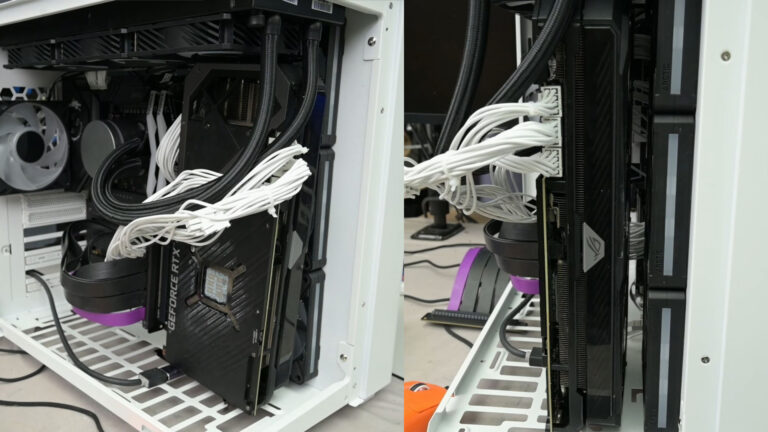
TrashBench’s Vertical GPU Mount Drops Hotspot Temperatures by 19°C
A modder achieved a 19°C reduction in GPU hotspot temperatures by mounting the graphics card vertically near the...

NATO Uses AI Agents to Test Information Warfare in Synesis 2026
NATO has launched the Synesis 2026 exercises in Riga, Latvia, involving civil and military teams from 13 nations...