Municipal financial obligations reached 10 trillion RMB (US$1.37 trillion) at the close of 2024, representing about 7 per cent of GDP, as China faces mounting local fiscal strain and property market adjustments following a sharp drop in land revenue from its 2021 peak. S&P Global Ratings analysts report that residential real estate prices may bottom by the third quarter of 2028, while new government subsidies and supply contractions aim to stabilize the sector.
For decades, local governments across China relied heavily on land sales and off-budget borrowing to fund public services and infrastructure. That financing model, known as land finance, tied municipal budgets directly to the property cycle. At the peak of the housing market in 2021, broadly defined land-related revenue accounted for nearly half of local governments’ consolidated revenue, equivalent to around 10 per cent of gross domestic product, according to an East Asia Forum report.
That proportion shrank to roughly 25 per cent of municipal income by 2025, which amounted to under 5 per cent of GDP. The sharp drop exposed deep vulnerabilities in municipal finances. Between 2019 and 2023, debt-servicing costs on official local government debt increased from around 8 per cent of local revenue before central transfers to 18 per cent. Heavily indebted provinces such as Guizhou openly sought greater support from Beijing as falling land values made it harder to roll over off-budget debt raised against land collateral.
Tianlei Huang is Senior Fellow at the Peterson Institute for International Economics. His forthcoming book is Detox: China’s Fiscal Reckoning in the Shadow of the Housing Bust (PIIE). Municipal financial obligations were calculated at 10 trillion RMB (US$1.37 trillion) at the close of 2024, representing about 7 per cent of GDP, according to a February 2025 assessment.

These arrears act like a hidden tax on companies, squeezing profits and depressing investment and employment. Beijing sought to ease localities’ immediate liquidity constraints through greater transfer payments, refinancing and debt swaps.
Immediate cash-flow strains were alleviated by these actions, extending the average duration of outstanding local debt from 5.1 to 10.5 years between 2019 and 2025, while simultaneously lowering average borrowing costs from 3.6 per cent down to 2.8 per cent. Debt service as a share of local revenue started to drop after 2023. But Beijing’s strategy offers more relief than repair.
S&P Forecasts Real Estate Bottom by 2028
An end may be in sight for China’s yearslong property market slump, according to a report distributed by S&P Global Ratings analysts. Residential real estate prices may hit a bottom in the third quarter of 2028, the report said, adding that prices in major cities like Beijing and Shanghai will likely recover as soon as next year.

This outlook differs from February, when S&P warned that high levels of unsold housing kept recovery out of reach. In August, Beijing announced new restrictions on developers selling unfinished properties. A month later, Premier Li Qiang indicated the government would roll out stabilizing policies for the real estate sector. Beijing subsequently launched a mortgage rate subsidy for first-time homebuyers purchasing units priced below 1.5 million yuan ($220,000) and smaller than 120 square meters.
S&P Global Ratings analysts noted that developers are adopting more cautious strategies in land acquisition, which could lead to reduced new project developments.
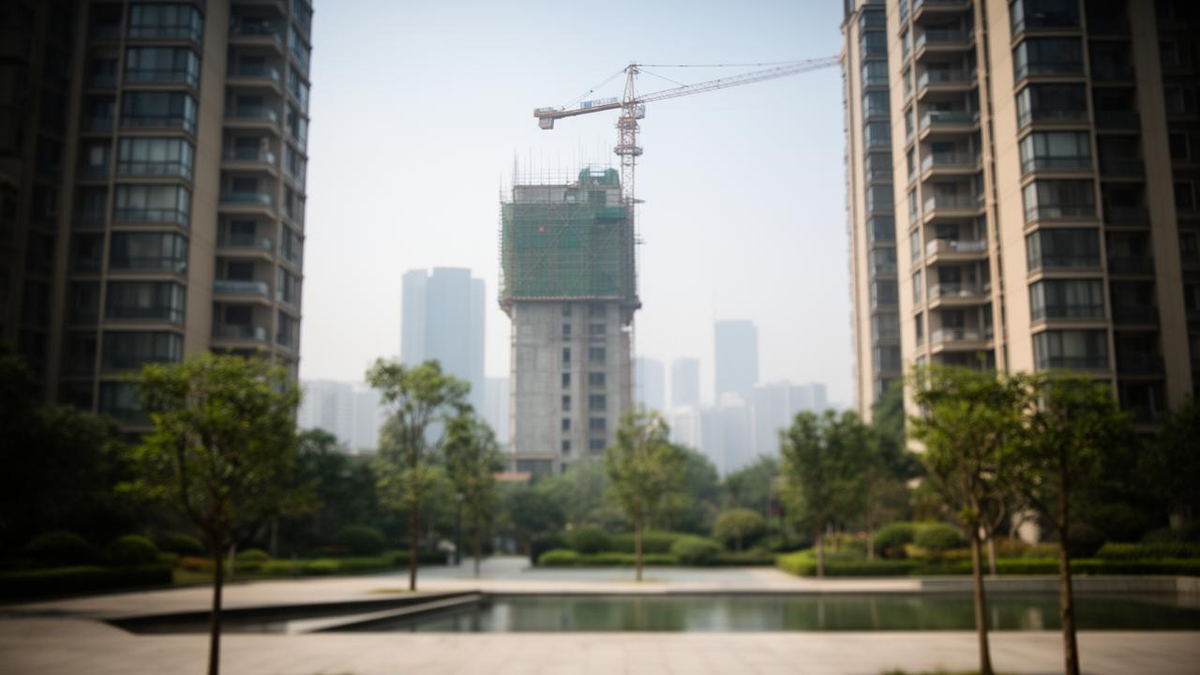
Chan noted that 2026 marks the first year of real estate inventory destocking. The report stated that China’s supply contraction is occurring much earlier and with greater magnitude
than Japan’s housing crisis from 1991 to 2014. On the price front, Chinese residential prices have fallen by 22% since their 2021 peak, compared with a 67% drop in Japan.
Poly Developments Reclaims Top Sales Spot in China
Combined sales for China’s top 100 real estate developers reached 2.25972 trillion yuan (approximately $337.0 billion) during the first three quarters of 2026, with monthly turnover recovering to roughly 242.1 billion yuan (approximately $36.1 billion) in September, BigGo Finance reported. Following an August lull, September brought a modest warming to the market. Poly Developments and Holdings overtook China Overseas Land & Investment with sales of 181.2 billion yuan versus 180.9 billion yuan, reclaiming the top sales spot by a margin of 300 million yuan.
Only five developers surpassed 100 billion yuan in sales in the first nine months of the year, one fewer than during the same period in 2025. Guotai Junan International Chief Economist Hao Zhou published a report predicting that the fourth quarter could see the first growth in existing home prices for large tier-one cities since the 2021–2023 slump. Existing home prices in Shanghai have narrowed their year-on-year decline, while Beijing prices rose by 1.4% from a low in January.
“The next three months are a key window. If Shanghai, Shenzhen and Guangzhou avoid a monthly decline through the November 2026 data, this rebound will have outlasted the 2024–25 episode. In our view, that would be strong evidence of a Tier-1 bottom and an important signal for the wider market.”
Hao Zhou, Chief Economist at Guotai Junan International

PM Modi and CM C. Joseph Vijay Launch Multiple Development Projects in Tamil Nadu
Prime Minister Narendra Modi arrived in Chennai on October 11, 2026, to launch development projects exceeding ₹13,000 crore...
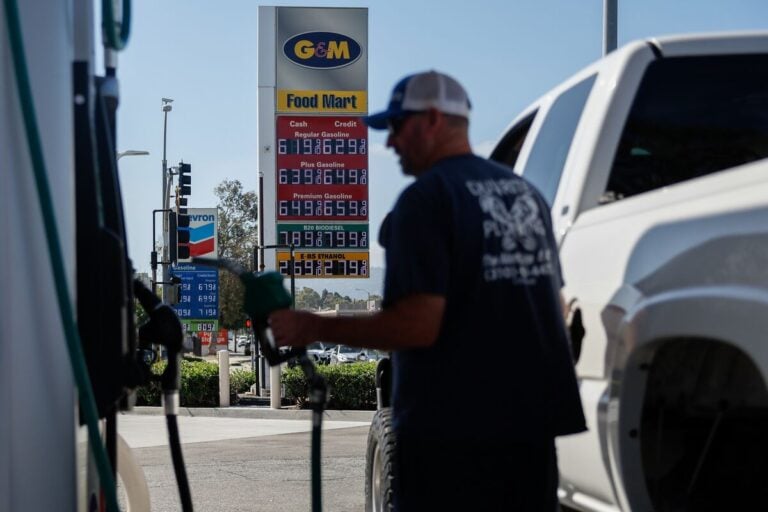
US Inflation Expected to Rise in September on Higher Gasoline Prices
Higher gasoline prices pushed overall US inflation up 0.6% in September, while core price pressures continue a gradual...

UK Pensions Face Inheritance Tax Overhaul From April 2027
Millions of UK families face a tax policy change as unused pensions and death benefits enter the inheritance...

Indonesia’s House of Representatives (Commission VIII DPR RI) and government ministers finalized
Indonesia’s House of Representatives (Commission VIII DPR RI) and government ministers finalized the Hajj Organising Costs, known as...