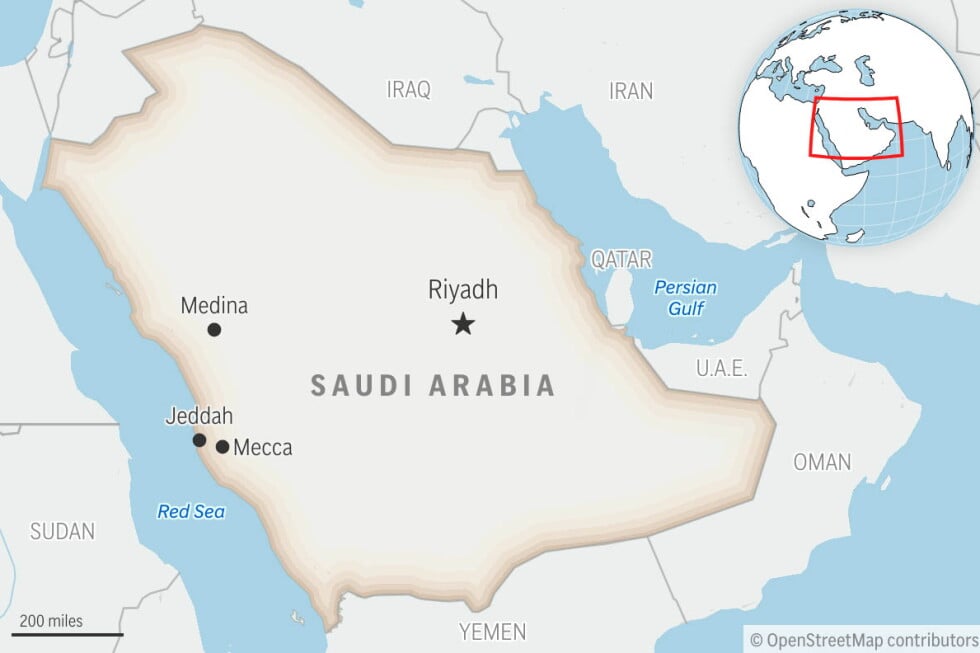
Twelve people were killed and more than 300 wounded in a missile strike on Riyadh’s international airport on Saturday, marking the deadliest attack on the Saudi capital in over a decade and prompting international airlines to suspend flights as regional hostilities escalate.
King Khalid International Airport Hit in Deadliest Strike in a Decade
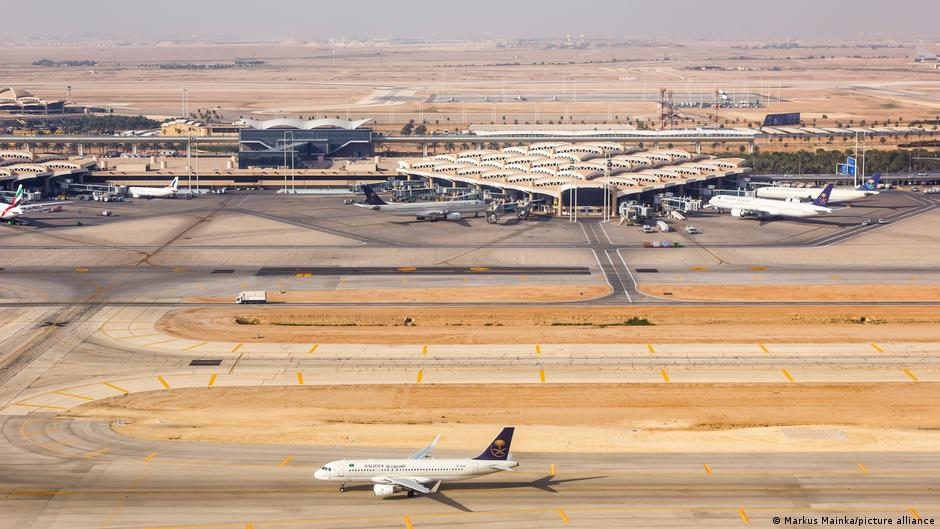
A ballistic missile struck a complex housing terminals 3 for domestic flights at King Khalid International Airport on Saturday afternoon, creating a mass casualty event that flooded Riyadh hospitals with patients. Witnesses reported seeing an explosion followed by part of a ceiling collapsing near a departure gate, while more than a dozen ambulances rushed to the facility. The Saudi General Authority of Civil Aviation announced that 12 people had died, including four Saudi citizens, two Bangladeshi nationals, one American, one Egyptian, one Jordanian, one Syrian, one Palestinian, and one Sudanese national. At least 309 others sustained injuries.
The weekend assault followed a string of earlier strikes this week on the airport that had already killed four people and damaged planes on the tarmac, including an aircraft belonging to the national carrier Saudia. Footage verified by news organizations showed thick black smoke and flames rising from the aviation facility.
Before the deadly Saturday escalation, civil aviation authorities and regional observers noted that earlier attacks had already prompted various carriers to suspend their schedules. Air India, FlyDubai, Lufthansa Group, and Pakistan International Airlines had previously suspended flights to and from Riyadh and other Saudi airports for varying periods. The European Union Aviation Safety Agency had previously expanded its guidance on Saudi airspace, noting the Houthis’ ability to strike targets deeper inside the kingdom, including Riyadh, and pointing to a greater focus on aviation infrastructure alongside the risk of civil aircraft misidentification.
On Thursday, Houthi military spokesman Yahya Saree had issued a final warning to global airlines against operating in Saudi airspace, declaring it a theater for military operations. Following the subsequent attacks, regional carriers including Etihad Airways, Qatar Airways, and Flydubai suspended operations, while flight tracking data showed the last commercial departures and arrivals occurring on Saturday afternoon before operations were suspended until further notice.
Global Airlines Suspend Flights and Embassies Issue Urgent Travel Warnings
The unfolding security crisis brought commercial air traffic at Riyadh’s King Khalid International Airport to a temporary halt as flight tracking data showed clear skies above the capital. Regional carriers including Etihad Airways, Qatar Airways, Flydubai canceled services to Riyadh, while international operators such as Ethiopian Airlines and Lufthansa adjusted their operations amid mounting airspace security concerns.
Western governments responded with immediate travel restrictions. The U.S. Embassy in Riyadh strongly recommended that all American citizens avoid the airport and surrounding areas. Several other Western embassies in Riyadh, including those of Germany, Canada, and Spain, similarly urged citizens to avoid the airport. Australia’s Smartraveller advisory urged citizens to reconsider travel to Saudi Arabia and advised against visiting provinces near the Yemeni border, while authorities in Riyadh moved local schools online until the end of the week and extended airport closures.
Washington Weighs Military Response as Regional Conflict Widens
President Donald Trump told reporters at the White House that Washington was evaluating whether to join Saudi military strikes against the Houthi movement in Yemen, stating that officials would make a rapid decision after reviewing the attack.
We may. We’re going to look at it. We just found out about the recent attack, so we’ll make a decision. We move very quickly.
President Donald Trump, via Reuters and DW
UN Secretary-General Antonio Guterres also issued a condemnation, declaring that attacks on civilian infrastructure violate international law. European Commission President Ursula von der Leyen added on X that attacks by Iran’s proxies are pushing the region into a spiral of violence. Meanwhile, Pakistan reaffirmed its commitment to Saudi security under the Makkah Joint Defence Agreement, while Yemen’s Houthi military spokesman Yahya Saree reiterated warnings for civilian aircraft to avoid Saudi airspace, which the group treats as an active military theater.
More on King Khalid International Airport
Court Releases Abhijeet Dipke and CJP Leaders in New Delhi on October 11
Following a massive security clampdown and the detention of thousands in New Delhi, a local court ordered the...

Trump says Norway has an ‘indelible stain’ for not awarding him Nobel Peace Prize
Navi Pillay, a South African jurist and former United Nations human rights chief, won the 2026 Nobel Peace...

Trump Announces Russian Diesel Deal as Zelensky Condemns Agreement
US President Donald Trump announced a deal with Russian President Vladimir Putin to import Russian diesel into the...

Germany Indicts Former Ukrainian Officer in Nord Stream Sabotage Case
Four years after underwater explosions ruptured the Nord Stream pipelines, Germany’s federal prosecutor has indicted a former Ukrainian...