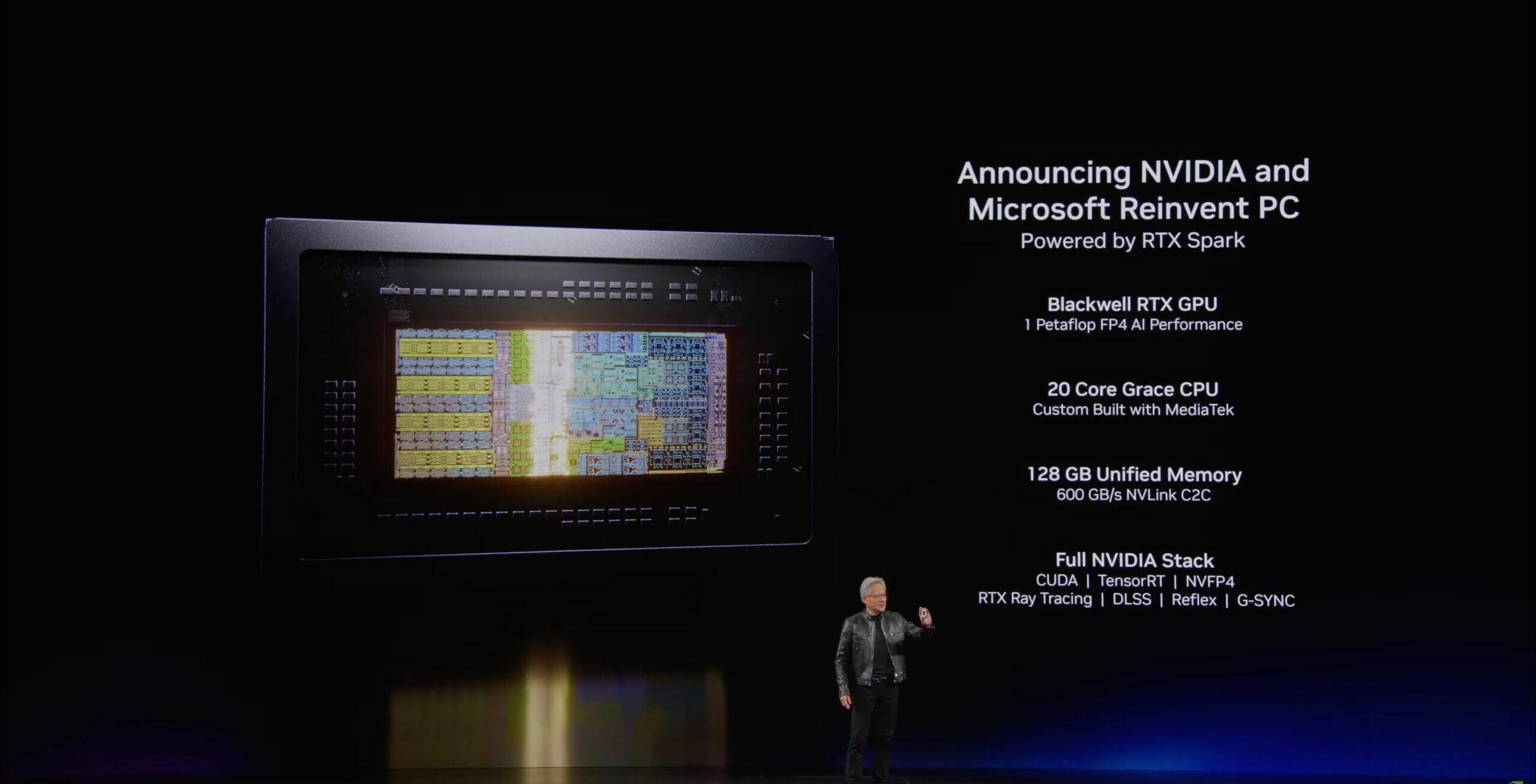
Microsoft and hardware vendors opened global pre-orders for RTX Spark Windows PCs, featuring unified memory architectures designed to run local artificial intelligence models. Shipments begin October 16, 2026, with devices scaling up to 128GB of memory and pricing starting around $2,599.
Pre-Orders and October 16 Shipping Date for RTX Spark Systems
Deliveries for initial laptop configurations are scheduled to begin on October 16, 2026, with compact desktops arriving in November. Major original equipment manufacturers, including Microsoft, ASUS, Dell, HP, Lenovo, and MSI, rolled out early sales across retail channels.
The platform introduces Arm-based processing combined with NVIDIA Blackwell graphics architecture to the consumer Windows ecosystem. Alongside the hardware rollout, Microsoft declared its agent containment layer, Microsoft Execution Containers, generally available on Windows 11. During the event, NVIDIA presented digital creators AlexiBexi, FalcoPunch, and Alex Wätzel, alongside presentations from CD Projekt Red, the studio behind The Witcher 3 and Cyberpunk 2077. NVIDIA is marking the launch with a public party at XPERION on Alexanderplatz in Berlin on October 16, featuring live hardware stations, DLSS 5 demos, a raffle for five ASUS ProArt P14 laptops signed by CEO Jensen Huang, and goodie bags containing a six-month GeForce NOW Ultimate membership.

Hardware Configurations and Chip Tiers Across Manufacturers
Underneath the marketing label, the hardware is built around a range of N1X system-on-chips. Laptops utilize two different N1X chip tiers operating within a 45W to 80W thermal design power envelope, contrasting with the entry model featuring 5,120 cores against the top configuration packing 6,144 cores. The entry model C1XMT-212MY from MSI features a 2.8K OLED panel, while the C1XMT-211MY upgrades to a 4K UHD+ Tandem OLED panel hitting over 1,000 nits of peak brightness with Calman Verification and Delta E < 1 color accuracy. Retail packages also include an in-box MSI Nano Pen, an Essential Backpack II, a Microsoft Office 2024 license, and 1 year of 100GB Office 365 cloud storage.
but it’s actually a range with two different chips. The full chip is comes with a 20-core Grace CPU and 6144-core Blackwell GPU, but there’s a lower-end configuration with an 18-core Grace CPU and 5120-core Blackwell GPU.Pay close attention to which you are pre-ordering.
Tech Insider
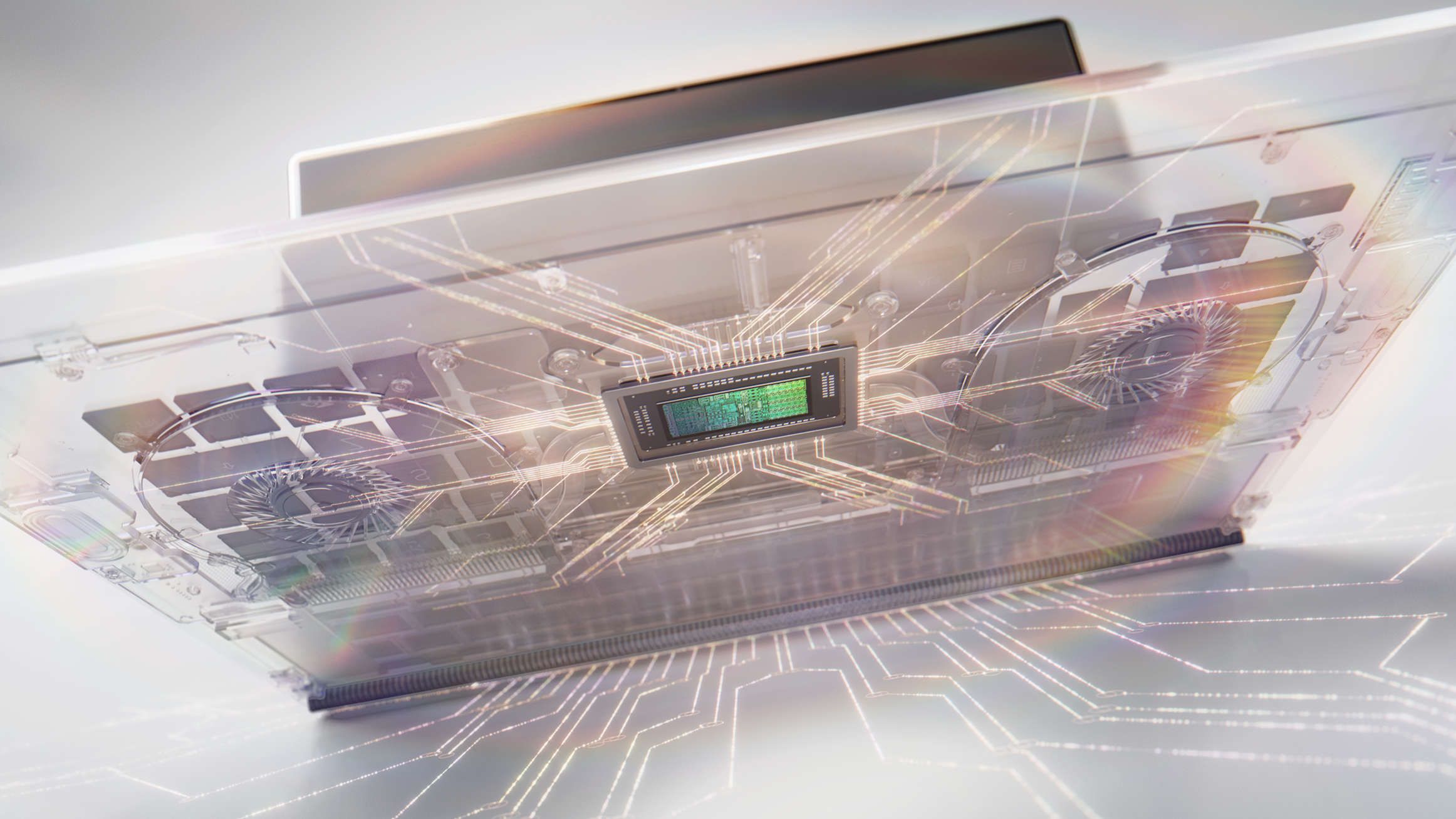
Desktop variants utilize the full 20-core Grace CPU and 6,144-core Blackwell GPU configuration running at a 140W chip TDP. Memory configurations scale from 24GB up to 128GB of unified LPDDR5X shared between the central processing unit and graphics processor. System memory bandwidth reaches up to 300GB/s on a 256-bit interface, matching specifications reported across vendor spec sheets. For alternative comparisons, Apple’s M5 Max with a 40-core GPU delivers 614GB/s, while the M5 Ultra reaches 1,200GB/s.
Pricing Breakdown for Surface, ProArt, and Other Flagship Models
The hardware carries premium pricing tied directly to high-capacity unified memory pools and the broader memory-chip supply constraints affecting the industry. Microsoft’s Surface Laptop Ultra starts at $2,599.99 for an entry configuration with 24GB of memory and 512GB of storage, scaling up to $5,899.99 for the 128GB variant. Microsoft also offers a desktop system, the Surface RTX Spark Dev Box, priced at $5,999 with 128GB of RAM. Nvidia lists its DGX Spark desktop with 128GB of unified memory and 4TB of storage for $4,699, though it is currently listed as out of stock on Nvidia’s own store, while a $4,999 variant features half the RAM and storage.
ASUS opened pre-orders for its ProArt P16 and P14 laptops alongside the compact ProArt GR1X mini PC. The ProArt P16 starts at $3,699 with 48GB of RAM and reaches $6,999.99 for the 128GB version with a 2TB SSD, while the compact ProArt P14 measures 13.9mm thin, weighs 1.48kg, and houses up to a 90Wh battery alongside an ASUS Lumina Pro OLED display.

Microsoft Claims on-Device AI Performance Rivals Cloud Variants
Manufacturers are positioning the platform around its ability to execute large language models exceeding 100 billion parameters directly on personal hardware, avoiding cloud token limits and latency. Microsoft notes its quantized on-device solution scores 70.8% on SWE-bench compared to 72.6% for the BF16 cloud variant, alongside achieving 66.29% on Terminal-Bench 2.1 relative to the 62.9% alternative.
Creators want to run the best AI models on their own machines, with full control.
Yoland Yan, via ASUS Pressroom
Microsoft’s promotional benchmarks claim performance advantages over Apple MacBook Pro hardware running M5 Pro chips, citing up to 2.1 times faster time to first token and multi-fold improvements in AI image and video generation.
Related reading
Apple Unveils iPhone Duo Foldable Starting at $1,999
Apple introduces its first book-style foldable smartphone, the iPhone Duo, starting at $1,999 for 256GB and carrying an...
Koofr Offers 1TB Lifetime Cloud Storage for $129.99 via StackSocial
Shoppers seeking alternatives to recurring cloud storage expenses can secure one terabyte of Koofr cloud storage for a...

Google Rolls Out Android Sideloading Verification in Pilot Countries
Google has rolled out its Android sideloading verification system in four pilot countries, requiring developers of apps on...
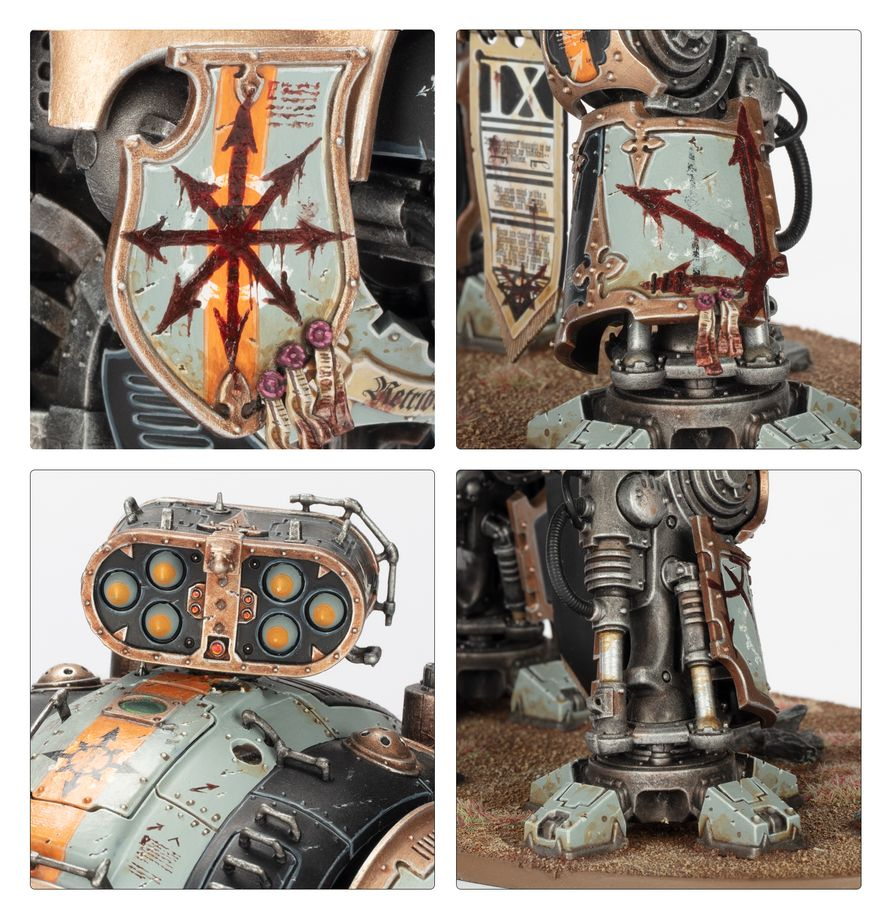
Imperial Knights Star in New Black Library Novel Throne Questoris
Black Library has unveiled a new novel titled Throne Questoris by Victoria Hayward, placing Imperial Knights at the...