Department of Science and Technology-Food and Nutrition Research Institute Findings on Stunting

The government’s decision to tighten oversight of the School-Based Feeding Program (SBFP) follows a concerning surge in child malnutrition. According to findings from the Department of Science and Technology-Food and Nutrition Research Institute (DOST-FNRI), stunting among children under five has climbed to 25.3 percent, marking a 1.7 percentage point increase since 2023. As reported by Inquirer.net, this reversal of a decade of progress has spurred the administration to move from fragmented, localized implementation to a centralized, unified system.
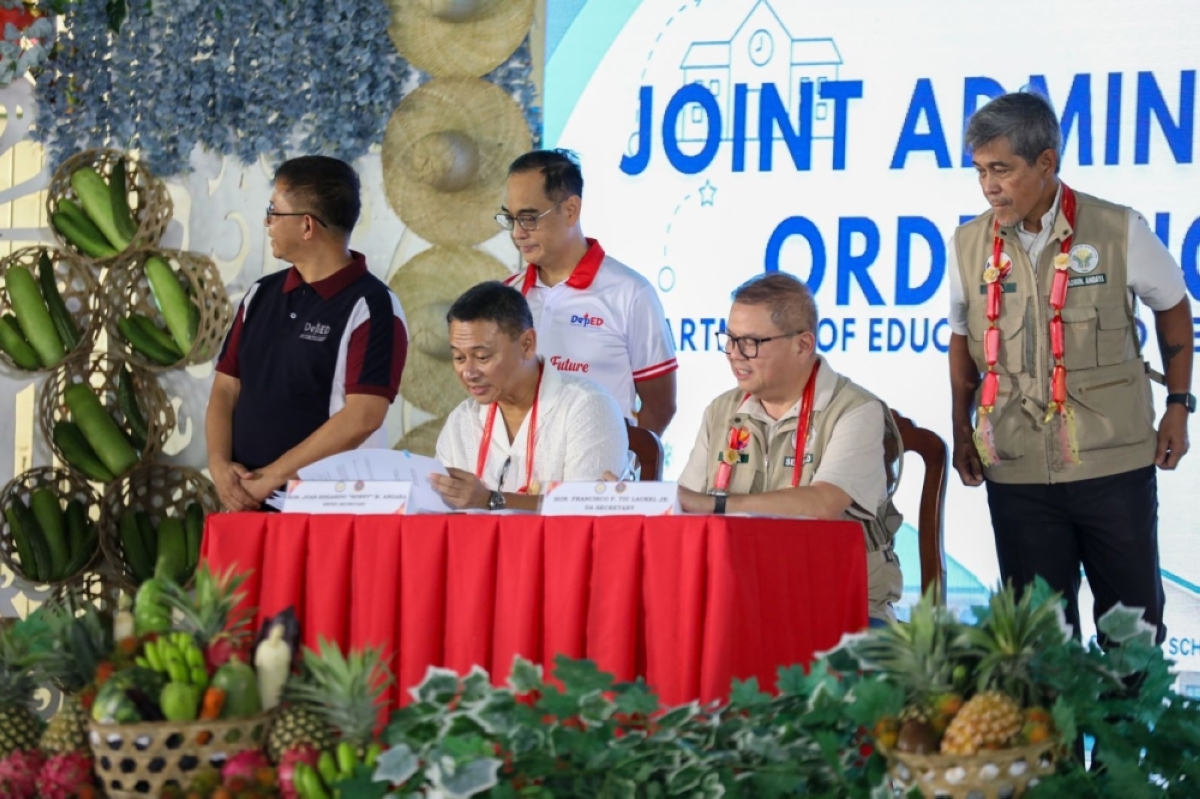
“Every percentage point represents a Filipino child whose potential is being compromised,” Education Secretary Sonny Angara said during the program launch in Pulilan, Bulacan. The expanded initiative now covers all Kindergarten and Grade 1 students, regardless of their nutritional status, while continuing to provide targeted support for wasted and severely wasted learners in grades two through six.
National Dairy Authority and Philippine Carabao Center Protocols

Previously, the Manila Times noted that the implementation of the milk-feeding component varied significantly by region, leading to inconsistent product quality and frequent delivery delays. Under the new guidelines signed by the Departments of Education and Agriculture, agencies including the National Dairy Authority and the Philippine Carabao Center will follow a single, nationwide protocol for planning, procurement, and monitoring.
This structural change is designed to address the logistical hurdles that have long plagued school feeding efforts. By standardizing inspection procedures and establishing clear accountability, the government aims to eliminate the “product quality issues” that previously hindered the program’s effectiveness. The government has allocated P25.6 billion for the SBFP for the 2026-2027 school year, a significant increase from the P11.8 billion budget in the previous year, with the program expected to benefit 4.63 million learners.
National Dairy Authority Administrator Marcus Antonius Andaya on Local Farmer Supply
Beyond school nutrition, the revamped program seeks to bolster the domestic dairy industry by prioritizing local farmers and cooperatives as the primary suppliers for school milk. National Dairy Authority Administrator Marcus Antonius Andaya stated that the initiative creates a more stable demand for local producers. “When children are properly nourished, we see improvements not only in attendance but also in their ability to focus and learn,” Andaya noted, emphasizing that the program provides farmers with the confidence to expand their herds and upgrade operations.
BusinessMirror reported that private sector partnerships are also complementing these government efforts. In Sta. Rosa, Laguna, a 100-day milk feeding program—longer than the traditional 21-day cycle—will begin in September 2026. ABI Pascual Foods, in coordination with the city government and the National Dairy Authority, is backing this pilot as a model for sustained nutritional intervention. “When the National Dairy Authority launched its private sector-funded nutrition program, we saw an opportunity to invest in Filipino children and in the future of the Philippine dairy industry,” said Michael Tan, President of Asia Brewery Inc.
Second Congressional Commission on Education Oversight of Milk Storage
Despite the optimism surrounding the expansion, challenges regarding self-sufficiency remain. Pasig City Rep. Roman Romulo, co-chair of the Second Congressional Commission on Education (Edcom2), told reporters that the country is “still capacity building to become self sufficient in the production of milk.” BusinessWorld Online highlighted that while the government is scaling up, officials are also debating the practicalities of fresh milk storage and delivery, with some proposals suggesting powdered milk as a potential logistical alternative in harder-to-reach areas.
For the upcoming school year, the government has committed to a minimum of 180 days of feeding, marking what Education Secretary Angara described as a “historical first” for the program’s duration. The ultimate success of these measures will be measured by the ability of the Department of Education to maintain the supply chain across the entire academic cycle, ensuring that the target of 4.63 million students receives consistent, high-quality nutritional support.
Find more reporting in our Health section.

Related reading

Louisa Nicola Outlines Lifestyle Changes to Prevent Alzheimer’s
Neuroscientist Louisa Nicola argues that up to 95 percent of Alzheimer’s cases are preventable through lifestyle choices, pointing...

Marking World Mental Health Day 2026, the Irish government announced an €11 million funding package
Marking World Mental Health Day 2026, the Irish government announced an €11 million funding package to expand youth...

CU Anschutz Study: Horseback Riding Cuts Hyperactivity in Autistic Youth
Therapeutic horseback riding cuts hyperactivity in children with autism and co-occurring psychiatric conditions, according to new research published...

Routine Blood Tests May Predict Long-Term Dementia Risk
Routine blood screening tests and advanced genetic markers are offering doctors new ways to estimate long-term dementia risks...