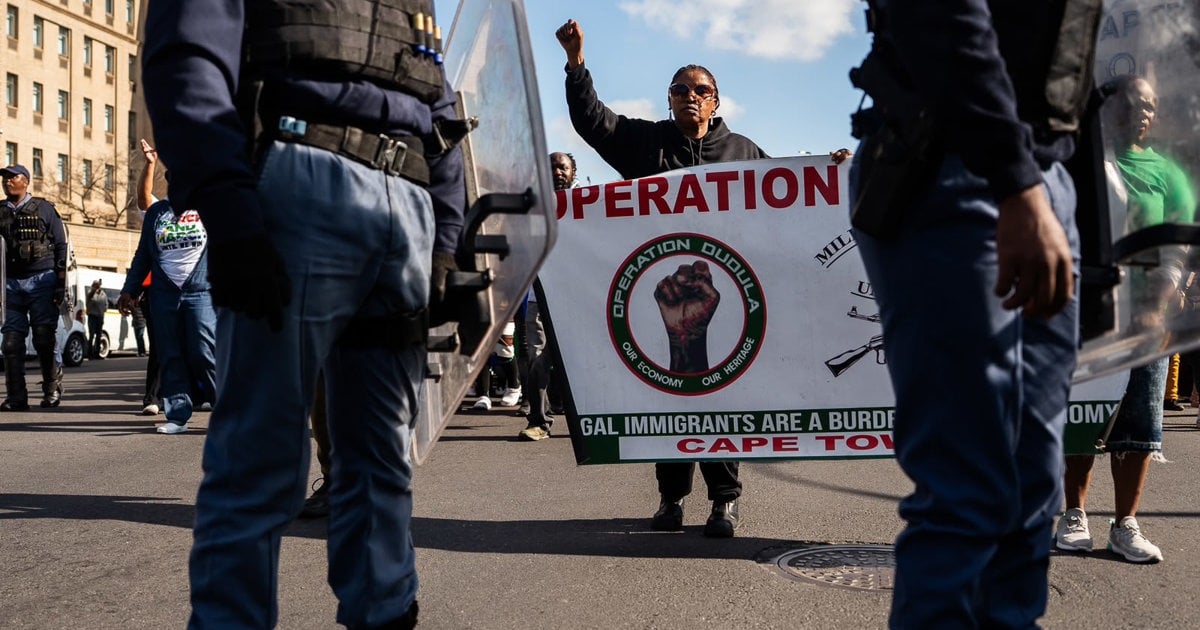
Anti-immigrant protest groups have begun conducting door-to-door searches in Johannesburg townships, including Alexandra and Soweto, to identify and remove undocumented foreign nationals. Following an informal June 30 deadline for migrants to leave South Africa, these groups have increasingly seized individuals and handed them to local police, heightening regional tensions and sparking mass repatriation efforts.
Protesters Target Private Homes in Alexandra and Soweto
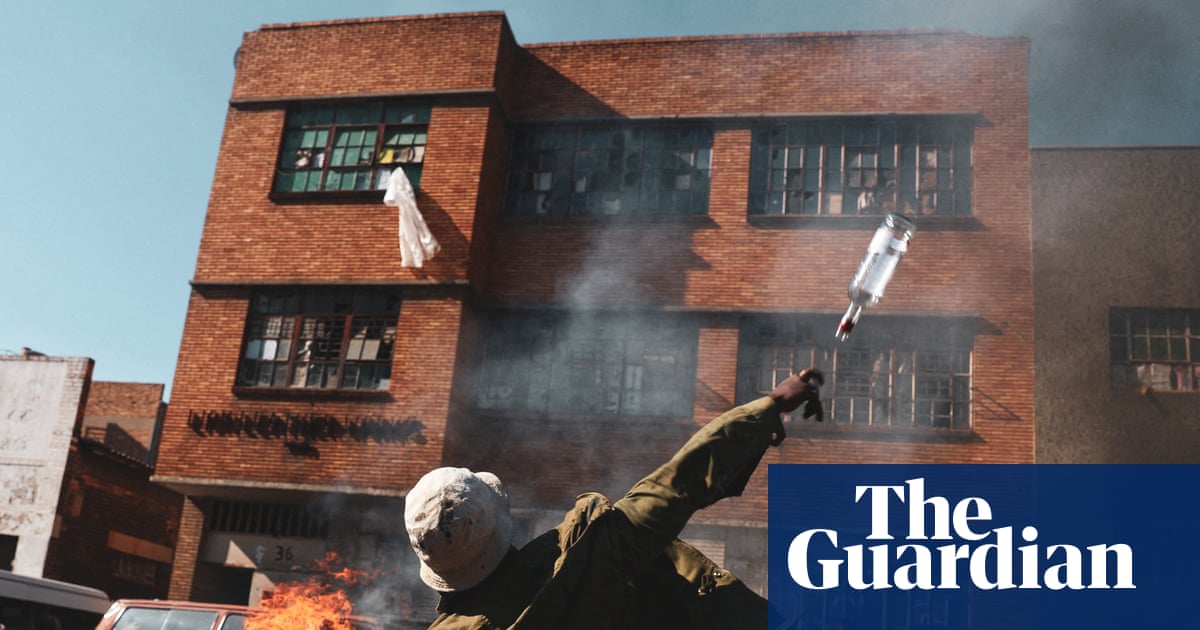
On Thursday, July 9, 2026, the movement against undocumented immigration in South Africa took a more aggressive turn. In Johannesburg’s Alexandra township, protesters were observed breaking down doors and entering private homes to search for foreign nationals. Those found were escorted to police vans. In one instance, a woman and a small child from Malawi were among those taken into custody. In Soweto, anti-immigrant protesters marched through town wielding sticks and flags, with plans to search for undocumented immigrants. Several flyers for the Thursday protests advertised a “peaceful march” followed by “door to door.” Another march took place in Durban on the east coast.
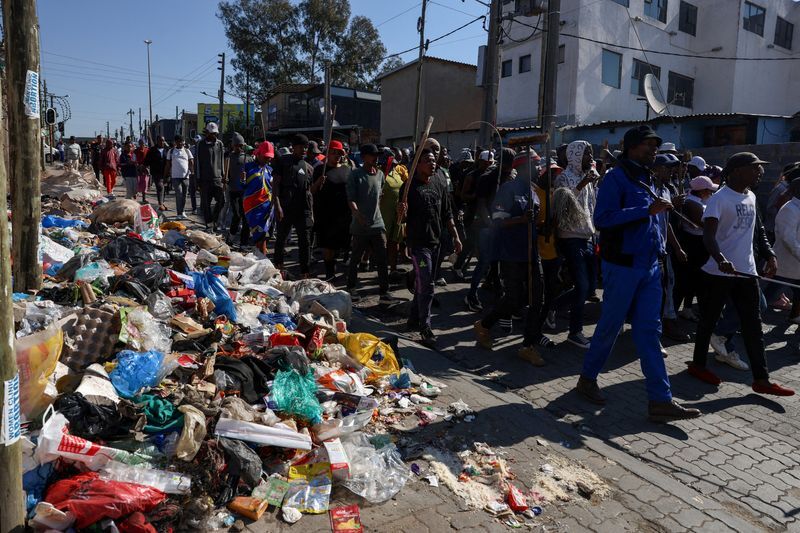
The actions have sparked significant fear among migrant communities. According to cultural historian and writer Fezokuhle Mthonti, mobs and protesters have so terrified African migrants that thousands are sleeping on pavements in fear of being attacked in their homes, hoping for repatriation to their home countries. The campaign’s battle cry is “Abahambe!”, which translates to “They must go!”.
Total Mhlanga Apprehended Despite Zimbabwean Exemption Permit Status
The dragnet has not exclusively targeted undocumented individuals, leading to confusion and potential rights violations. During the searches, a Zimbabwean national named Total Mhlanga was apprehended by protesters despite his legal status. “I am a ZEP holder,” Mhlanga stated, referring to the Zimbabwean Exemption Permit, which allows tens of thousands of nationals to live and work in South Africa. The incident highlights the vulnerability of even those with documentation in an environment where protest groups are performing their own immigration enforcement.
Bellville Informal Traders Demand Municipal Enforcement
Beyond the residential searches, the campaign has targeted the informal economy. In Bellville, Cape Town, protesters—primarily South African informal traders—marched to the Department of Home Affairs and the City of Cape Town’s municipal offices on Wednesday. The protesters claim that authorities have failed to deal with illegal immigration, which they believe is costing South Africans jobs and business opportunities. They are calling on the municipality to enforce informal trading by-laws more rigorously and to conduct regular inspections of traders’ permits. The impact was visible at the local taxi rank and bus terminus, which remained unusually quiet and largely deserted by foreign vendors following the circulation of a social media video that appeared to show a confrontation between South African and foreign national traders.
President Cyril Ramaphosa Navigates Diplomatic Strains and Repatriation
The South African government faces a complex challenge in balancing public order with its stated stance against vigilante justice. President Cyril Ramaphosa has warned against scapegoating immigrants for deep-rooted problems and has repeatedly told citizens that they do not have the right to take immigration enforcement upon themselves. However, police have stepped up arrests of undocumented migrants in response to the protests and have deployed officers during recent marches. Notably, President Ramaphosa met and shook hands with two leaders of the xenophobic protests last week while encouraging demonstrators to act peacefully.

The situation has strained diplomatic ties, triggering a massive wave of departures. Malawi’s government stated that over 38,000 of its citizens have returned from South Africa in recent weeks as part of a massive repatriation effort due to safety concerns. Additionally, over 60,000 people have returned to neighbouring Zimbabwe. Other governments, including Ghana and Nigeria, have also arranged for thousands to return.
The intensity of the movement shows little sign of immediate abatement. Jacinta Ngobese-Zuma, the former radio presenter who leads the “March and March” group, has declared that protests will take place every Thursday until the group’s demands—including tighter border controls, mass deportation, and for schools and health centres to serve South Africans first—are met. We are walking around doing door to door removing foreigners, said community leader Bongani Msomi at the march in Alexandra.
For those remaining in the country, the coming weeks present a precarious reality. Cultural historian Fezokuhle Mthonti noted that while xenophobic violence has occurred in the past, with 703 people killed in such incidents since the end of apartheid, this current iteration is distinct. Mthonti stated that this movement is not something that we’ve seen in the post-apartheid dispensation so far, noting that it is well-funded, legitimised by mainstream media coverage, and acknowledged by the government. Mthonti attributes this to a global economic crisis leading to a turn toward scapegoating politics.
Find more reporting in our World section.
Related reading
12 Killed in Missile Strike on King Khalid International Airport
Twelve people were killed and more than 300 wounded in a missile strike on Riyadh’s international airport on...
Court Releases Abhijeet Dipke and CJP Leaders in New Delhi on October 11
Following a massive security clampdown and the detention of thousands in New Delhi, a local court ordered the...
Trump says Norway has an ‘indelible stain’ for not awarding him Nobel Peace Prize
Navi Pillay, a South African jurist and former United Nations human rights chief, won the 2026 Nobel Peace...

Trump Announces Russian Diesel Deal as Zelensky Condemns Agreement
US President Donald Trump announced a deal with Russian President Vladimir Putin to import Russian diesel into the...