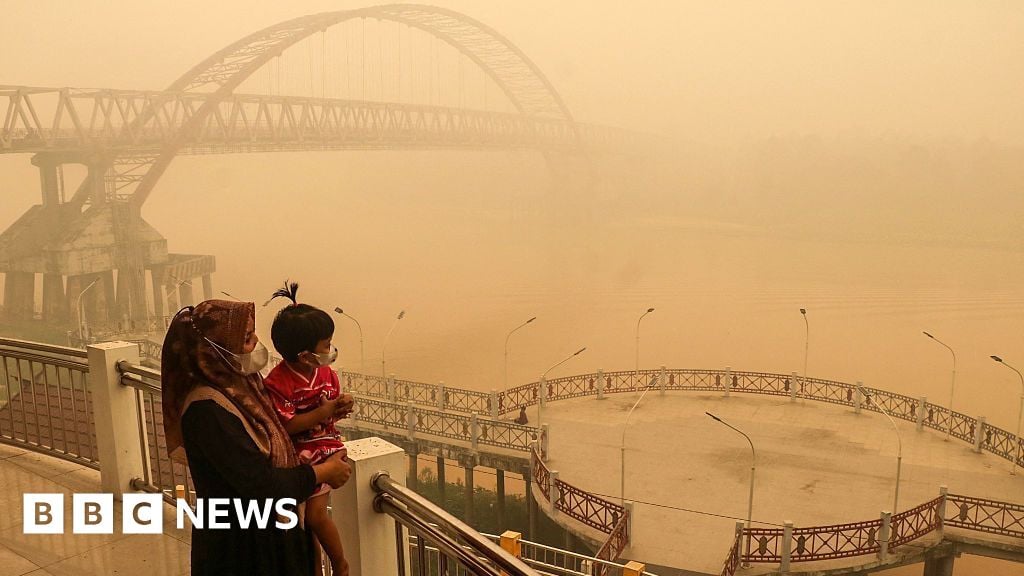
Indonesia is dropping 1.5 tons of dry ice over South Sumatra in an experimental effort to break up a thick wildfire haze choking Southeast Asia. The severe dry season blazes, exacerbated by a strong El Niño, have burned nearly 900,000 hectares, shuttered regional schools, and triggered public health warnings across multiple countries.
The trial deployment of solid carbon dioxide by aircraft over the city of Palembang marks a new tactical shift for Indonesian authorities after trying cloud seeding, water bombing, and army deployment. Rather than triggering rain like silver iodide cloud seeding, the dry ice aims to break down haze in the lower atmosphere so that pollutants can rise upward.
#Indonesia: "Aircraft will disperse pellets of dry ice above South Sumatra province in an experimental approach that authorities hope will reduce the hazardous smoke that has blanketed the region for weeks"(Hope it works)https://t.co/hXbhNMz1c5
Coordinating Minister for Political and Security Affairs Dudung Abdurachma said the operation followed direct instructions from President Prabowo Subianto to help tackle the haze in South Sumatra. If the trial succeeds, the method could expand to other critical regions such as Central Kalimantan and its surroundings.
Air Quality Plummets Across Southeast Asia as Fires Burn Underground
The fires have recorded more than one million hotspots across Indonesia this year, according to independent monitoring platform Nusantara Atlas which has tracked the burning of 900,000 hectares. Many blazes smolder underground in peatlands that were previously drained for agriculture, making them exceptionally stubborn to extinguish and capable of burning for weeks.
[Indonesia wildfire fuelled by El Niño razes almost 300 homes]“Hundreds of people displaced in Bangka Belitung with conditions described as worst in a decade with wildlife also badly hit“https://t.co/LBwzyC2tHg
Acute respiratory infection cases in the city climbed from 13,480 in July to 17,434 in September, local officials reported.
The pollution has drifted far beyond Indonesian borders, blanketing Singapore, Malaysia, and the Philippines in dense smog. IQAir monitoring placed Kuala Lumpur and Singapore among the most polluted major global cities, while East Timor ordered a nationwide three-day school closure to protect students.
The government must also think about common people like us. Please take action to find a solution so that this haze problem can be resolved immediately.
BBC Indonesian
Cross-Border Tensions Rise Over Land Clearing and Corporate Accountability
Public frustration has targeted both local authorities and agricultural companies accused of using illegal slash-and-burn methods to clear land for commercial crops like palm oil. Indonesian police have named more than 200 individuals and nine companies as suspects in connection with the fires, while the Environment Ministry has suspended operating licences for 26 companies and seized assets from 57 firms.
A Greenpeace report released this month identified businesses based in Singapore and Malaysia that hold stakes in Indonesian land plots where fires are active.
When there is no smoke, we send oxygen.
Experts Question the Long-Term Effectiveness of Atmospheric Dry Ice Trials
Atmospheric experts remain skeptical that dry ice dispersal offers more than temporary relief. Rick McRae, an adjunct professor with the University of New South Wales bushfire research group, noted that weather patterns continually push smoke across the region while fires continue to burn underneath peatlands.
It’s got some potential for local relief that might work for a while,
McRae told the Guardian, adding There’s gonna be more blowing all the time. So it’s a constant … It’s not going to be simple and it’s not going to be a permanent fix in any way.
He warned that climate change could transform transboundary haze into a global problem.
Meanwhile, residents continue working outdoors despite stinging eyes and severe breathing difficulties. In Palangkaraya, motorcycle taxi driver Heri described his daily struggle amid orange skies after four months of continuous smoke exposure.
I still have to work and have been struggling in the haze for four months now, if I don’t work, I won’t earn any money. Everyone is forced to fight against this dense smoke.
The situation remains dire for residents like Heri, who are forced to endure the hazardous conditions with little respite, as they try to make a living amidst the choking haze.

>
Related reading

Musk Suggests US Government Behind Ukraine Starlink Speed Limits
Elon Musk suggested the US government may have driven unexpected speed restrictions on SpaceX's Starlink network in Ukraine,...

Canada Cuts Poverty Funds Amid Military Spending Hike
Federal budget cuts to official development assistance have drawn sharp criticism as Canada observes the International Day for...

Zelenskyy Criticizes Partners for Lack of Missile Strike Warnings
Five Russian ballistic missiles struck Kyiv without prior intelligence alerts from international partners on Tuesday evening, prompting criticism...

Benjamin Netanyahu Denies Meeting Egyptian Intelligence Chief Despite Records
Israeli Prime Minister Benjamin Netanyahu denied meeting with former Egyptian intelligence chief Abbas Kamel during an interview on...