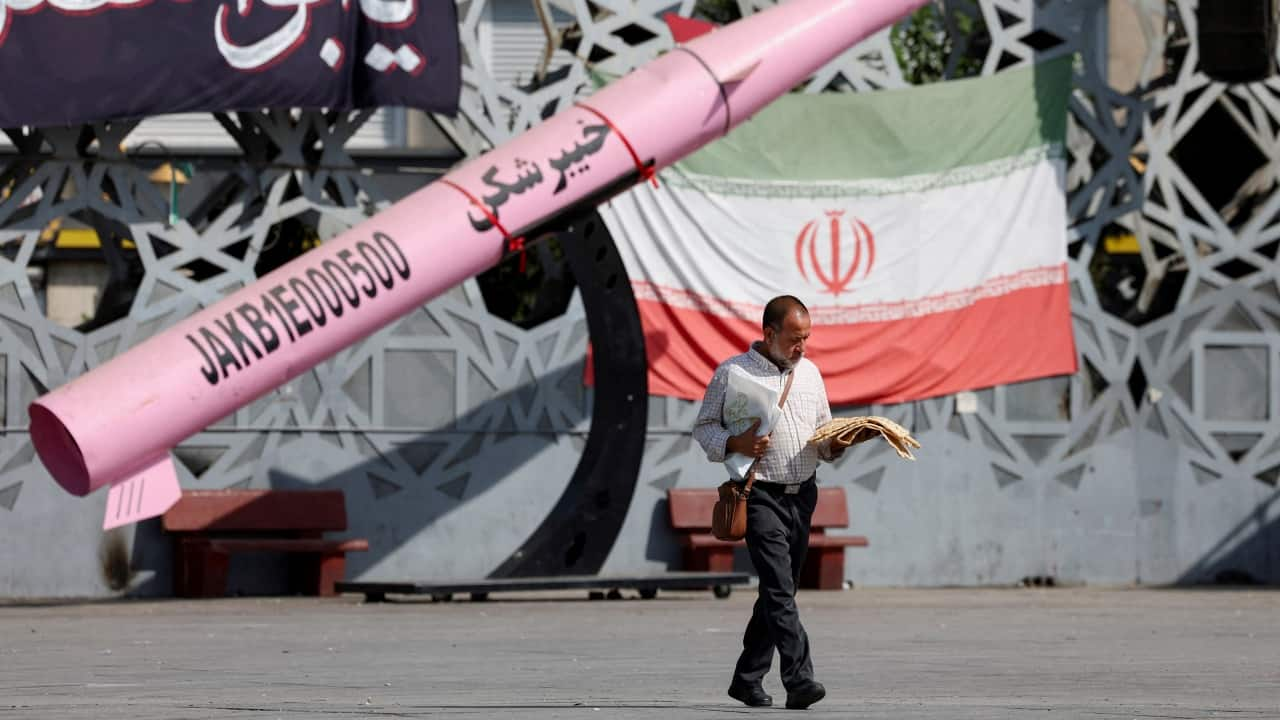
Iran’s military announced it shot down a U.S. Iran claimed its air defense systems shot down a US LUCAS drone near Bandar Abbas and the Strait of Hormuz, as President Donald Trump weighed renewed military action and an Iranian source denied a reported naval blockade deal.
The armed forces of Iran downed an American Low-cost Uncrewed Combat Attack System over the southern port city of Bandar Abbas. The state-backed Tasnim news agency reported that the one-way attack drone was intercepted by air defense units operating within the country’s integrated air defense network. U.S. Central Command had strike plans ready for presidential approval after the November 3 midterm elections, according to outside reports.
Trump Weighs New Strikes While Foreign Minister Araghchi Warns Policies Remain Unchanged
The weekend escalation followed public remarks from Washington regarding possible military operations. U.S. President Donald Trump told reporters he was considering fresh strikes while also leaving room for diplomacy. Trump remarked that the U.S. may do another little Epic Fury,
invoking the prior military campaign launched on February 28. Sources noted that the Pentagon’s role is to develop and present military options to the commander-in-chief without speculating on hypothetical missions. Multiple options were presented to Defense Secretary Pete Hegseth, while the USS George Washington carrier strike group prepared its aircraft for action and the USS Theodore Roosevelt headed toward the region, which hosts more than 50,000 service members and about 20 warships.
Do you really think I would tell you that? Maybe tomorrow… There’s a possibility I will. There’s also a possibility we’ll have a nice, big, beautiful agreement.
President Donald Trump, via The Times of India
Iranian Foreign Minister Abbas Araghchi dismissed the threat of renewed conflict during a televised address in Tehran, asserting that state strategy would not shift under pressure.
Recently, there has been talk of a new war, but I am already thinking about the post-war period. Whether there is war or not, our policies remain the same.
Abbas Araghchi, Iranian Foreign Minister, via Moneycontrol
Tehran Denies Blockade Deal as Regional Friction Spreads Across West Asia
An informed Iranian source rejected claims broadcast by a Saudi satellite channel that Tehran had proposed reopening the Strait of Hormuz in exchange for the lifting of the U.S. naval blockade. The source dismissed those reports as pure fiction and maintained that Iran would continue to bypass naval restrictions through its own channels, warning that oil smuggling or unauthorized maritime transit would face much harsher technical systems and enforcement.
Regional tensions extended well beyond Iranian waters. Yemeni authorities reported that the Iran-aligned Houthi movement targeted the Al-Nasr camp and a naval base in Aden on October 24, alongside missile strikes on local coast guard installations.

Pentagon Strike Options and Analyst Assessments on Post-Election Escalation
Inside Washington, military planners prepared for potential orders. A source familiar with the matter told The Hill that U.S. Central Command prepared several follow-up options for defense leadership. Gregory Brew, an Iran analyst at Eurasia Group, pointed to the political calendar as a key driver for timing.
To me, it looks pretty likely that the U.S. goes back to military strikes on Iran once the midterm elections are passed.
Gregory Brew, Iran expert at Eurasia Group, via Türkiye Today
Harrison Mann, a former executive officer at the Middle East and Africa Regional Center, noted that any renewed campaign could expand beyond coastal areas to strike inland military, political, or energy infrastructure if coordinated with Israel. Meanwhile, the latest drone incident follows an earlier interception on October 20, when the Islamic Revolutionary Guard Corps reported destroying an MQ-9 drone over the Strait of Hormuz, marking friction points across critical maritime energy corridors.
=== END ARTICLE >
Keep reading
Israel to close West Bank crossings on Oct 27, 2026
Israel announced it will close all land crossings with the West Bank on October 27, 2026, coinciding with...

Aleksandar Vucic returns as Serbia votes
Around 6.45 million registered voters head to the polls in Serbia on Sunday for a snap parliamentary election.
Gas supply cut from Indonesia accounts for less than 2% of Singapore’s daily gas demand: EMA
Indonesia cut pipeline natural gas exports to Singapore by 31 billion British thermal units per day on October...
Kenya Secures China Market for Dried Chilli Exports
Kenya has secured access to China’s market for dried chillies, announced by KEPHIS, allowing producers to diversify exports.