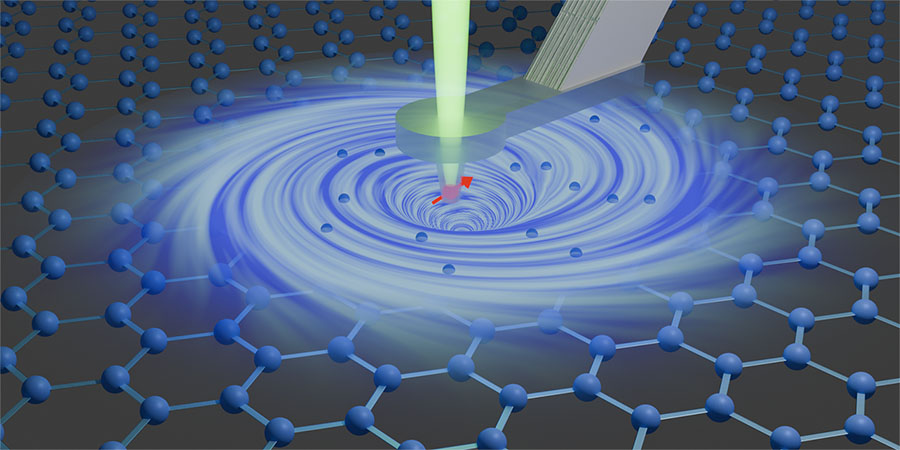
Under intermediate magnetic fields, vortices traveled more than 1,000 times more easily along surface steps just one atom high than across them. Researchers in Japan have discovered these steps can act as rails guiding quantum vortices inside an ultrathin superconductor, offering a new path toward energy-efficient superconducting electronics.
Superconductors carry electrical current without resistance when cooled below a critical temperature, making them valuable for energy-efficient electronics and medical imaging systems.
Magnetic fields can penetrate these materials. This creates tiny quantum structures known as vortices that consist of small regions surrounded by circulating electrical currents. When these vortices move, they generate resistance and dissipate energy.
Atomic Steps Functioning as Nanoscale Rails
A research team led by Takashi Uchihashi at the Research Center for Materials Nanoarchitectonics (MANA), part of Japan’s National Institute for Materials Science (NIMS), studied an ultrathin superconductor with a surface featuring regularly arranged atomic steps. To investigate how to manage this movement, a research team led by Takashi Uchihashi at the Research Center for Materials Nanoarchitectonics (MANA), part of Japan’s National Institute for Materials Science (NIMS), studied an ultrathin superconductor with a surface featuring regularly arranged atomic steps. Using scanning tunneling microscopy, the team confirmed that these parallel steps ran across the surface and directly observed vortices positioned along them. Rather than pinning the vortices, the researchers took an approach of letting them move while guiding where they go.
Electrical transport measurements revealed an extraordinary directional preference. When exposed to intermediate magnetic fields, vortices traveled more than 1,000 times more easily along the atomic steps than across them.
The steps functioned as natural guiding tracks that channeled vortex movement, much like a strong wind redirected along rows of trees on a farm to protect crops.
Our study shows that atomic-scale steps can act as effective rails that guide superconducting vortices, and that this guiding effect can be tuned simply by changing the temperature or magnetic field.
Takashi Uchihashi, Research Center for Materials Nanoarchitectonics
Pinning-Free Flow And Quantum Tunneling
The guiding behavior is not fixed by the structure alone. By adjusting the magnetic field or temperature, researchers altered how the vortices moved. When the magnetic field ranged from approximately 0.10 to 0.20 tesla, the vortices flowed freely along the steps without becoming pinned, creating what the researchers describe as one-dimensional, pinning-free vortex flow.
Instead, it was governed by quantum tunnelling, a phenomenon in which quantum objects can pass through energy barriers that would normally prevent their movement under classical physics.
Future Superconducting Devices
The findings, published in the journal Physical Review B under the title Anisotropic Transport of Josephson vortices in atomic-layer superconductors on vicinal surfaces. Qian and colleagues, demonstrate that surface features just a single atom high can exert profound control over quantum behavior. The ability to guide vortices and manage heat flow using naturally occurring atomic steps could eventually help researchers manage vortex movement in future superconducting technologies, potentially enabling more efficient devices that consume less power. While practical applications will require further development, the ability to guide vortices and manage heat flow using naturally occurring atomic steps could eventually help researchers manage vortex movement in future superconducting technologies, potentially enabling more efficient devices that consume less power.
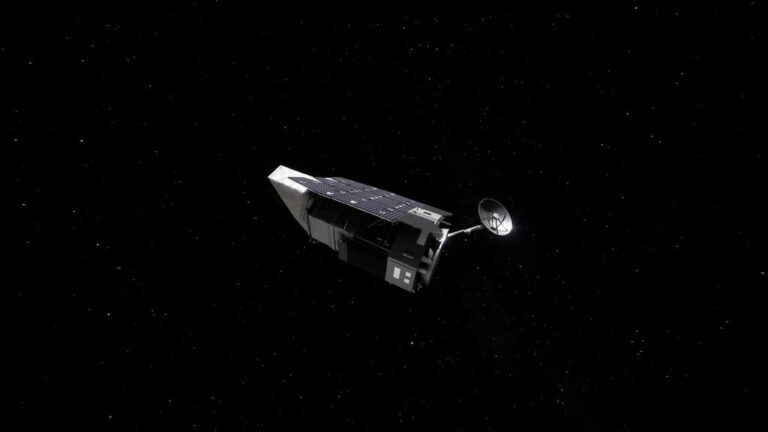
NASA Completes Optical Alignments on Nancy Grace Roman Space Telescope
Following an August 30 launch, Nancy Grace Roman Space Telescope team completed rigorous in-space optical alignments, achieving a...

University of Queensland Researchers Propose Omic Technologies to Develop Heat-Adapted Chickpeas
Researchers at the University of Queensland have proposed a staged approach using new omic technologies to accelerate the...

President Daniel Chapo Urges Global Action on Climate Justice
Mozambican President Daniel Chapo called for strengthened international climate justice measures at a Maputo conference on October 14.
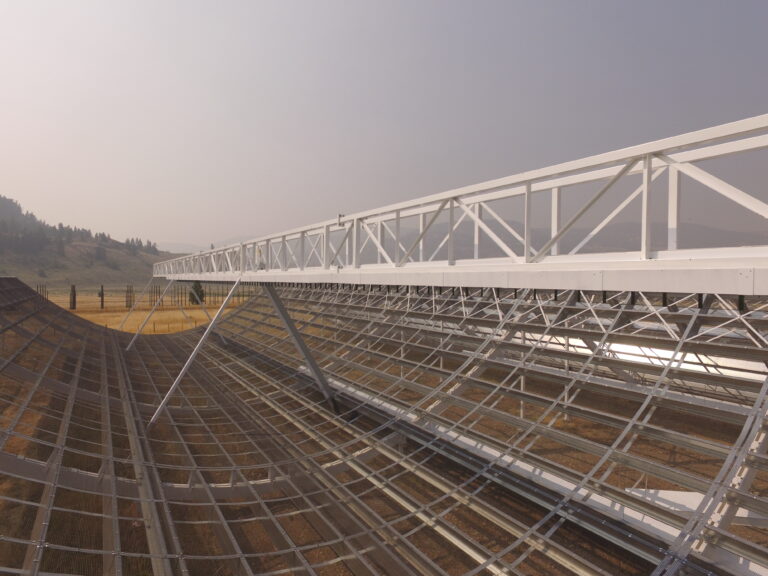
CHIME Telescope Detects Early Universe Hydrogen Signal Independently
Using only its own data, the Canadian Hydrogen Intensity Mapping Experiment (CHIME) telescope in British Columbia detected a...