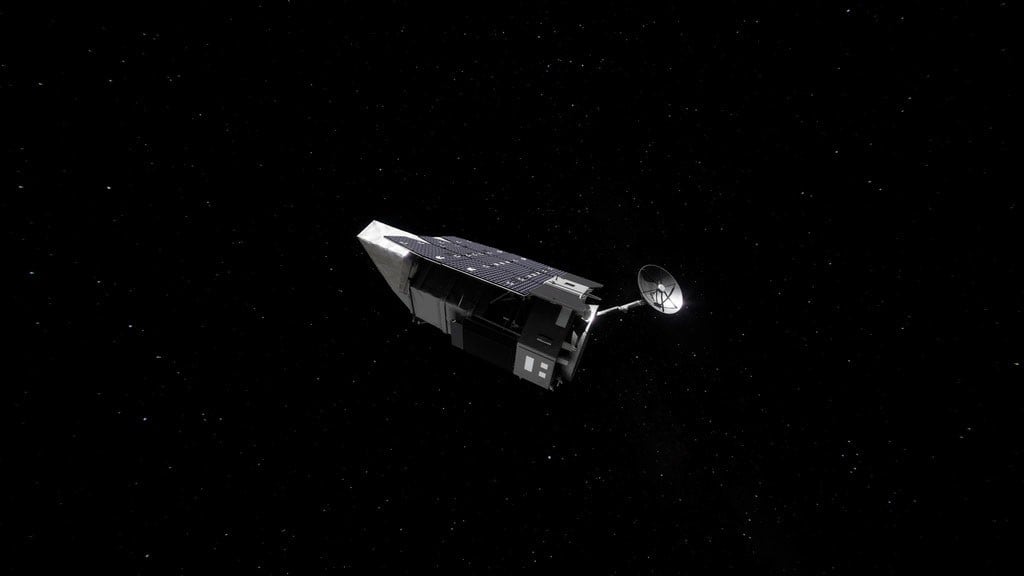
Following an August 30 launch, Nancy Grace Roman Space Telescope team completed rigorous in-space optical alignments, achieving a Wide Field Instrument image-quality error of just 90 nanometers RMS—beating the original requirement by nearly 30 percent as the observatory continues toward its second Lagrange point.
Engineers on Nancy Grace Roman Space Telescope completed a demanding series of in-space checks to prepare the observatory’s primary instrument for deep-universe surveys. Propelled into space on August 30 by a SpaceX Falcon Heavy rocket originating from Florida’s Kennedy Space Center, the observatory is currently making its way to its targeted destination roughly 930,000 miles from Earth near L2, the second Sun-Earth Lagrange point.
How Microscopic Mirror Adjustments Sharpened Roman’s Vision
Getting a space observatory ready for routine science demands an elaborate sequence of tests. The commissioning team activated the 300-megapixel Wide Field Instrument’s 18 detectors, verified their electronics, and exercised the element wheel.

Optical performance required exquisite physical adjustments. Matthew Bolcar, Roman’s optical systems lead at NASA Goddard, noted that excellent ground modeling left only minor corrections, despite the inevitable shifts caused by launch and the absence of gravity in space.
To fix minuscule misalignments, Alden Jurling, a senior optical engineer at NASA Goddard, described an exceptionally delicate physical adjustment.
Roman’s marathon of testing continues while it zooms toward L2! The team aligned and focused the telescope’s optics and gave Roman’s primary instrument a meticulous “eye” exam. The results: Roman’s cosmic surveys will be even sharper than expected! 🤩https://t.co/Yc6vYKaQwp pic.twitter.com/QCQ0T92hSB
We moved the secondary mirror by about one-sixteenth of the diameter of a human hair. This adjustment nudged the height of the secondary mirror above the primary. If we scale that height up to the height of the empire state building, the change in height is a little bit less than you would get by stacking a single U.S. penny on top of the tip of the tower.
Alden Jurling, senior optical engineer at NASA Goddard
That microscopic tweak yielded major scientific dividends. While the team initially found the separate Coronagraph Instrument slightly out of focus, it proved simple to calibrate. More impressively, the Wide Field Instrument surpassed its original performance baseline by a wide margin.
Why the Wide Field Instrument Exceeded Pre-Launch Requirements
NASA originally set an image-quality target of roughly 90 nanometers root mean square for the Wide Field Instrument. After finishing mirror corrections, engineers measured an error of only 63 nanometers RMS, marking a nearly 30 percent improvement over expectations.
Maxime Rizzo, a Wide Field Instrument systems engineer at NASA Goddard, likened the process to standard acoustic preparation. Calibrating an instrument is like tuning a piano or guitar before a concert,
Rizzo said. You adjust everything until it’s just how you want it and then leave the settings alone so it performs consistently while you use it.
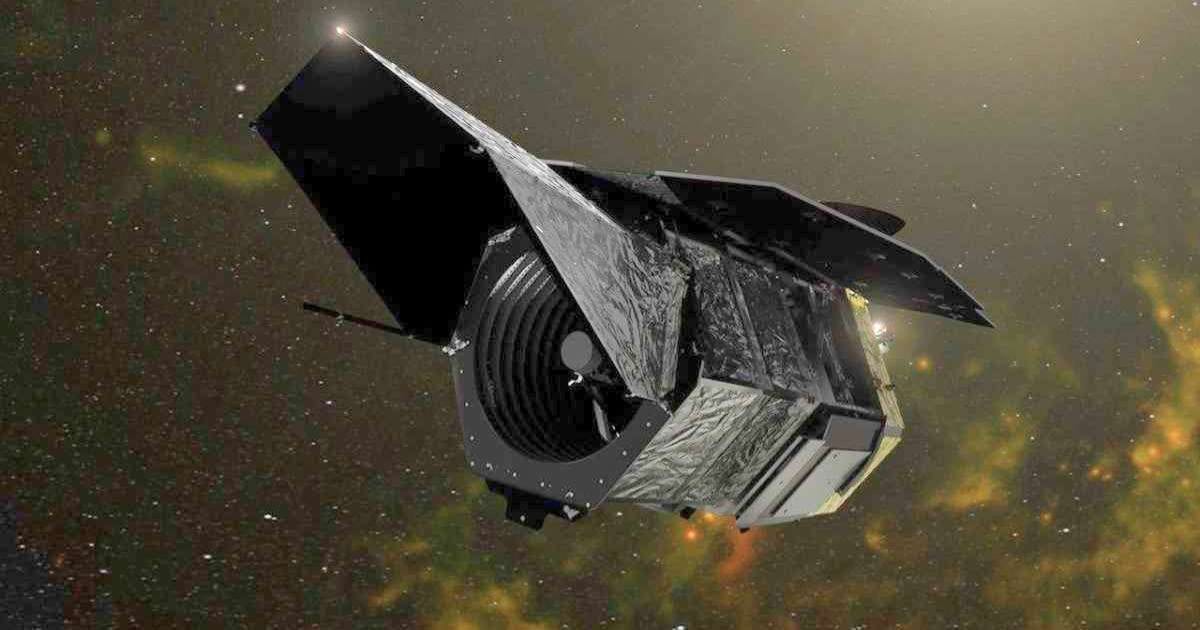
Dave Hickey, a Wide Field Instrument systems engineer at NASA Goddard, emphasized how vital this precision is for the mission’s core scientific objectives.
Many of the mission’s primary goals, like studying dark matter and dark energy, wouldn’t be possible without it, so it’s both exciting and a huge relief to see that it’s working well!
Dave Hickey, Wide Field Instrument systems engineer at NASA Goddard
How Global Researchers Plan to Harness the Daily Data Deluge
Once operational, Roman will dump 1.4 terabytes of data onto the internet every day, and within 48 hours that data is available to the entire world. Jessica Lu, a University of California, Berkeley associate professor of astronomy, noted that this rapid public release requires a coordinated global approach.
The Nancy Grace Roman Space Telescope has been named one of TIME's Best Inventions of 2026. Roman continues its journey in space to its final orbit, completing critical milestones along the way. We expect first images by early 2027.https://t.co/oy9o44u0cU pic.twitter.com/wA0RunmsBz
The telescope takes the data, and within 48 hours it’s available to the entire world. As a result, we’re planning to do science differently as well. The Roman Science Collaboration is a group of 900 astronomers that are interested in working together collectively to get out the highest-impact discoveries from the survey data.
Jessica Lu, UC Berkeley associate professor of astronomy
Concurrently, Haojing Yan, a professor of physics and astronomy at the University of Missouri, directs a global consortium of 130 scientists hailing from 62 distinct research centers—such as Harvard University, Princeton University, NASA, and the California Institute of Technology—working collaboratively on the Roman eXtreme Deep Field. NASA allocated 386 hours of observation time for the project, which aims to examine early galaxy formation, distant supernovae, giant black holes, and mysterious little red dots
first spotted by the James Webb Space Telescope.
Decades of Evolution Leading to the Nancy Grace Roman Mission
The observatory’s roots trace back to 1999, when Berkeley physicist Saul Perlmutter and colleagues at Lawrence Berkeley National Laboratory proposed a dedicated space telescope to study accelerating dark energy. That initial concept evolved through several iterations—including the Department of Energy’s Supernova Acceleration Probe (SNAP) and the Joint Dark Energy Mission (JDEM)—before transitioning into the Wide Field Infrared Survey Telescope (WFIRST) and ultimately taking the name of the Nancy Grace Roman Space Telescope.
Commissioning work continues as engineers finalize coronagraph camera settings and deformable mirror configurations ahead of scheduled first images expected by early 2027.
Keep reading

University of Queensland Researchers Propose Omic Technologies to Develop Heat-Adapted Chickpeas
Researchers at the University of Queensland have proposed a staged approach using new omic technologies to accelerate the...

President Daniel Chapo Urges Global Action on Climate Justice
Mozambican President Daniel Chapo called for strengthened international climate justice measures at a Maputo conference on October 14.
CHIME Telescope Detects Early Universe Hydrogen Signal Independently
Using only its own data, the Canadian Hydrogen Intensity Mapping Experiment (CHIME) telescope in British Columbia detected a...
NASA’s Perseverance Rover Breaks Opportunity’s Mars Mileage Record
NASA’s Perseverance rover has set a new off-world driving record on Mars, surpassing the mileage of its predecessor...