
Using only its own data, the Canadian Hydrogen Intensity Mapping Experiment (CHIME) telescope in British Columbia detected a faint radio glow of hydrogen from five billion years ago. Detailed in The Astrophysical Journal, this milestone provides a faster, lower-cost method to study dark energy and cosmic expansion.
Researchers confirmed the signal originated from a period when the universe was approximately five billion years old by analyzing 94 nights of data collected in 2019, while cosmologists believe the universe is now about 13.8 billion years old. For years, the CHIME radio telescope relied on cross-correlating its observations with external galaxy surveys to map the distribution of hydrogen across the universe. That dependency ended with the recent discovery that the instrument can isolate the faint cosmic tracer
of neutral hydrogen independently.
CHIME Maps Hydrogen Without External Data
Because hydrogen is the raw material from which stars form,
its distribution acts as a structural map of the cosmos. The ability to map hydrogen without relying on other telescopes changes how researchers approach cosmology.
Previously, researchers were limited to probing regions dense enough to host star formation, which often required expensive, high-detail galaxy catalogs. CHIME’s new 21cm intensity mapping
technique allows for a comprehensive view of matter distribution across the observable universe. Researchers had to extract the signal from a background of human-made interference, radio noise from the universe, and instrument-specific effects to overcome technical hurdles.
The team spent more than a year validating the data before confirming the signal was authentic. We worked very hard to convince ourselves that this wasn’t a false alarm,
said Dr. Arnab Chakraborty, a postdoctoral fellow at the University of Toronto who first proposed the finding, noting that the signal survived the team’s tests and was consistent with hydrogen in the distant universe.
Scientists Track Cosmic Expansion Using CHIME
Scientists hope to calculate how the universe expanded over time and determine whether dark energy remains constant or changes by mapping hydrogen across different cosmic eras. Astronomers use baryon acoustic oscillations as a cosmic ruler
approach to test competing theories about the nature of space itself.
By measuring how that hydrogen is distributed and clustered, CHIME gives us a new way to test our understanding of how galaxies form and evolve,
said Dr. Shabbir Shaikh, a postdoctoral fellow at Arizona State University. Joseph noted that the signal’s strength and shape act like a fingerprint,
revealing historical hydrogen density and clustering.

Researchers Plan Deeper Observations Into Cosmic History
The team is working to push their analysis further back into cosmic history with nearly seven years of observational data now available. The goal is to study an era when the universe was only three billion years old, potentially uncovering new details about the early growth of large-scale structures.
This independent data collection allows CHIME to test competing theories without relying on the results of others. Operating across Canada and beyond, this collaborative scientific initiative brings together experts from the University of British Columbia, the Dominion Radio Astrophysical Observatory (NRC), McGill University, the University of Toronto, and Arizona State University alongside other North American partners. Financial backing for the endeavor comes from the Natural Sciences and Engineering Research Council, the National Research Council of Canada, the Canada Foundation for Innovation, and the provincial governments of British Columbia, Quebec, and Ontario, with additional backing provided by the Digital Research Alliance of Canada. Can independent data collection resolve existing disagreements within the scientific community regarding the nature of dark energy?
A press release by Ministry of Science & Technology reads, "In an international collaboration that includes researchers from India, the Canadian Hydrogen Intensity Mapping Experiment telescope (CHIME telescope) has made its first standalone detection of the glow of hydrogen from… pic.twitter.com/UfxSPLBPf2
More on University of Toronto
Scientists have detected a faint radio signal from hydrogen in the distant universe — and it could help answer one of physics’ biggest mysteries. 🌌📡The Canadian CHIME radio telescope has successfully measured this signal using its own observations, without relying on other…
A signal from 9 billion years ago could help us understand why the universe is expanding the way it does. 🌌📡And scientists detected it using a radio telescope in Canada.The instrument is called CHIME — the Canadian Hydrogen Intensity Mapping Experiment.Its target? The…
Keep reading
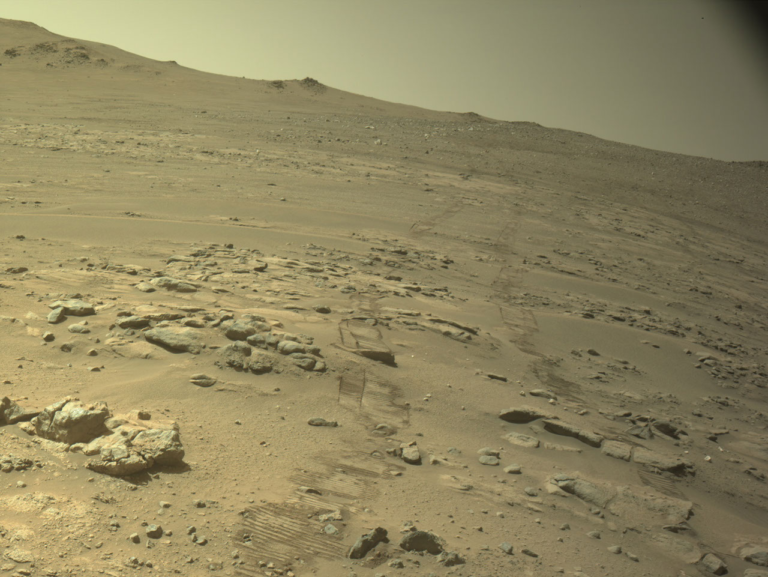
NASA’s Perseverance Rover Breaks Opportunity’s Mars Mileage Record
NASA’s Perseverance rover has set a new off-world driving record on Mars, surpassing the mileage of its predecessor...
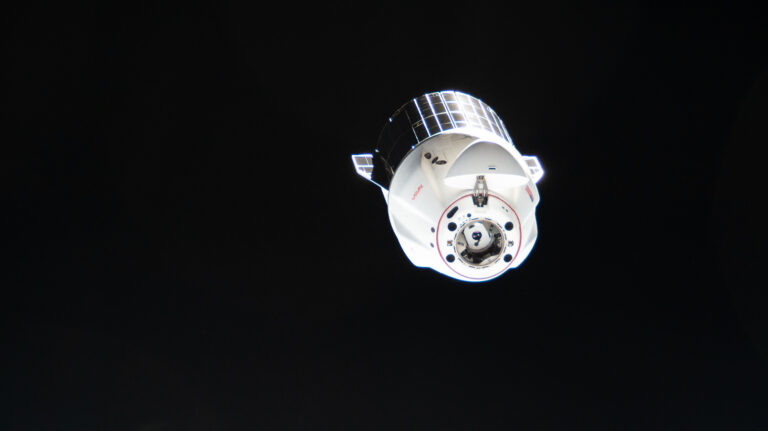
NASA and SpaceX to Launch Cargo and Solar Arrays to Space Station
NASA and SpaceX are targeting Tuesday, October 13, for the launch of the 35th commercial resupply mission to...
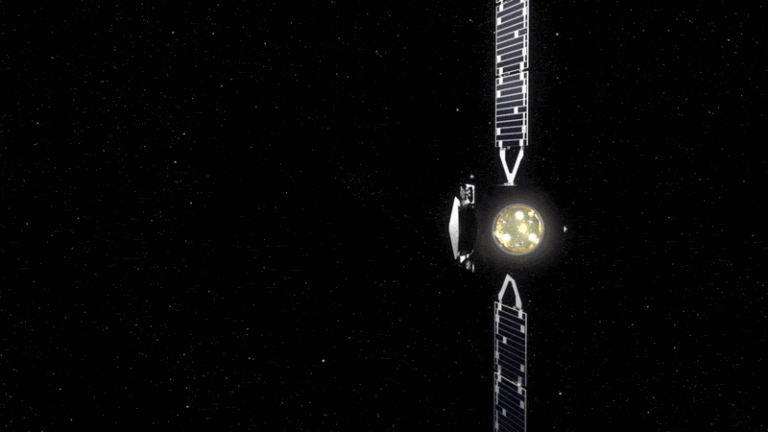
ESA’s Hera Spacecraft Spots Target Asteroid Didymos
Two years after launch, the European Space Agency’s Hera spacecraft has successfully spotted its target binary asteroid system...
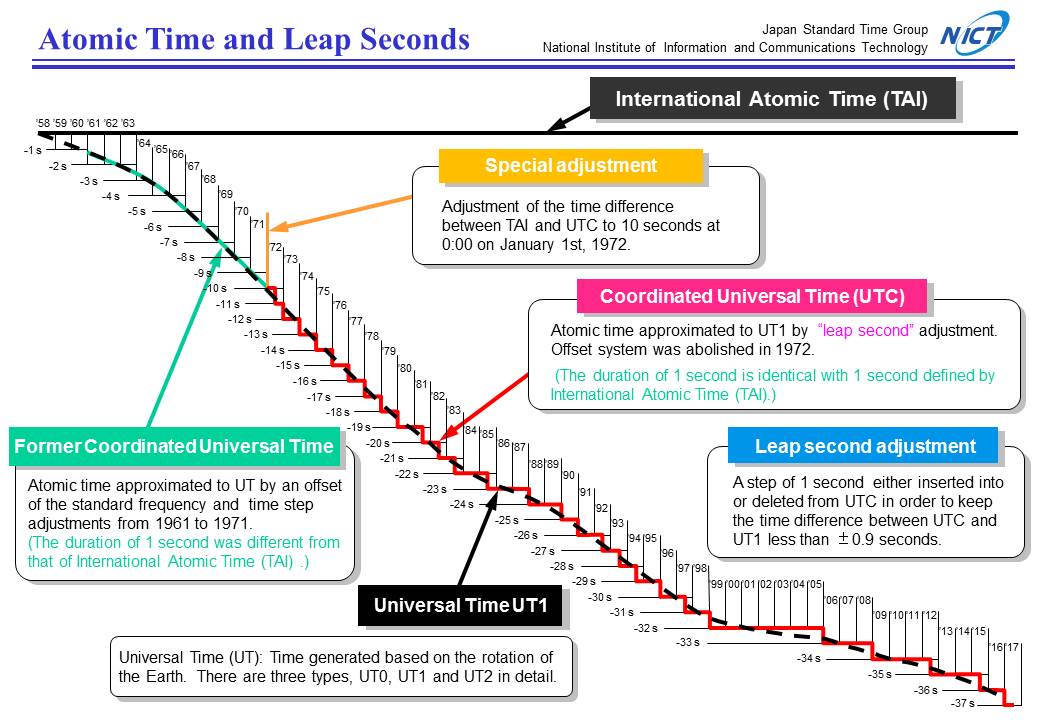
Delegates to Vote on Abolishing Leap Second to Protect Systems
Delegates meeting near Versailles this week will vote on abolishing the leap second, driven by Earth's recent speed-up.