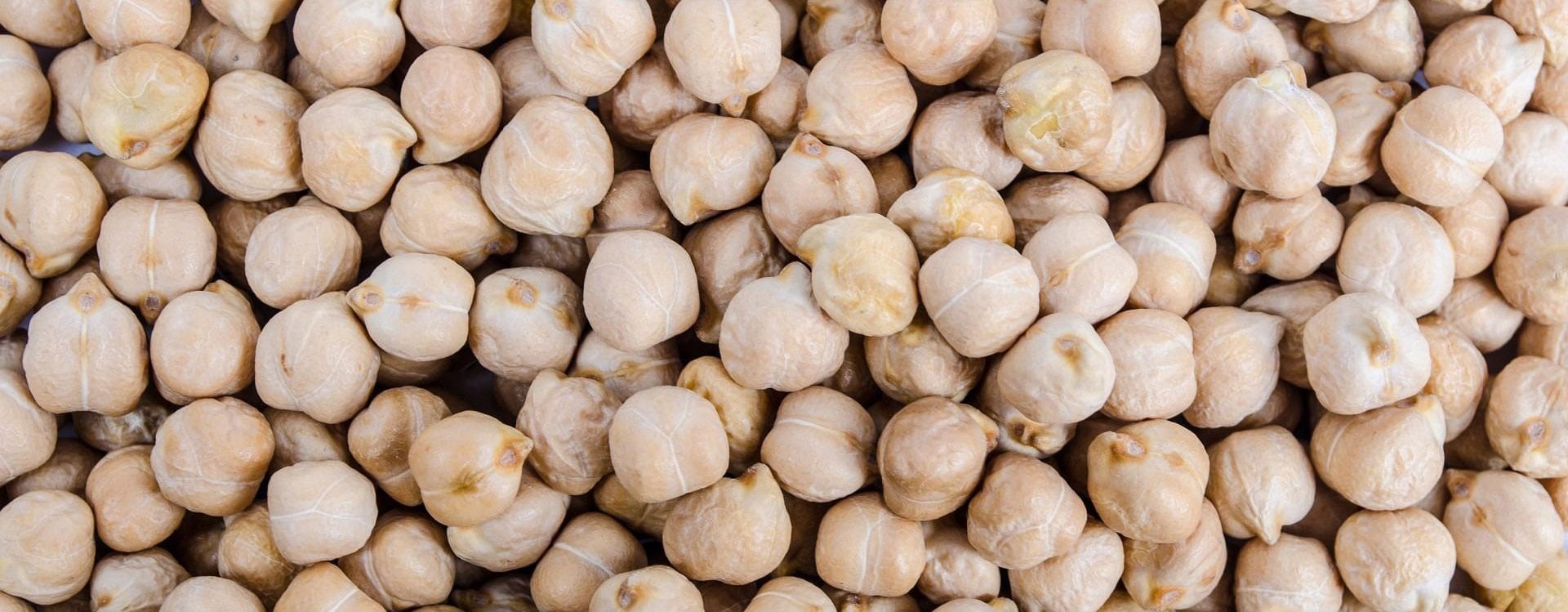
Researchers at the University of Queensland have proposed a staged approach using new omic technologies to accelerate the development of heat-adapted chickpeas, targeting severe yield losses caused by high temperatures in key growing regions across Australia.
Conventional breeding methods have long struggled to improve stress tolerance in chickpeas due to a restrictive genetic makeup within elite gene pools. To bypass this barrier, scientists including PhD Candidate Callum Jamie, Dr Millicent Smith and Dr Shanice Van Haeften at UQ’s Plant Futures Facility are turning to a suite of high-resolution omic technologies that map biological systems in fine detail.
Genomics, Phenomics, and the Omic Toolkit in Chickpea Research
The suite of technologies identified by researchers includes genomics, epigenomics, transcriptomics, proteomics, metabolomics, phenomics, and enviromics. Each method targets a distinct layer of biological activity to build a comprehensive picture of how plants respond to environmental pressure.
Epigenomics tracks gene activity controls, while transcriptomics measures gene expression and proteomics details protein production. Metabolomics evaluates biochemical processes, phenomics observes physical traits, and enviromics accounts for external environmental variables.
According to PhD candidate Callum Jamie at the Queensland Alliance for Agriculture and Food Innovation, previous scientific literature usually restricted investigations to just one or two omic datasets, a limited number of plant genotypes, and single tissues. That narrow focus made it difficult to interpret what the findings meant for overall trait architecture, and constrained breeders’ ability to apply the data to larger populations.

The narrow genetic diversity in the elite chickpea gene pool has limited conventional breeding’s effectiveness for stress tolerance.
Callum Jamie, PhD candidate via Queensland Alliance for Agriculture and Food Innovation
Beyond data integration hurdles, researchers faced steep obstacles regarding financial costs, technological scalability, and the complexity of combining vastly different types of biological readouts into a single actionable format.
Staged Implementation Plan to Lower Costs and Overcome Technical Hurdles
To address these technical and financial roadblocks, the research team outlined a practical pathway that starts simple before layering on advanced data categories. The proposed model prioritizes genomic prediction and standard phenotyping initially, progressively introducing deeper omic layers as laboratory costs drop and technological unknowns are cleared up.
These technologies are novel and we still don’t know which information provides added value and how best to integrate all of this data to achieve an outcome.
Callum Jamie, PhD candidate via Queensland Alliance for Agriculture and Food Innovation
The study was published by Food and Energy Security, outlining the framework for future crop improvement pipelines.
Protecting Late Sown Crops Across Queensland and New South Wales
High temperatures present severe agricultural risks during vulnerable stages of crop development, directly threatening overall harvest volume. Project leader Dr Millicent Smith noted that heat stress triggers widespread flower and pod shedding, diminishes pollen viability, and disrupts normal grain filling.

These agricultural pressures hit specific geographic sectors particularly hard during particular growing windows.
Late sown chickpea is particularly in the firing line across most of Australia’s crop in southern Queensland and northern New South Wales.
Dr Millicent Smith, project leader via Queensland Alliance for Agriculture and Food Innovation
Developing resilient crop variants is treated by researchers as an urgent necessity to safeguard domestic agricultural standing. Project leaders emphasize that new varieties with improved genetics are essential to keep Australian producers competitive against mounting climate pressures.
We want to ensure that Australian growers maintain their competitive edge.
Dr Millicent Smith, project leader via Queensland Alliance for Agriculture and Food Innovation
The broader research initiative is supported by the Grains Research and Development Corporation alongside the International Research Training Group Accelerating Crop Genetic Gain. Work on the project is centered at the Plant Futures Facility under the umbrella of the University of Queensland research institute established with the support of the Queensland Department of Primary Industries.
>
Keep reading

President Daniel Chapo Urges Global Action on Climate Justice
Mozambican President Daniel Chapo called for strengthened international climate justice measures at a Maputo conference on October 14.
CHIME Telescope Detects Early Universe Hydrogen Signal Independently
Using only its own data, the Canadian Hydrogen Intensity Mapping Experiment (CHIME) telescope in British Columbia detected a...

NASA’s Perseverance Rover Breaks Opportunity’s Mars Mileage Record
NASA’s Perseverance rover has set a new off-world driving record on Mars, surpassing the mileage of its predecessor...
NASA and SpaceX to Launch Cargo and Solar Arrays to Space Station
NASA and SpaceX are targeting Tuesday, October 13, for the launch of the 35th commercial resupply mission to...