Tanya Fowles said that when the reporting ban was lifted in the Newry case, the accused told his lawyer he was going to leave the courthouse and run out in front of a bus, describing the situation by saying: “That’s what is being done to us: ‘You print my name, I’ll kill myself.’”
A veteran court reporter in Northern Ireland is taking formal action to overturn lifetime anonymity orders shielding three convicted criminals from public exposure, according to reporting by The Irish Times and The Journal.
Tanya Fowles has written to the Lady Chief Justice to rescind the reporting bans, arguing that lifetime anonymity is being granted far too often to convicts seeking to dodge public shame. Two of the targeted individuals are convicted sex offenders, while all three secured their reporting restrictions by threatening self-harm or suicide should their identities reach the media.
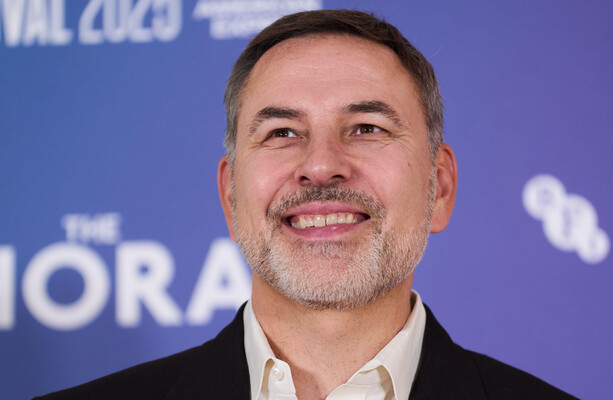
The legal push follows a high-profile High Court ruling in London last week. Comedian and children’s book author David Walliams lost a bid for a permanent injunction to block The Guardian and ITV from publishing allegations of sexual misconduct.
Lawyers for Walliams argued that publication would likely lead him to take his own life, basing their case on Articles 2 and 3 of the European Convention on Human Rights concerning the right to life and the prohibition of torture.
“to guarantee that suicide will not occur or to eliminate every residual risk” was not an obligation the state had, Mr Justice Nicklin ruled, striking down the injunction in favor of freedom of expression under Article 10. For Fowles, who has reported on courts for over 30 years, that precedent upended previous legal assumptions.

Shifting Standards in Northern Ireland Courts
Lifetime anonymity orders were once exceptionally rare. Until 2023, just seven such orders had been imposed across the UK, typically reserved for high-profile convicts given new identities upon release, such as Robert Thompson and Jon Venables, the boys who murdered two-year-old James Bulger in Merseyside in 1993.
That situation has changed dramatically. Applications for reporting restrictions used to appear a couple of times a year, but Fowles said that the rate has climbed to roughly one a week, with self-harm threats topping the list. “Judges were clearly erring on the side of caution”, Fowles said, in her view.
“I’m not saying there aren’t mental health issues, but they’re not suicidal. It’s a situational reaction,” Fowles told The Journal, describing the threats as tantamount to “blackmail” of the courts and the press.
Fowles pointed out that in several instances where accused individuals claimed extreme self-harm risks, no prior interventions had been recorded from mental health professionals, suggesting the actual risk may be minimal. Orders have emerged from Crown and Magistrates’ courts across Newry, Antrim, and Ballymena, bringing the total number of restricted cases to about ten.
Implications for Future Domestic Violence Legislation
Campaigners are pushing for identical legislation in Northern Ireland. However, Fowles warned that widespread lifetime anonymity orders could undermine such a register by legally preventing police from disclosing a sex offender’s or abuser’s past convictions to the public.
Having previously been told by court officials that challengers had no legal grounds to lift the bans—even after attempting to challenge them a year and a week post-issuance—Fowles continues her push through the judiciary. In one instance at Newry Crown Court, a ban was successfully lifted, only for the defendant to threaten to run in front of a bus outside the courthouse.
“We have put the Lady Chief Justice on notice but we have challenged all three orders previously,” Fowles told The Irish Times, adding, “I hope it will be a bit easier when the remaining cases reach sentencing.”
- Philippines Urges ASEAN to Sustain Regional Security Beyond 2026
- FAA Lifts Nationwide Ground Stop After Major US Air Travel Chaos
- David Walliams investigated by UK police over sex offense allegations (newsarchyuk.com)
- Met Police probe David Walliams, following misconduct allegations (world-today-news.com)

Philippines Urges ASEAN to Sustain Regional Security Beyond 2026
Regional security depends on moving beyond mere agreements to achieve tangible results, according to Philippine officials concluding their...

FAA Lifts Nationwide Ground Stop After Major US Air Travel Chaos
The Federal Aviation Administration lifted a nationwide ground stop late Friday after a massive communications failure paralyzed US...

Sweden and Ivory Coast Sign Article 6 Bilateral Agreement at Cop 31
Sweden and Ivory Coast signed a bilateral agreement under Article 6.2 of the Paris climate agreement on Friday,...

FAA Imposes Nationwide Ground Stop Due to Air Traffic Control Communication Failure
Thousands of US flights remain grounded after a massive communications failure paralyzed air traffic control centers across the...