
The Student List, a decentralized movement born from public outrage over a fatal infrastructure disaster, has secured a decisive victory in Serbia’s parliamentary elections. Capturing 141 of the 250 seats with a 53% share of the vote, the movement has effectively ended the 14-year tenure of Aleksandar Vučić and his Serbian Progressive Party (SNS), according to reporting by The Irish Times. The result, fueled by a record-breaking 70% voter turnout, marks a seismic shift in the nation’s political trajectory as the movement now prepares to dismantle the institutional structures established under the outgoing populist administration.
From Protest to Parliament
The movement’s momentum traces back to the 2024 collapse of a railway station canopy in Novi Sad, which killed 16 people. As reported by The Journal, the tragedy served as a flashpoint for widespread accusations of state-level corruption, transforming local anger into a nationwide push for systemic reform. Unlike traditional political parties, the Student List operates without a formal hierarchy or single leader. Candidates were selected by student assemblies, and while they are set to be sworn in as MPs, the movement’s organizers intend to maintain a supervisory role, acting as advisors to the new government.
“We see this as a time where everyone who was honestly and credibly working within public institutions can do their jobs,” said Iva Marković, a Student List candidate and political ecologist, as noted by The Guardian. The movement’s immediate agenda focuses on the removal of senior law enforcement officials, including the heads of the criminal police and the intelligence agency, whom they accuse of operating as a partisan security apparatus rather than a state entity.
The Challenge of Institutional Reform
The path forward remains fraught with the risk of repeating historical failures. Borko Stefanović, a veteran of the movement that ousted Slobodan Milošević in 2000, warned against the dangers of a “second democratic coalition” losing its way. “There is this almost legendary saying in Serbia that we won on the 5th of October over Milošević, but we never had the 6th of October,” Stefanović told The Guardian, emphasizing that the new government must prioritize swift legal justice and the liberation of state institutions to avoid frittering away their initial promise.
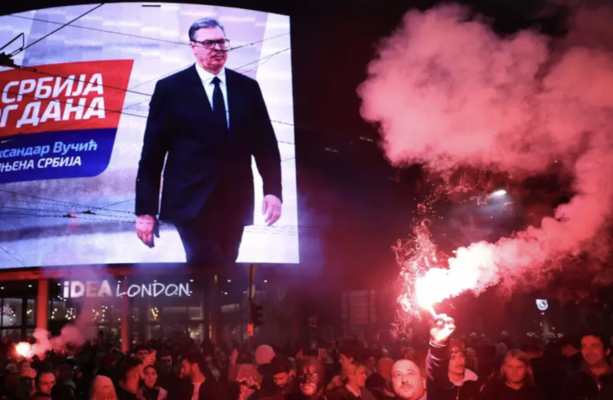
The Student List’s anti-corruption platform is rigorous, aiming to move beyond rhetoric. According to RTE.ie, the movement is pushing for the creation of an independent police unit that answers directly to prosecutors rather than the Interior Ministry. They also seek to replace political appointees in state-owned companies with merit-based hires, a move intended to curb the systemic patronage that defined the Vučić era.
Economic Shifts and Foreign Policy Realities
Beyond domestic institutional cleanup, the new leaders must navigate a complex economic and geopolitical landscape. The IMF has forecast economic growth of 3% for 2026, though the new government inherits a 4.1% inflation rate from September, as reported by RTE.ie. The Student List’s economic platform marks a departure from the previous focus on state-backed infrastructure projects, instead prioritizing domestic market security, labor rights, and a tax overhaul that aims to shift the burden away from lower-income groups.

Foreign policy remains a delicate point of contention. While the movement has expressed a desire to avoid aligning with the European Union on sanctions against Russia, it must manage its reliance on Russian gas and a critical oil refinery stake currently held by Gazprom. Furthermore, the Student List maintains that Kosovo remains an integral part of Serbia, a stance that may complicate relations with Western allies despite the European Commission’s stated readiness to support the movement’s rule-of-law reforms.
The Impact on the American Public
For American interests, the transition in Belgrade carries implications for regional stability in the Balkans. Serbia’s role as a major energy hub and its strategic position between Western markets and Russian influence means that the “political experiment” of the Student List will be closely monitored by Washington. Any shift toward a more transparent, merit-based economy in Serbia could stabilize regional supply chains, yet the movement’s stance on energy reliance and its refusal to impose sanctions on Moscow present a potential friction point for U.S. foreign policy in Europe.

As the movement prepares to take office, the mood remains one of cautious optimism. Music festivals like Exit have already confirmed their return to Novi Sad, signaling a broader societal shift. For the candidates now facing the reality of governance, the task is clear: replacing the old guard without losing the movement’s identity. As Stefanović told The Guardian, the challenge for the victors is simple, yet daunting: “Don’t blow it.”
Worth a look
Latvia has spent two decades applying a system to manage European Union funding that prioritizes
Latvia has spent two decades applying a system to manage European Union funding that prioritizes controlling the use...
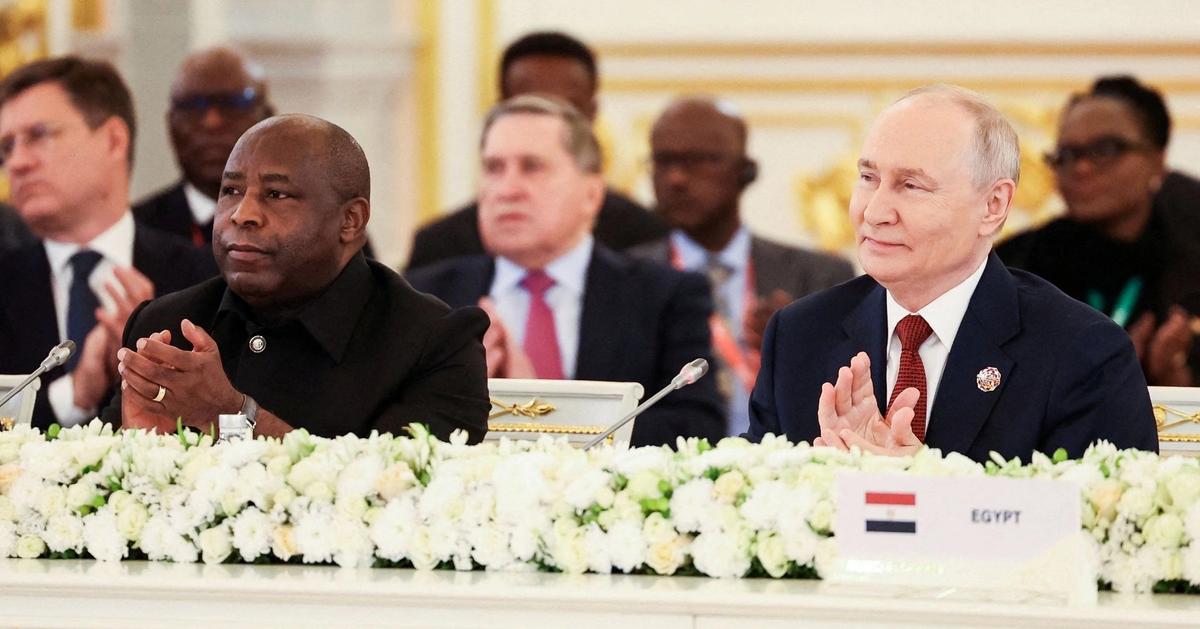
Russia pitches floating nuclear plants to African nations at summit
Moscow Pursues Floating Nuclear Plants as Russia-Africa Summit Closes Russia is positioning itself to become the world's first...

DUP’s Emma Little-Pengelly halts joint work with Michelle O’Neill
The DUP’s Tactical Withdrawal from Stormont Joint Engagements The delicate architecture of Northern Ireland’s power-sharing government faces a...

Subsea Cable Vulnerability: Geopolitical Threats and the Cost of Regulatory Bifurcation
The Deep-Sea Chokepoint Threatening Trans-Pacific Data Networks Trans-Pacific undersea cables have rapidly evolved from background utility infrastructure into...