
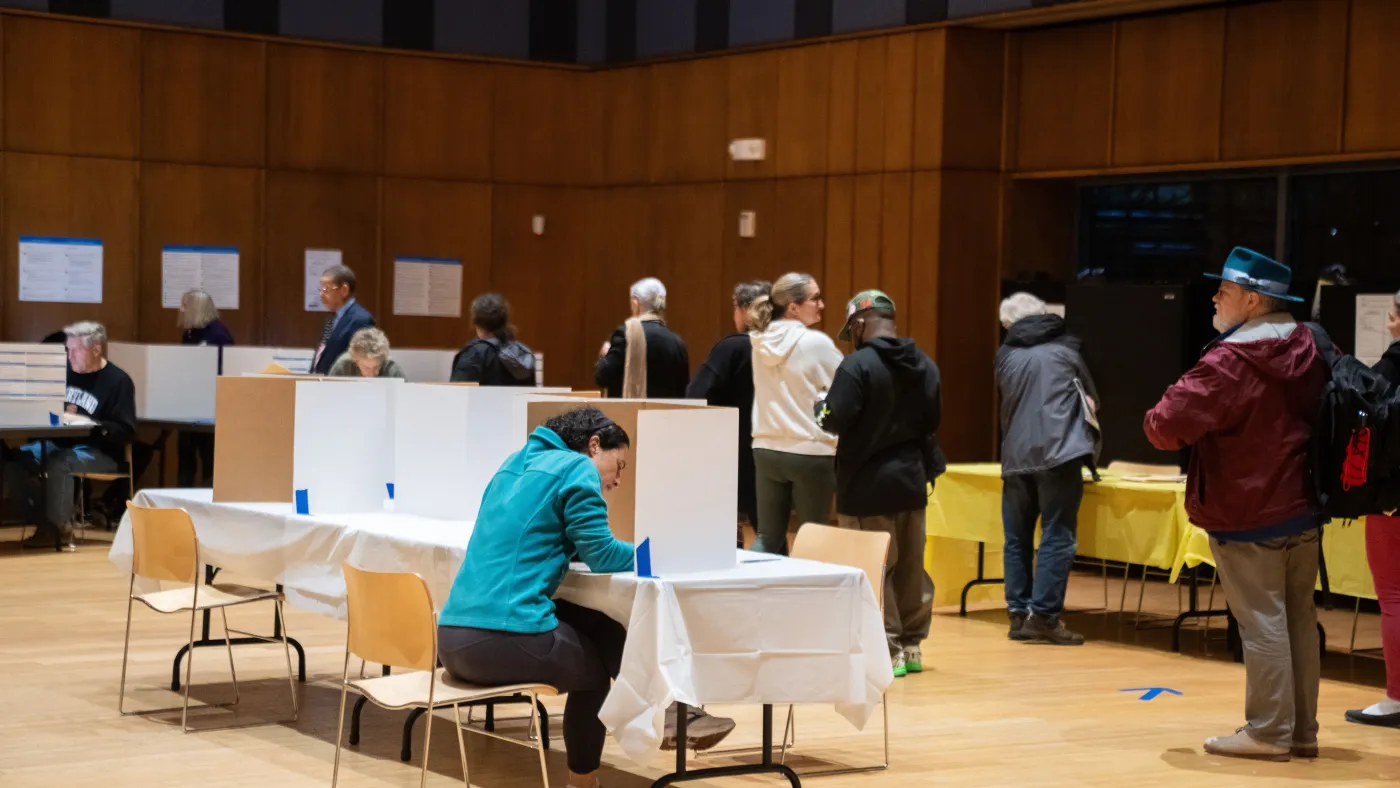
“These are really big numbers, and that’s going to influence the race,” says demographer Greg Rigamer, who has spent decades analyzing the shifting tides of Louisiana politics. As voters head toward the November 3 election, early voting data is painting a picture of high-intensity turnout in the state’s urban centers, potentially signaling a competitive challenge for Republican candidate Julia Letlow in a state that has long leaned reliably red.
For Jamie Davis, a farmer from Tensas Parish, this concentrated turnout in densely populated areas offers a theoretical path to victory. It is a strategy that requires turning the traditional map of Louisiana on its head, relying on high-margin dominance in cities rather than broad geographic support across the state’s rural parishes.
The Echoes of 2019
The current electoral landscape draws inevitable comparisons to the 2019 gubernatorial race. During that cycle, former John Bel Edwards secured his seat by effectively concentrating his support in the state’s largest parishes. While Edwards did not carry a majority of the state’s individual parishes, the sheer volume of his vote totals in urban areas was enough to offset the Republican advantage elsewhere. Rigamer notes that the current early voting maps show a similar concentration of activity, suggesting that Davis’s campaign is attempting to replicate that specific blueprint.
New poll released in Louisiana Senate race between Jamie Davis, Julia Letlow https://t.co/bpP8eKjuWZ
The stakes for this race extend far beyond the ballot box. Louisiana has not sent a Democrat to the U.S. Senate since Mary Landrieu, who held the seat until her 2014 defeat by current Bill Cassidy.
The Power of Dissatisfaction
While partisan affiliation often dictates voting habits, analysts point to an underlying economic current that may be fueling this year’s participation. Rigamer suggests that the rising cost of living is acting as a primary catalyst for voter engagement, noting that the “angry voter” is often more reliable than the standard supporter. In this view, the intensity of the early vote is less about party loyalty and more about a direct, visceral response to economic pressure.

An angry voter is far more reliable than a supporter, because a supporter may get distracted and not vote. An angry voter wants to come out and express their dissatisfaction.
This reality forces both campaigns to address the immediate financial anxieties of the electorate. While Davis attempts to capture that frustration, Letlow, the current congresswoman for Louisiana’s 5th District—a region stretching from Baton Rouge to Monroe—is leaning on her established record and high-level political backing to consolidate her base.
National Attention on the Final Stretch
The Republican response to these shifting numbers has been swift. On Wednesday night, President Donald Trump confirmed his involvement in the final days of the campaign, announcing plans for a tele-rally scheduled for the eve of the election. In a post on Truth Social, the President offered a direct endorsement of his party’s candidate:
I know Julia well, have seen her tested at the highest and most difficult levels, and she is a TOTAL WINNER!
As the campaign moves into its final hours, the focus shifts entirely to the ground game. The early voting data provides a roadmap of where the energy is, but the outcome will depend on which campaign is more successful at converting that early momentum into concrete ballots on November 3. For the residents of Louisiana, the result will determine who represents their interests in the Senate at a moment when economic policy remains the central point of contention for voters across the state.
State ballots let voters decide on abortion, taxes, transgender restrictions – NPR
Early voting scenes in Maryland feature decisions on congressional redistricting, but that choice is just one piece of...

Texas football: Star QB Kamario Taylor out for Mississippi State – Austin American-Statesman
Mississippi State Loses Star Quarterback Kamario Taylor for the Rest of the Season Mississippi State will play the...

30-year sentence in Minnesota fraud that drew Trump backlash – Al Jazeera
A 37-year-old Minneapolis restaurant operator convicted of masterminding a massive COVID-19 relief fraud has been sentenced to 30...

Dr. Ann McKee Warns of High CTE Prevalence Among Former NFL Players
Researchers at Boston University, Mass General Brigham, and the Concussion & CTE Foundation utilized statistical methods to analyze...