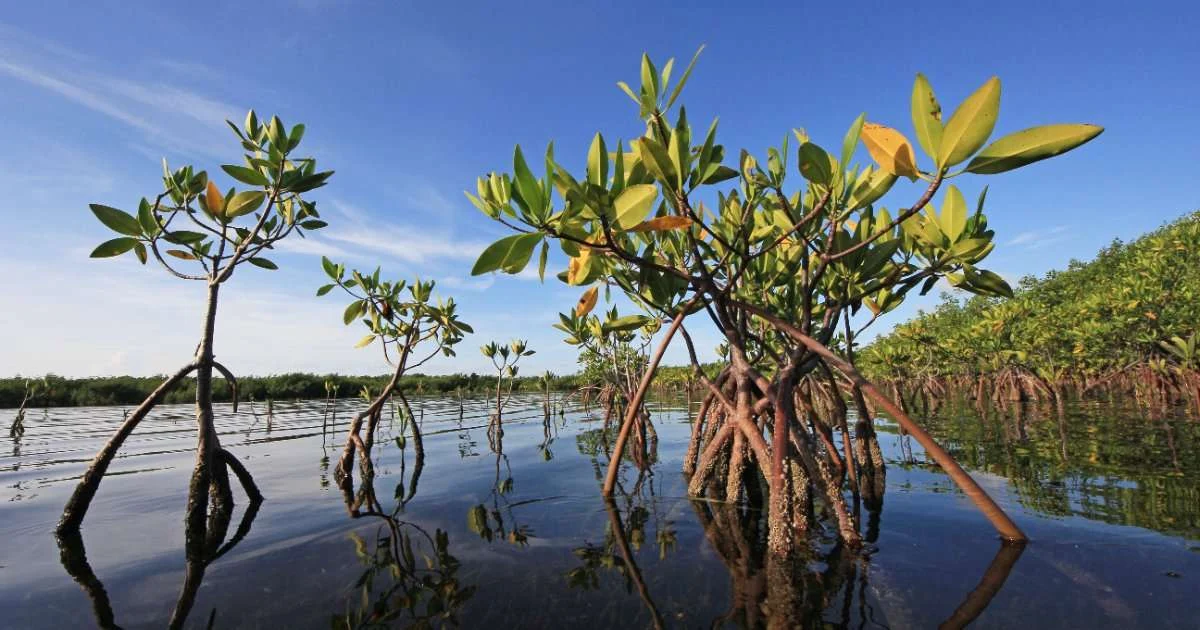
Global mangrove cover grew by 477 square kilometers between 1985 and 2025, marking a modest 0.3 percent net gain that reverses decades of widespread coastal forest loss. Updated satellite mapping and new scientific research reveal that targeted restoration, stronger wetland protections, and community-led actions are driving a fragile global turnaround.
After generations of steep decline, the world’s salt-tolerant coastal forests are beginning to expand. Newly released data from Global Mangrove Watch show that total mangrove cover increased over four decades, pointing to a dramatic shift for ecosystems that protect shorelines and store massive amounts of carbon.
Global Satellite Mapping and the 40-Year Trend
The positive shift comes to light through updated mapping tools that track changes across 108 countries. Researchers utilized high-resolution satellite imagery and machine learning models to analyze long-term shifts in canopy cover. While earlier monitoring efforts frequently began around 1996, the latest assessments span a much wider window from 1985 to 2025. According to a study published in Science, the world lost nearly 2,900 square kilometers of mangroves between the 1980s and 2010, but recorded a net gain of 2,033 square kilometers from 2010 to 2023, leaving an overall decline of 0.5 percent.

According to Global Mangrove Watch data released in July, the net expansion reaches 477 square kilometers, representing a 0.3 percent increase over four decades. A separate study published in June reached a similar conclusion regarding overall growth. Researchers report that the global rate of mangrove loss has slowed drastically over the last ten years, with natural regeneration and active planting now outpacing historical destruction in key areas. The United Nations Environment Programme 2023 report titled The Decade of Mangrove Forest Change also noted that global losses have largely stabilized while new growth occurs within and around many major rivers, estuaries, and deltas.
Regional Expansion in India and Uneven Losses in Indonesia
Recovery has not occurred evenly across the globe. India recorded the largest net expansion, adding 1,180 square kilometers of mangroves. Significant gains also appeared in Pakistan, Australia, the Philippines, and Senegal. In India, policy shifts and engineering initiatives fueled the turnaround. Ramasubramanian R., a mangrove restoration scientist and senior fellow at the M.S. Swaminathan Research Foundation explained that the government stopped felling and declared most wetlands as protected areas because these ecosystems remain vital for fisheries and storm defense.
Greenery is returning to the world’s coastlines!For decades, mangrove forests were disappearing. Now, these vital coastal ecosystems are showing signs of recovery.A study published in Science, analysing four decades of satellite data, found that global mangrove forests have… pic.twitter.com/ltw1PWGgFX
Starting in the late 1980s, Indian states such as Tamil Nadu and Andhra Pradesh constructed fishbone-shaped canals to regulate seawater flow and encourage seedling establishment. Conversely, severe net losses persisted in other nations over the same four-decade span. Indonesia led all countries in total destruction with 2,043 square kilometers lost since 1985, followed by Myanmar with 1,458 square kilometers, Malaysia with 390 square kilometers, Nigeria with 312 square kilometers, and Cuba with 272 square kilometers. Land-use conversions for agriculture, aquaculture, rice and oil palm cultivation, urban development, pollution, and excessive harvesting of timber and charcoal drove those reductions. However, net area decline in Indonesia slowed after 2010, and since 2015 the country has ranked among the three states with the largest gains in mangrove cover.
Community Action, Restoration Science, and Continuing Threats
Experts emphasize that successful recovery requires careful ecological planning rather than simple mass plantings. Lammert Hilarides, program lead at Wetlands International, stressed the necessity of precise monitoring data.
The importance of tracking changes in mangroves lies in the need to have accurate information if you want to successfully halt loss, protect and restore mangroves.
Lammert Hilarides, program lead at Wetlands International
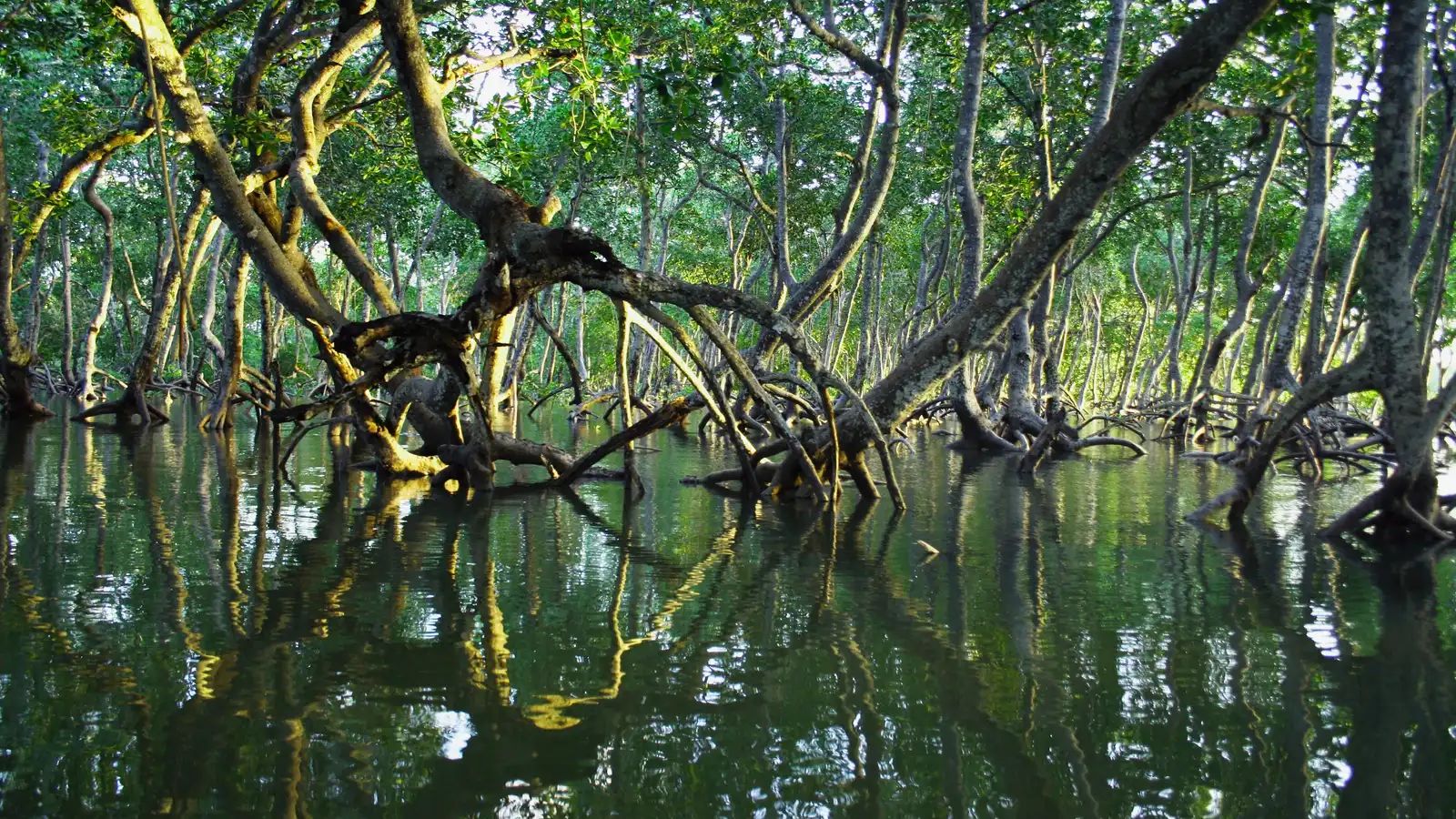
Hilarides further noted that restoring a forest to a healthy state requires doing more than simply putting a set number of seedlings into the ground, demanding community ownership for long-term sustainability alongside the restoration of proper ecological conditions for growth. Across Africa, Nigeria’s Niger Delta holds the continent’s largest mangrove forest, but faces severe pressures from oil pollution and coastal erosion. Nnimmo Bassey, director of the Nigeria-based Health of Mother Earth Foundation, stated that about 260,000 barrels of crude oil have spilled into the delta annually for nearly seven decades. Ogunlade Olamide Martins, associate director at the Nigeria-based NGO Corporate Accountability and Public Participation Africa, explained that communities lose a natural barrier against erosion, flooding, and rising seas when mangroves disappear.
Despite recent gains, old-growth forest losses remain an ongoing concern. The State of the World’s Mangroves 2026 report notes that direct clearance, oil pollution in Nigeria, and ill-managed coastal infrastructure continue to threaten mature ecosystems. Sinikinesh Beyene Jimma, head of the Marine and Coastal Ecosystems Unit at the United Nations Environment Programme, remarked that the findings offer encouraging news for global restoration and conservation efforts during a time when widespread hope is needed.
Worth a look
Whitehead Researchers Recreate Planar Cell Polarity in Engineered Epithelial Cells
Researchers at the Whitehead Institute have recreated planar cell polarity in engineered epithelial cells, discovering that collective cell...
Thwaites Glacier Melts Faster Than Expected. Sea Levels Could Double by 2100
Thwaites Glacier in West Antarctica is melting faster than expected, with a new model showing sea level rise...

Japanese Researchers Guide Vortices via Atomic Steps
Under intermediate magnetic fields, vortices traveled more than 1,000 times more easily along surface steps just one atom...

NASA Completes Optical Alignments on Nancy Grace Roman Space Telescope
Following an August 30 launch, Nancy Grace Roman Space Telescope team completed rigorous in-space optical alignments, achieving a...