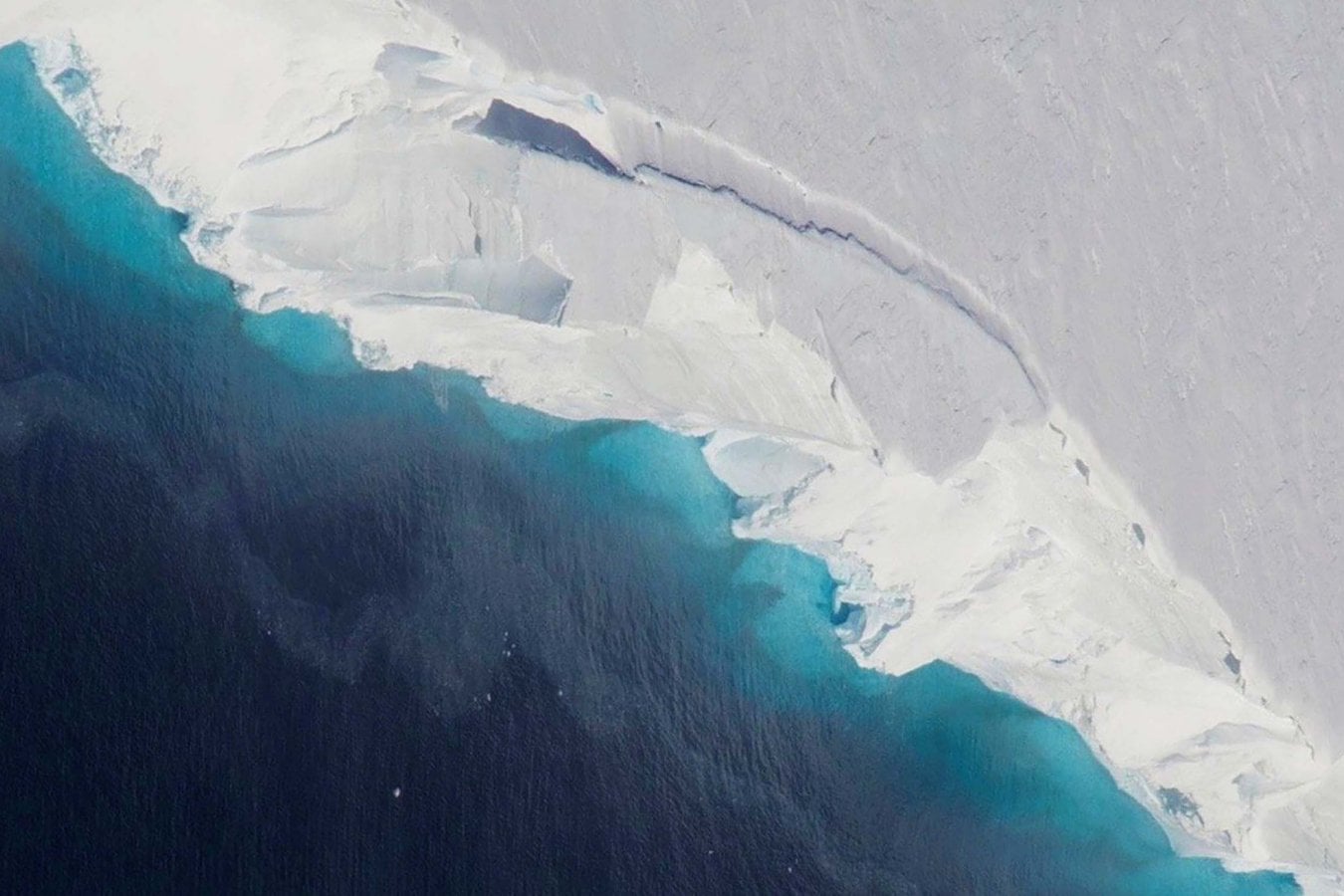
Thwaites Glacier in West Antarctica is melting faster than expected, with a new model showing sea level rise contributions could double to 1.2 inches by 2100. Researchers report warm ocean water penetrating miles beneath the ice via a wide grounding zone, accelerating the glacier’s retreat toward a potential collapse.
The planet’s widest glacier is eroding at a more aggressive pace than previous projections indicated, a development that could significantly amplify global sea level rise. Known widely as the doomsday glacier
, the Florida-sized ice mass in West Antarctica has retreated for decades and currently accounts for roughly 4 percent of global sea level rise. While a total collapse is not considered imminent, new computer modeling reveals that the mechanisms driving its retreat are more complex than scientists previously understood.
Tidal Forces and Grounding Zone Dynamics Accelerate Thwaites Melting
Typical ice sheet models have historically treated the grounding line—the boundary where ice lifts off the seabed to float as a shelf—as a stable, discrete line. However, glaciologists from the University of California, Irvine and NASA’s Jet Propulsion Laboratory point to a different reality beneath major ocean-terminating glaciers.
we have come to acknowledge a different arrangement beneath Earth’s major ocean-terminating glaciers.

Data gathered by satellite shows this boundary is actually a grounding zone
that spans several miles. Seawater flushes in and out of this zone with the tides, lifting and lowering the thick ice. This movement allows warm ocean water to penetrate deep underneath the ice sheets and causing vigorous melting, according to Poinelli. Because the land beneath Thwaites slopes downward away from the ocean, this melting exposes fresh ice to the warming water in a continuous cycle.
Thwaites’ Unpinning Threatens Faster Retreat by 2100
When researchers incorporated the grounding zone dynamics into their models, their simulations produced projections that were twice as large as earlier forecasts. The study, published in Nature Communications, calculates that Thwaites could contribute up to 1.2 inches of sea level rise by the year 2100 even without further global warming. Co-author Professor Eric Rignot from the University of California observed that most previous estimates have failed to account for the speed of this mass loss due to gaps in physical understanding.
The glacier’s flow toward the ocean is currently slowed by underwater ridges that pin the ice in place. The aggressive melting at the grounding zone is actively accelerating the unpinning of ice from the Mouginot Ridge. According to the research team’s model, there is a 60 percent chance that Thwaites will become disconnected from this stabilizing ridge before the century ends, which would trigger an even more rapid retreat across the retrograde seafloor.
Thwaites Continues Losing Ice Even With Ocean Cooling
While West Antarctica’s melting is exacerbated by rising global temperatures—with surface waters outside polar regions hitting record highs this summer—new findings suggest that past damage cannot be undone simply by cooling the seas. In a separate modelling experiment published in Geophysical Research Letters, researchers led by the British Antarctic Survey simulated a zero-melting scenario beneath Thwaites and neighboring Pine Island Glacier.
While Pine Island Glacier responded by thickening and advancing under cooled conditions, Thwaites continued to lose ice over a 150-year period, though the rate slowed as the glacier thinned.
Researchers Plan New Instruments to Track Grounding Zone Activity
External experts view the new grounding zone models as a major change in polar research. Ted Scambos, a senior research scientist for the Earth Science and Observation Center at the University of Colorado Boulder who did not participate in the study, described the results as a transformative development for predicting sea level rise from Thwaites.
However, researchers emphasize that gathering direct observations from beneath the ice remains a formidable challenge. Robert Larter, a marine geophysicist at the British Antarctic Survey who was not involved in the work, noted that the environment beneath the glacier is considerably more complex than current computer models describe.
The reality is that there is a lot we still need to find out about grounding zone processes to be able to make confident predictions about how fast ice will be lost.
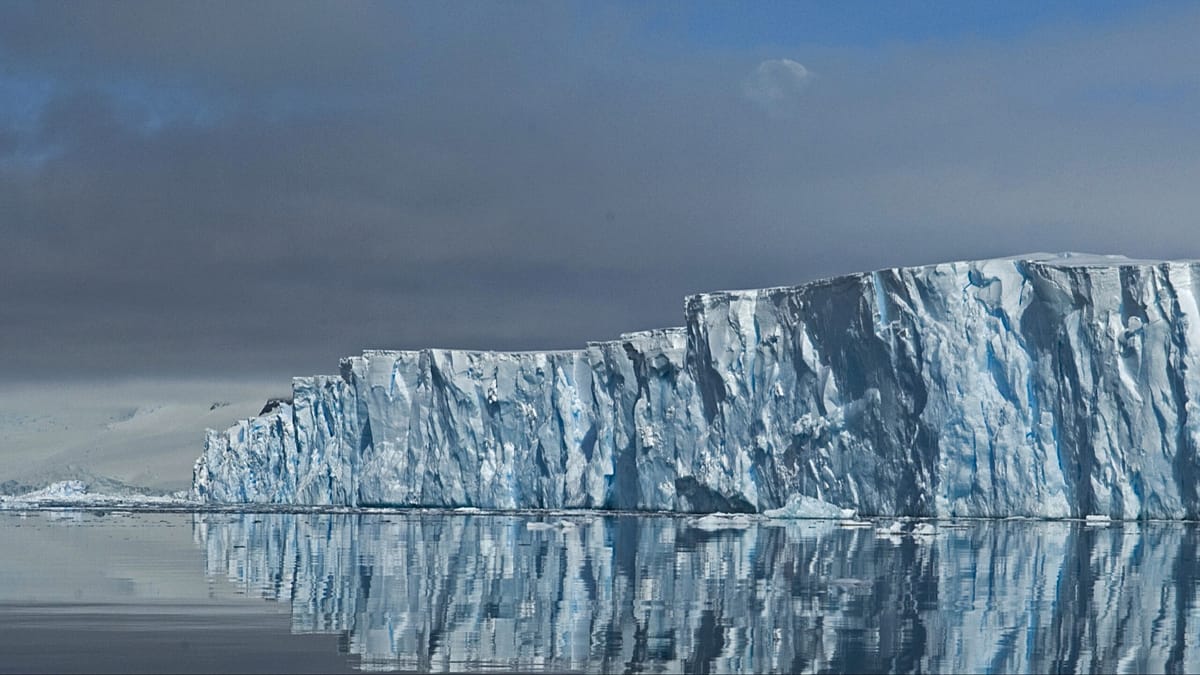
To address these unknowns, the research team plans to deploy specialized instruments designed to document the continuous flushing of seawater through the grounding zone.
Keep reading
Japanese Researchers Guide Vortices via Atomic Steps
Under intermediate magnetic fields, vortices traveled more than 1,000 times more easily along surface steps just one atom...
NASA Completes Optical Alignments on Nancy Grace Roman Space Telescope
Following an August 30 launch, Nancy Grace Roman Space Telescope team completed rigorous in-space optical alignments, achieving a...

University of Queensland Researchers Propose Omic Technologies to Develop Heat-Adapted Chickpeas
Researchers at the University of Queensland have proposed a staged approach using new omic technologies to accelerate the...

President Daniel Chapo Urges Global Action on Climate Justice
Mozambican President Daniel Chapo called for strengthened international climate justice measures at a Maputo conference on October 14.