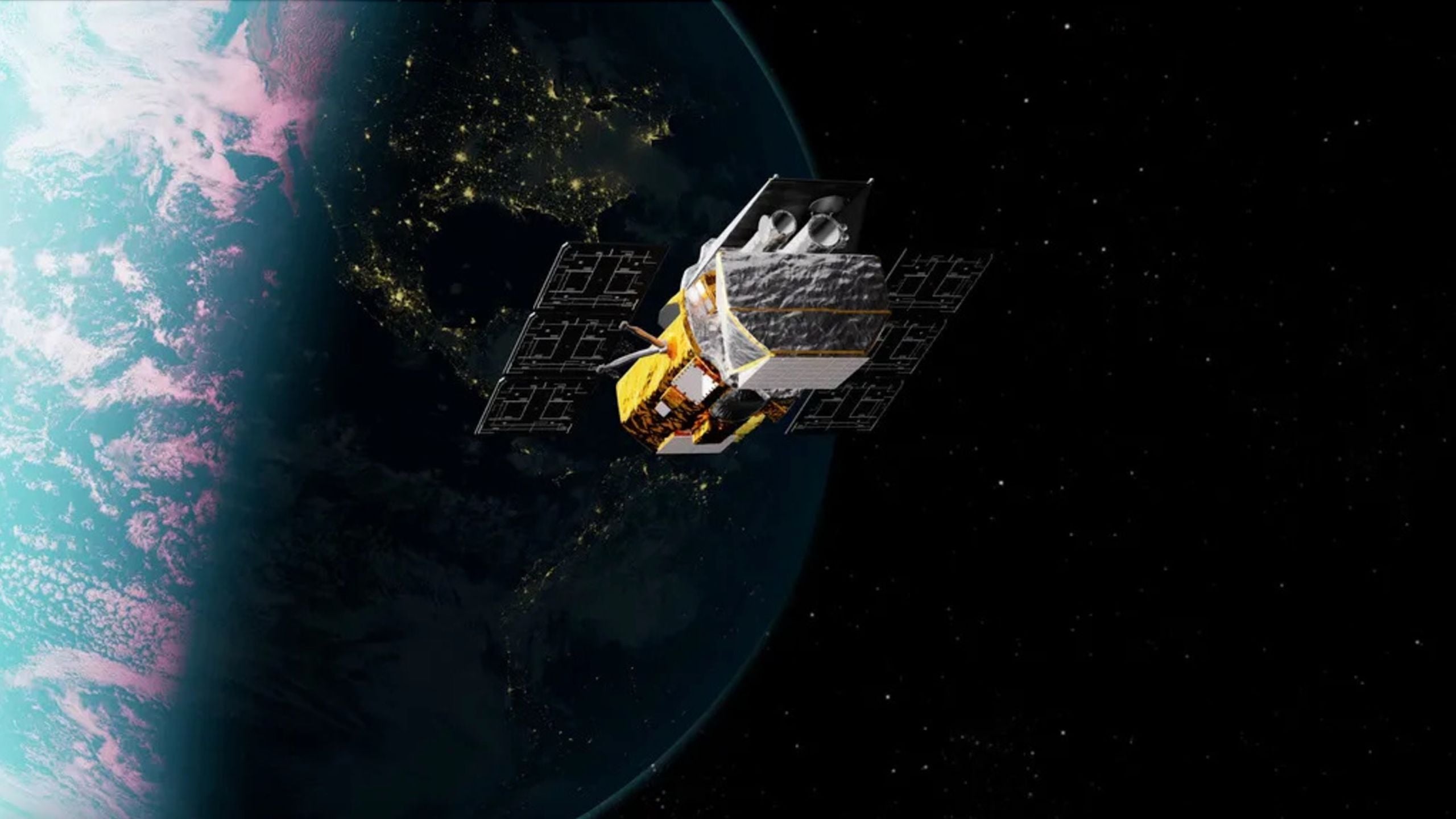
The Neil Gehrels Swift Observatory is on a collision course with Earth after two decades in orbit, following the failure of an ambitious commercial repair mission that sought to boost the aging space telescope to a higher altitude. Launched in November 2004, the 3,200-pound spacecraft has spent its operational life monitoring cosmic phenomena from low-Earth orbit, but increased solar activity and atmospheric drag have sealed its fate.
How Solar Storms and a Failed Rescue Sealed Swift’s Orbit
Designed for a two-year primary mission to study gamma-ray bursts, Swift far outlived its original timeline by operating for more than a decade beyond expectations. However, unusually strong solar storms since the fall of 2024 heated the upper atmosphere, creating dense layers of drag that pulled the observatory down faster than anticipated. By late October, the satellite had dropped to an altitude of 171 miles above Earth, prompting NASA to officially shut down its instruments on October 20 because it had become too unsteady to control.
In an effort to save the observatory, NASA contracted Arizona-based Katalyst Space Technologies for a $30 million rescue mission. The LINK spacecraft launched on July 3 carrying robotic arms designed to clasp onto Swift and raise it back to about 370 miles high. Weeks after its launch, the Katalyst-built tug lost control of its orientation, and NASA called off the capture on Aug. 19.
Swift Sinks Toward Uncontrolled Descent as Agencies Predict Reentry Timing
With no engine to steer itself, Swift has been sinking toward an uncontrolled descent. The U.S. Space Force and NASA predicted the satellite would re-enter the atmosphere on Wednesday, November 4, around 3:30 a.m. ET.
The risk of harm coming to anyone on Earth is unlikely — approximately 1 in 2,100,
NASA stated, adding that monitoring efforts would continue alongside the Space Force. NASA also outlined the uncertainty surrounding the location of any surviving spacecraft components, noting that re-entry locations can vary from hemisphere to hemisphere and depend on when it re-enters.
International space authorities also evaluated trajectories to determine regional exposure. Korea’s space agency, KASA, reported that the observatory was projected to reenter the atmosphere during the evening hours with a two-hour margin of error, concluding that the Korean Peninsula was unlikely to be affected.

What Survives the Fiery Descent Through the Atmosphere
As the spacecraft plunges deeper, atmospheric friction will generate intense heat. Once Swift falls to about 120 kilometers [75 miles], the end usually comes within a few minutes,
said Dean Sladen, a quality manager and aerospace engineer at Accu Components, noting that the air in front of the satellite heats up enough to make it glow.
While most of the spacecraft’s mass is expected to burn away — scientists warned that about 10 percent of its weight could survive reentry — dense and heat-resistant components can endure the fall. Aerospace experts indicate that the most likely survivors include six heavy reaction wheels used for aiming, along with durable glass lenses and metal telescope parts. Most of these surviving fragments are projected to land in the ocean or in sparsely populated areas.
We’re tracking the upcoming reentry of the Swift space telescope📡 The NASA Neil Gehrels Swift Observatory, launched in 2004 to study space objects and events, is now on its return to Earth. Aerospace's Center for Orbital and Reentry Debris Studies has just released an updated… pic.twitter.com/mmq09B1FZ7
Scientific Legacy and Massive Data Archive Left Behind
Despite its end, astronomers emphasize the extraordinary volume of research generated by the observatory. During its 22-year run, Swift detected and tracked more than 2,000 gamma-ray bursts, captured 1.5 million ultraviolet and optical telescope images, and transmitted 12 terabytes of scientific data back to Earth. Those observations fueled an estimated 7,000 research papers.
Swift delivered an incredible, lasting return on investment for the nation, designed for a two-year primary mission but productive for more than 10 times as long.
Shawn Domagal-Goldman, director of the Astrophysics Division at NASA
The satellite also served as an early-warning system for other major observatories, providing rapid alerts about fleeting cosmic events that allowed instruments like the Hubble Space Telescope and the James Webb Space Telescope to conduct follow-up observations. Researchers note that an extensive archive remains available for future study.
Keep reading
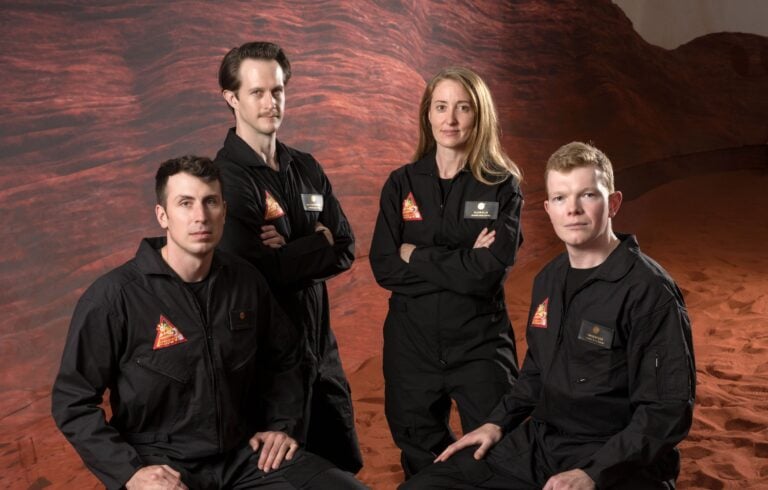
NASA Simulated Mars Mission Crew Emerges After 378 Days
Four volunteers exited a sealed 1,700-square-foot habitat at NASA's Johnson Space Center on October 31, 2026, successfully concluding...

4.1-Billion-Year-Old Meteorite From Mars Discovered in Sahara Desert
Discovered in the Sahara Desert in 2022, a nearly two-pound rose-colored rock found in Mali has been identified...

You start painting pictures of squirrels twirling their mustaches’: A biologist on whether animals can lie
Biologist James O'Hanlon tackles tactical deception and whether animals can truly lie in his 2026 book Liars, Cheats...

GSI Study Reveals Ancient Redox Shifts in Bijawar Basin
Geochemical analyses of Paleoproterozoic sedimentary rocks in Madhya Pradesh's Barwah-Harda inlier reveal shifting oceanic redox gradients and atmospheric...