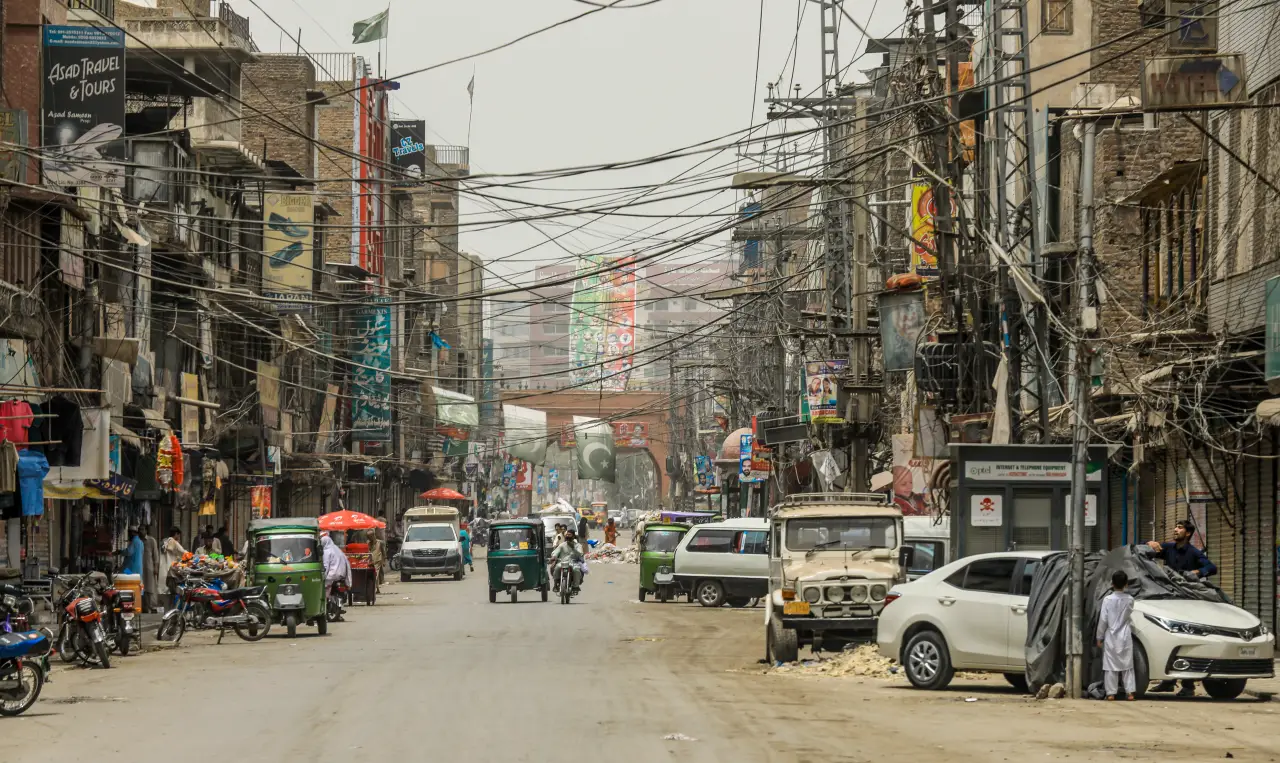
Pakistan declared a state of emergency in Khyber Pakhtunkhwa on Sunday, October 11, 2026, suspending the provincial government and deploying army troops. The emergency measures, approved by President Asif Ali Zardari, led to closed roads in Peshawar, suspended bus services, and heightened political tensions.
Federal Intervention and Suspension of Provincial Administration
The federal government declared an emergency and instituted governor’s rule in Khyber Pakhtunkhwa on Sunday, October 11, 2026. President Asif Ali Zardari approved the emergency declaration and governor’s rule acting upon a formal proposal submitted by the federal Cabinet of Prime Minister Shehbaz Sharif. The emergency measures were imposed under Articles 232 and 234 of Pakistan’s Constitution, granting federal authorities control over the northwestern province and transferring provincial executive authority to Governor Faisal Karim Kundi.
This intervention suspended the provincial government. Prime Minister Shehbaz met President Zardari to discuss the overall security situation prior to the emergency imposition. The official notification and its copies were distributed to the prime minister’s adviser, the president’s secretary, the KP governor’s secretary, the Military Operations Directorate at GHQ Rawalpindi, the KP home secretary, the provincial inspector general of police (IGP), the Peshawar High Court registrar, and other relevant authorities.
Security Forces Block Major Roads Across Peshawar
Security forces and police moved quickly across Peshawar following the emergency declaration, setting up checkpoints and blocking major thoroughfares with shipping containers and barbed wire. Traffic restrictions impacted Bacha Khan Chowk, Khyber Road, and Firdous Chowk, alongside areas near the Khyber Pakhtunkhwa Provincial Assembly and the Red Zone. Additional police and security personnel were deployed along GT Road, Warsak Road, Kohat Road, and Pishtakhara Road.
Containers were also placed near Peshawar’s railway station to block the routes toward Khyber Bazaar, Shoba Bazaar, and beyond, as well as near Edwardes College to block entry to Jail Road and Malik Saad Shaheed Flyover. TransPeshawar temporarily suspended operations on the city’s Bus Rapid Transit (BRT) system due to the security situation and road blocks. Transport operators noted that employees remained stationed at BRT locations to monitor conditions, though no confirmed reopening schedule was issued. Mobile phone services were suspended in parts of Peshawar, complicating travel and communication across the city.
Federal Government Authorizes Pakistan Army Deployment
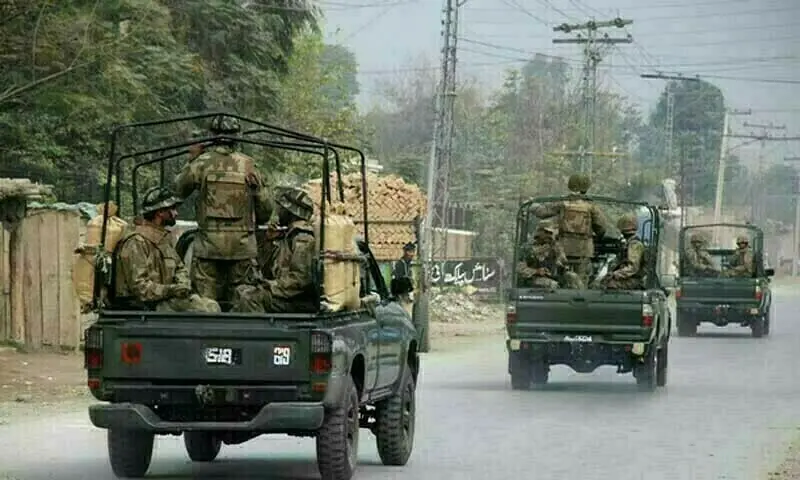
To enforce order, the federal government authorized the deployment of Pakistan Army troops and assets in aid of civil power across Khyber Pakhtunkhwa. The interior ministry issued SRO (1)/2026 under Article 245 of the Constitution to ensure the safety of life, security of persons and property of citizens as well as security of government installations
in the province. This authorization lasts for the duration of the proclamation regarding the emergency and governor’s rule.
Meanwhile, heavy police contingents were deployed across the city, particularly around Khyber Pakhtunkhwa Assembly Chowk and the adjoining Red Zone. Police were directed to take strict action against anyone damaging public property or engaging in vandalism, with protest demonstrations set to be video-recorded, while leave for all staff at the Governor House was cancelled and employees were directed to report for duty immediately.
Opposition Response and Sealed Facilities in Islamabad
The political fallout extended directly to Islamabad, where shipping containers placed along important roads to prevent protests forced motorists in the capital and neighboring Rawalpindi to take lengthy detours.
More on Asif Ali Zardari
Worth a look
Abiy Ahmed Sworn In as Prime Minister With Focus on Red Sea Access
Prime Minister Abiy Ahmed was sworn into a new five-year term on Monday, October 5, 2026, following his...
Pope Leo XIV Rejects Death Penalty as Attack on Human Dignity
Pope Leo XIV has rejected the death penalty as an attack on human dignity, posting on X that...
SpaceX Launches 21 U.S. Space Force Satellites After Delay
Following a five-day delay from an earlier countdown abort, a SpaceX Falcon 9 rocket successfully launched 21 data...
Queen Camilla Recalls Secret Teenage Reading of Lady Chatterley’s Lover
Queen Camilla has revealed she secretly read Lady Chatterley's Lover under her pillow by torchlight as a teenager...