
NASA released nearly a terabyte of Artemis II science data and reports on Wednesday, featuring 11,000 images, audio recordings, and astronaut observations collected during a lunar flyby by crew members Reid Wiseman, Victor Glover, Christina Koch, and Jeremy Hansen.
Months after four astronauts circled the moon and returned safely to Earth, NASA made its complete Artemis II lunar science dataset public on Wednesday. The expansive upload to the Planetary Data System brings researchers more than 800 gigabytes of unreleased material—or 814 gigabytes according to Space.com and Live Science—offering the planetary science community a rare look at lunar regions few human eyes have ever witnessed. The agency’s public release includes 11,000 full-resolution photographs and videos captured by both handheld and Orion spacecraft cameras. It also features 8.5 hours of recorded audio (amounting to 521 minutes, as noted by Space.com) documenting the crew’s real-time commentary, alongside 996 new images and astronaut-annotated images that provide context for what unfolded outside the capsule windows.
NASA Releases Reports to Refine Lunar Landing Models
To accompany the raw files, WIRED: the Artemis II Preliminary Lunar Science Report, the Artemis II Lunar Science Operations Report, and the Artemis II Lunar Science Data User Guide. These publications outline how the mission’s science plan was built and executed. Planetary geologists, flight engineers, heliophysicists, experts in telecommunications and remote sensing, and specialists in meteoroid impacts can now comb through the information to refine models for upcoming lunar landings.
Meteoroid Impacts Recorded During the Orion Flyby
During a 54-minute eclipse observed from the Orion capsule, the crew spotted five small meteoroid impacts on the lunar surface, confirming details during communication with Mission Control at NASA’s Johnson Space Center in Houston as science evaluators jumped up and down in the Science Evaluation Room.
Space.com reports that commander Reid Wiseman confirmed the sightings were not sun glint off a particulate from the thrusters or the purge tanks, but definite impact flashes from small rocks hitting and vaporizing. Scientists estimate that each impactor weighed roughly 8.5 grams—comparable to the mass of two dice—yet struck the ground at tens of kilometers per second. Because the crew flew outside major annual debris streams, these observations offer a baseline background rate for small space rocks hitting the moon. NASA calculated that a similar projectile carries roughly a one-in-10,000 chance per decade of striking a future south pole moon base.
Astronaut Observations Across the Lunar Farside
Equipped with digital cameras, tablets for annotations, and extensive geological training that included visiting craters on Earth, taking lessons individually and in classrooms, and conducting simulated flybys, the crew cataloged a surprising palette of colors across the lunar terrain spanning gray, black, brown, tan, white, green, and blue. Flight recordings captured immediate expressions of wonder as the terrain moved below them.
“Dude, no way!”
Artemis II commander Reid Wiseman, via Space
Mission specialist Jeremy Hansen of the Canadian Space Agency chimed in as impact flashes appeared on the lunar surface just like a ‘bloop!’
according to mission audio published alongside the logs.

Later, as the capsule sailed over the Aristarchus Plateau—a broad, elevated region on the northwestern edge of the moon’s nearside hosting ancient volcanic features and dark lava deposits—crew members noted distinct yellow and green hues. Christina Koch likened the region to a yellow snow-capped mountain
with sunlight-reflecting craters providing the bright snow, and called the area a jaundiced cheek of the Moon,
while pilot Victor Glover noted brown streaks flowing down from the north. According to the report authors, those bright shades likely correspond to orange (titanium-rich) and green (magnesium-rich) glass beads formed by ancient volcanic activity, mirroring volcanic glass beads gathered during the Apollo 15 and 17 missions.
Astronauts Observe Complex Structures in the Orientale Basin
Passing over the massive Orientale Basin—a huge, young, multiringed impact crater roughly three times as wide as Massachusetts, straddling the near and far sides—the astronauts observed complex structural rings. Mission commander Reid Wiseman remarked at the time that it had created chaos across that entire area,
while Christina Koch reported seeing almost swamp-like colors
within the outermost ring. Victor Glover spotted dusted mountain peaks and white on the very edges of the ridges and spines, and Koch added that chains of craters parading away from the impact site looked like bubbles rising from a team of scuba divers below.
The preliminary report concludes that the Artemis II mission demonstrated the exceptional value of human observation and cognition as scientific assets in planetary exploration,
highlighting how real-time perception complements robotic data as NASA prepares for future surface expeditions.
Keep reading
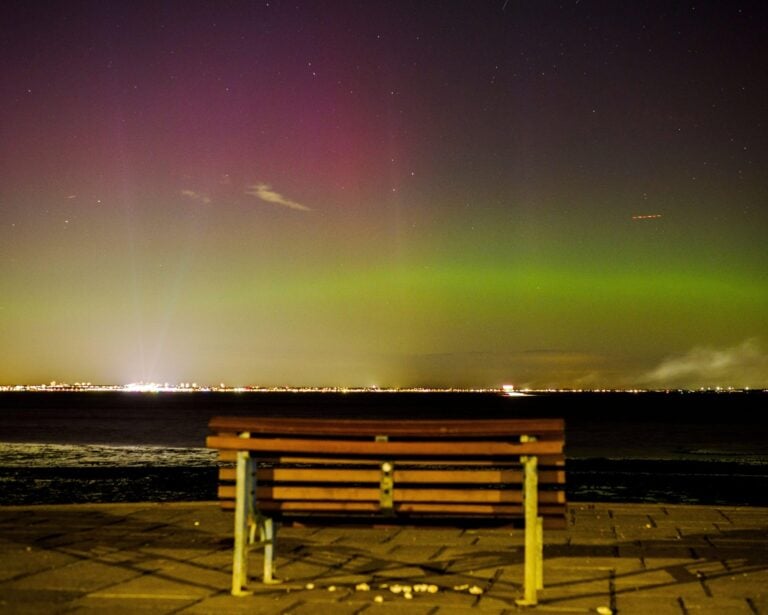
UK Skies Illuminated by Northern Lights as Geomagnetic Storms Continue
Skies across the UK lit up with the aurora borealis on Friday and Saturday evening as energetic solar...

Hubble Data Points to First Potential Planet Born From Dead White Dwarf Star
Astronomers revisiting decades-old Hubble Space Telescope data have discovered an unusual chemical signature around a white dwarf star,...
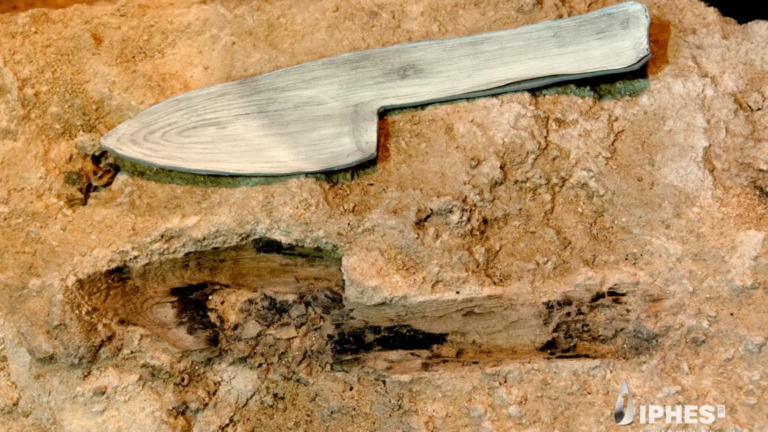
Spanish Archaeologists Catalog Neanderthal Wooden Tools at Abric Romaní
Spanish archaeologists have cataloged 597 wooden remains and imprints from Neanderthal living areas at Abric Romaní, dating between...
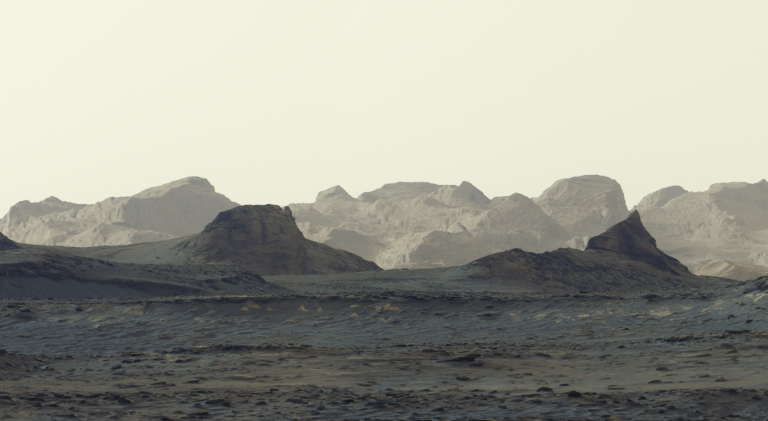
Curiosity Rover Captures Detailed Martian Dawn Panorama
NASA’s Curiosity rover has captured its most detailed panorama of distant Martian cliffs yet, photographing wind-carved yardangs under...