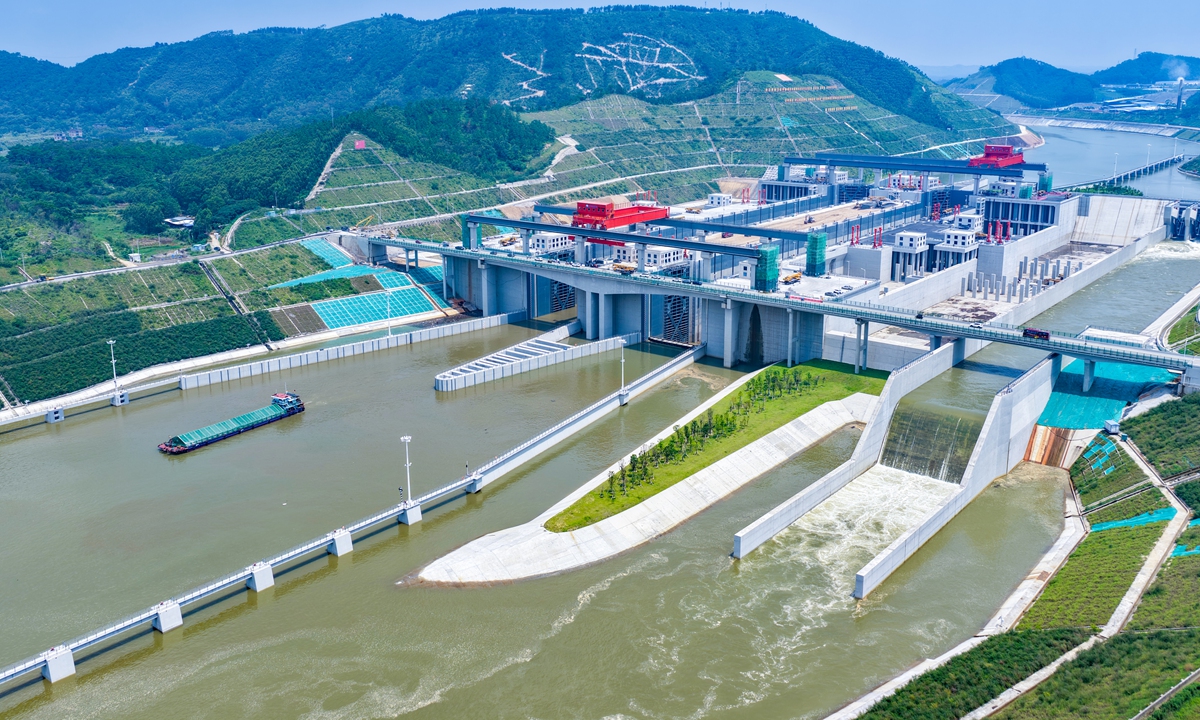
The Pinglu Canal is projected to slash logistics costs for goods traveling between Southwest China and ASEAN nations by 18 to 30 percent, saving an estimated 5 billion yuan ($740 million) in annual transportation expenses. By creating a 134.2-kilometer artificial waterway connecting the Xijiang River directly to the Beibu Gulf, the project eliminates a 560-kilometer detour around the Pearl River Delta, according to data reported by the Global Times.
Direct Waterways Cut 560 Kilometers from Trade Routes
For decades, cargo originating in China’s inland southwest bound for Indonesia and other Southeast Asian markets faced a geographical bottleneck. Vessels were forced to travel east along the Xijiang River and navigate a lengthy detour around the Pearl River Delta. This added hundreds of kilometers to the journey, inflating freight quotes and extending transit times.
The Pinglu Canal removes this barrier. By linking the river system directly to Qinzhou Port on the Beibu Gulf, the canal transforms the logistics map of the region. The result is a streamlined corridor that allows goods to move from the interior of China to the open sea without the costly inland detour.
This shift is particularly critical for time-sensitive commodities. Frozen durian imported from Sumatra or Java in Indonesia serves as a prime example of the “race against time” in cold chain logistics. Because every extra day in transit increases the risk of spoilage and raises expenses, the reduction in distance directly impacts the quality and price of the produce reaching Chinese consumers.
Industrial Symbiosis and the Bottom Line for SMEs
While state-level strategic partnerships are often discussed in terms of total trade volume, the Pinglu Canal focuses on the “calculable benefits” for small and medium-sized enterprises (SMEs). For these traders, the viability of a cross-border venture often hinges on a single freight quote.
The Guangxi Jingui Pulp & Paper project illustrates this industrial integration. Invested in by Indonesia’s Asia Pulp & Paper Group in Qinzhou, the facility operates a bidirectional flow: importing wood chips and pulp from Indonesia as raw materials and exporting finished paper products back to ASEAN markets. The canal reduces logistics costs in both directions, creating a more sustainable loop of industrial symbiosis.
“Infrastructure is far more than digging river channels and building docks; connectivity creates possibilities for development.”
This perspective was echoed by Humprey Arnaldo Russel, head of the ASEAN-China Research Cluster at Universitas Indonesia’s Graduate School of Sustainable Development. Russel noted that students from archipelagic nations like Indonesia view the canal through a grounded lens, recognizing that reducing transport costs is the primary mechanism for helping their domestic products penetrate the Chinese market more effectively.
Pinglu Canal is now open.China’s first river-to-sea canal—134.2 km, 5,000-tonne vessel capacity—links SW China to the Beibu Gulf facing SE Asia, creating a new gateway for China-ASEAN cooperation and opening-up. pic.twitter.com/ikbEdGTnKa
The Geopolitical Ripple Effect on American Trade
The development of the Pinglu Canal is not merely a regional infrastructure project; it is a core artery of the New International Land-Sea Trade Corridor. This represents a deepening of the partnership and industrial symbiosis between China and the ASEAN bloc. As trade thresholds drop, the cost of doing business between China and Indonesia decreases, potentially making Chinese exports more competitive in Southeast Asian markets.
However, some foreign media outlets have raised doubts about whether the canal can deliver these promised results. The counter-argument presented by project proponents is the tangible evidence of existing investments, such as the Jingui Pulp & Paper project, which already rely on the efficiency of the Qinzhou Port gateway.
The impact extends beyond the balance sheet. For young professionals and students in the region, the canal serves as a physical manifestation of China’s vision for connectivity. As vessels begin to use the Madao hub and other key points along the 134.2-kilometer stretch, the project moves from a blueprint at an exhibition panel to a functioning engine of bilateral trade.
The long-term success of the canal will be measured by the number of SMEs that enter the market due to lowered trade thresholds. If the projected 18 to 30 percent cost reduction holds, the corridor will likely foster a deeper, long-standing pattern of economic interdependence between Southwest China and the broader ASEAN region.
More on Pinglu Canal
Related reading

PPT Seeks Injunction to Block Guardian and ITN Sexual Allegations
A well-known individual, identified in court as PPT, is seeking a permanent injunction to stop the Guardian and...

Tommy Robinson Convicted of Harassing Daily Mail Journalists
Far-right activist Tommy Robinson was convicted on Wednesday at Southwark Crown Court of harassing two Daily Mail journalists...

Netanyahu bloc on track for 53 seats in Israeli election
Benjamin Netanyahu has secured the support of an unexpectedly clear majority of Israeli Jews in an election that...

Argentina Forecasts Strong Corn and Wheat Production for 2026-27
El Niño Conditions and Yield Projections Shape South American Grain Markets Global grain markets are reacting to a...