Researchers have completed the largest controlled test of space-based methane monitoring, publishing results in October 2026 showing that dedicated sensors accurately detect nearly all plumes on clear days. The findings provide a performance benchmark for satellites used by regulators and companies to track greenhouse gas leaks.
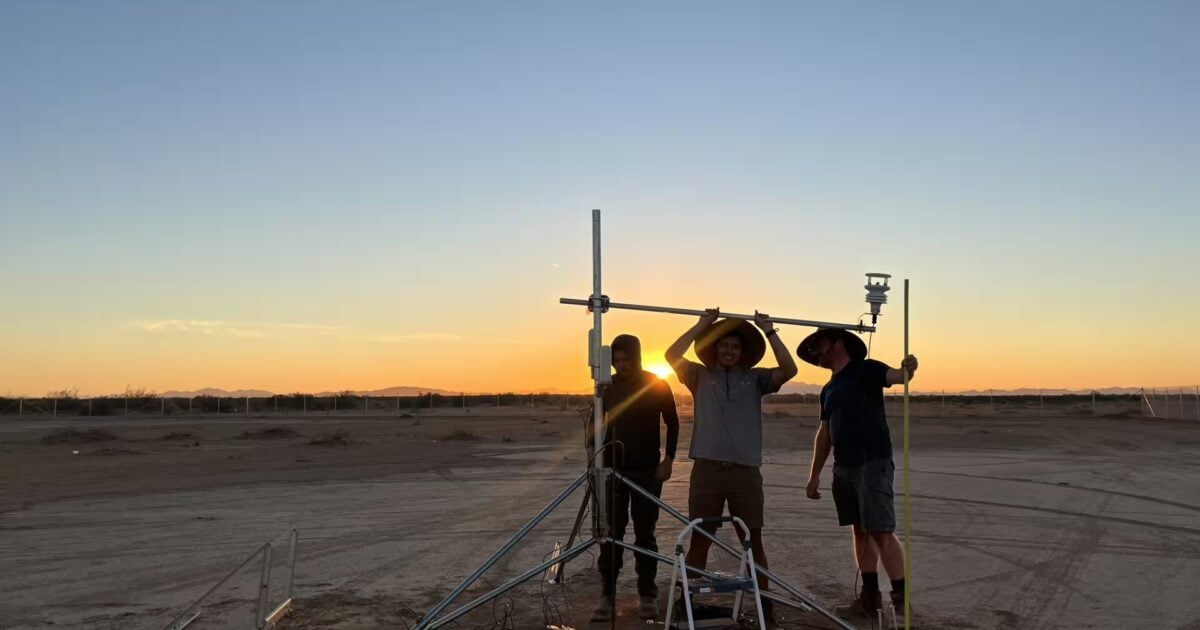
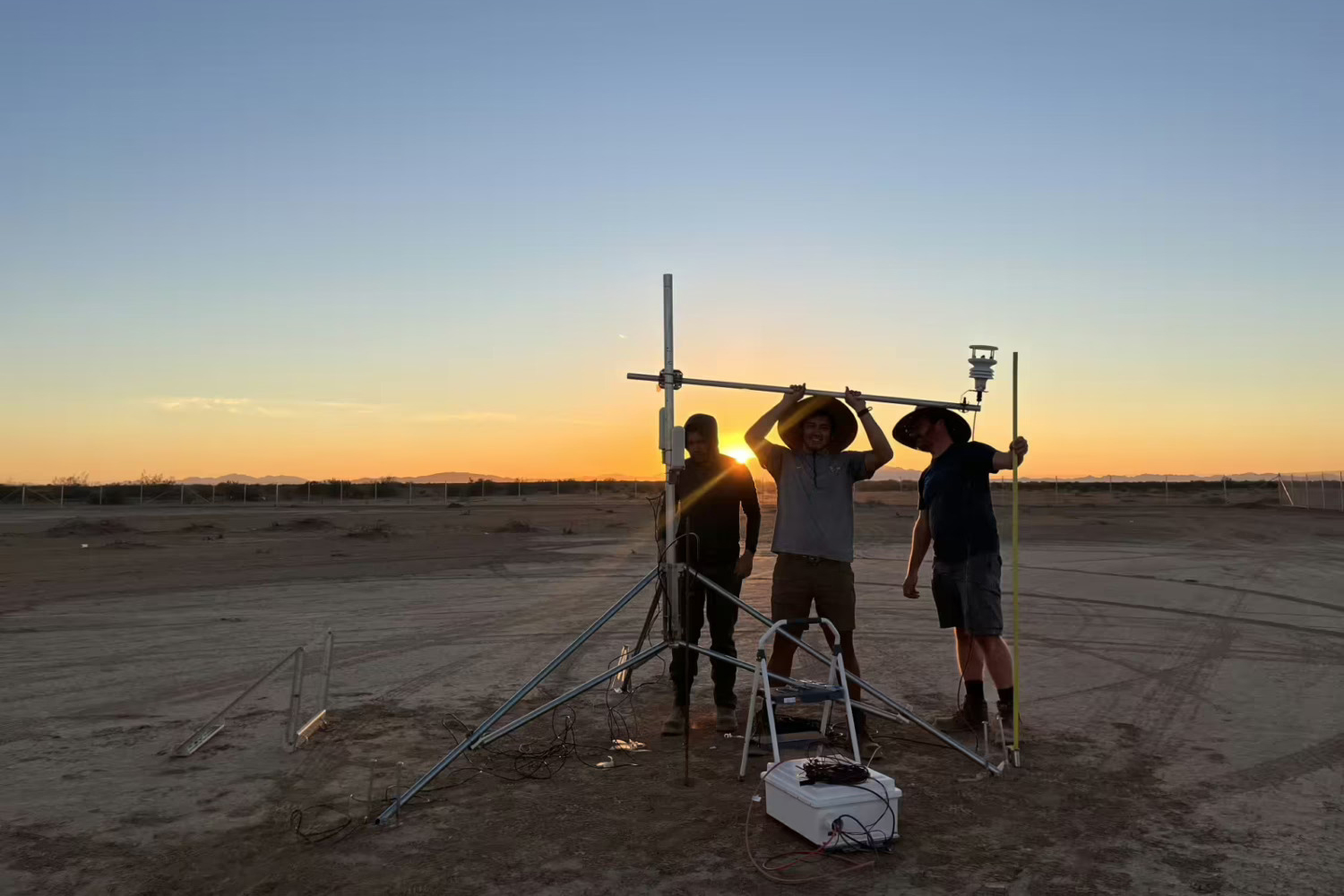
Skepticism has long surrounded whether space sensors can reliably track methane from orbit. To test their limits, researchers organized a large-scale experiment in Arizona’s Sonoran Desert throughout 2025.
Scientists timed 481 controlled methane releases at a Stanford University research site in Casa Grande. These releases targeted orbital overpasses by 11 government, nonprofit, and commercial satellites, alongside 265 blank controls where no gas was released.
Fifteen independent analysis teams across nine countries examined the data without knowing true release rates in advance.
The results, published on Oct. 14, 2026, in Nature, established that instruments built specifically to monitor methane perform with high reliability under favorable atmospheric conditions.
Satellites Test Detection Limits in Arizona
Purpose-built instruments, including satellites in the GHGSat constellation, achieved true positive detection rates between 92 and 100 percent while keeping false positives low. Under ideal conditions with clear skies and moderate wind, these instruments reliably flagged methane flows down to rates between 50 and 200 kilograms per hour.
That threshold sits close to the 100-kilogram-per-hour limit that triggers reviews under state and national super-emitter programs.
Quantification accuracy also proved strong for dedicated systems. Estimated emission rates tracked true releases almost linearly, registering a mean absolute percentage error of 44 percent. While individual estimates varied up to 50 percent higher or lower than actual amounts, those over- and underestimates roughly balanced out on average.
In many cases, the detection is the important part. As long as you know approximately how big it is, then you still know you need to go fix it.
Instruments repurposed for methane sensing detected 62 to 88 percent of test plumes with a mean absolute percentage error of 46 percent.
Meanwhile, general-purpose land scanners on U.S. government satellites detected only 29 to 37 percent of releases. European government satellites struggled similarly with flows below 1,000 kilograms per hour due to limited spectral data.
Clouds and AI Impede Orbital Data
Despite clear-sky successes, the technology faces distinct environmental boundaries. Because orbital sensors measure infrared light reflected off the Earth’s surface, cloud cover interrupts the light path entirely.
Performance dropped across all systems when ground-measured cloud cover exceeded 20 percent. This limitation creates significant blind spots in wet and cloudy regions.
Tropical oil and gas producers, alongside cold and cloudy climates, remain difficult to observe consistently.
Testing also exposed pitfalls in automated data processing. When teams searched for false positives using 265 blank overpasses, errors remained rare across most techniques except for emerging artificial intelligence applications.
Commercial teams applying AI-powered methods to government land-scanner data generated 79 percent of all false positives in the study, highlighting algorithms that require further refinement.

Regulators Gain Confidence from Study
Adam Brandt, senior study author and professor of energy science and engineering at Stanford University
Methane is vastly more potent than carbon dioxide at trapping heat during its first 20 years in the atmosphere, driving near-term global temperature increases. Beyond climate mitigation, authors noted multiple financial and safety motivations for tracking leaks.
Quick infrastructure repairs keep saleable natural gas from escaping while reducing flammable hazards and ground-level ozone pollution.
Researchers hope the unprecedented volume of controlled-source data gathered in Arizona will shift industry discussions away from whether orbital monitoring works. They want to move toward how to apply it effectively for global emissions mitigation.
It’s time to stop debating if satellites can see methane and start figuring out how to use what they find to stop the leaks,
Brandt said.
Worth a look

Voyager Probes Approach One Light-Day Distance After Decades
Nearly half a century after launching to explore the outer solar system, the Voyager probes are still operating...

Natural History Museum Uncovers New Dinosaur Species in Century-Old Fossil
Researchers have identified Europe’s first megaraptoran dinosaur, named Invictibellatrix amberina, from a fossil skull fragment acquired by London’s...

Dr. Ramya Anche to head NASA’s $20 Million PUFFINS Space Telescope Mission
Bengaluru-born astronomer Dr. Ramya Anche has been selected as principal investigator for NASA’s $20 million PUFFINS space telescope...
Japan to Launch Historic Round-Trip Mission to Mars Moon
Japan’s unmanned Martian Moons eXploration spacecraft is scheduled to launch from the Tanegashima Space Center on Tuesday to...