Scientists at the University of Nottingham have developed a gel that can grow a thin, enamel-like mineral layer on damaged teeth, a breakthrough that could fundamentally change how dentists treat enamel loss. The new material uses a process called epitaxial mineralization to rebuild the complex structure of natural enamel, potentially offering a restorative solution where only protective treatments existed before.
Gel Uses Proteins to Regrow Enamel
The Nottingham team, led by Professor Alvaro Mata, Chair in Biomedical Engineering & Biomaterials, designed the gel to imitate the biological processes that form enamel during early childhood. Unlike conventional fluoride treatments, the gel contains no fluoride. Instead, it uses proteins that mimic the natural proteins responsible for guiding enamel formation. When applied to a tooth, the gel forms a thin, durable coating that penetrates the surface and fills microscopic cracks. This coating then provides a framework for rebuilding the tooth’s mineral structure by attracting calcium and phosphate ions from saliva and organizing them into new crystals that grow in alignment with the existing enamel.
This organized growth is crucial because enamel’s exceptional hardness comes from its precise crystalline architecture. Simply depositing minerals on a tooth is not enough to recreate this complex structure. The Nottingham gel restores both the microscopic architecture and the physical properties of healthy enamel, according to the researchers.
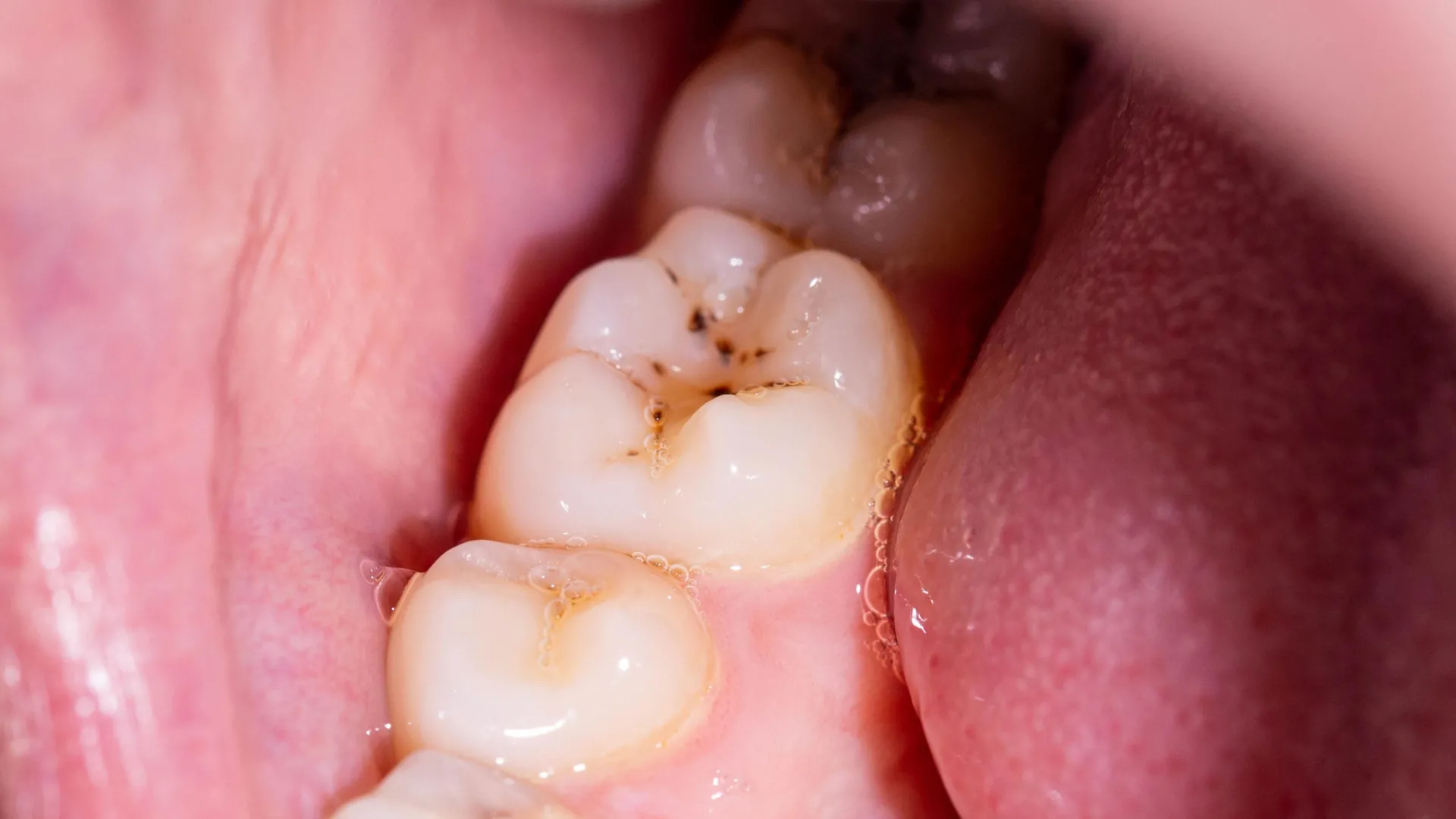
The material has also shown promise for treating exposed dentine. When gums recede or enamel wears away, exposed dentine can cause sensitivity. The gel can encourage the formation of an enamel-like mineral layer over this area, which could reduce sensitivity while also improving the attachment of dental restorations like fillings.
Lab Tests Show Regrowth and Durability
In laboratory tests using extracted teeth, the researchers applied the gel to damaged enamel and dentine. They reported mineralized layers up to about 10 micrometers thick—equivalent to 0.01 millimeter—with organized crystal growth integrated with the underlying enamel or dentine. The regenerated tissue recovered several key properties, including hardness, stiffness, and wear resistance.
To test durability, the researchers subjected the regenerated enamel to conditions simulating daily life, including repeated brushing, chewing, and exposure to acidic foods. The results showed that the regenerated enamel behaves just like healthy enamel under these stresses.
When our material is applied to demineralized or eroded enamel, or exposed dentine, the material promotes the growth of crystals in an integrated and organized manner, recovering the architecture of our natural healthy enamel. We have tested the mechanical properties of these regenerated tissues under conditions simulating ‘real-life situations’ such as tooth brushing, chewing, and exposure to acidic foods, and found that the regenerated enamel behaves just like healthy enamel.
These findings were published in Nature Communications. While the results are significant, the researchers acknowledge that their tests do not fully reproduce the environment of a living mouth and that further clinical validation is needed.

Start-Up Aims to Bring Gel to Market
The Nottingham researchers have already begun translating the discovery into clinical applications through their start-up company Mintech-Bio. The gel is designed to be safe, simple to apply, and scalable for manufacturing. The researchers believe the gel could eventually be incorporated into several kinds of dental products.
A human pilot study is now registered, with a reported July 2026 start date. The study focuses on non-cavitated white-spot lesions—early decay areas without a hole. The main outcome is the change in lesion size on standardized photographs over six weeks.
The registry has no posted results and estimates completion in January 2027. Even a favorable outcome from this small study would not prove the gel can rebuild substantial missing enamel or prevent cavities long-term, but it represents an important step toward clinical validation.
Current Care Still the Standard
For now, the gel is not yet an established enamel-regrowing treatment. The researchers hope to have a first product out by next year. The current standard of care remains vital: fluoride toothpaste and mouthwashes can help strengthen remaining enamel and reverse early decay, but they cannot replace lost enamel structure.
They deliver fluoride to the tooth. They can't rebuild enamel. Once enamel is gone, it's gone. We can just strengthen it. We can harden it. We can make it more resistant to acid and things of that nature, and protect it from getting cavities. But we cannot recreate the enamel, because mature enamel contains no living cells capable of regenerating it. Experts
Be skeptical of any product claiming that it can regrow missing enamel. A toothpaste may support remineralization of an early lesion, but it cannot replace tooth structure. Once enamel’s gone, it's lost.
Until the Nottingham gel or similar treatments are proven and approved, patients with enamel erosion or sensitivity should continue to follow established guidance. This includes using a fluoride toothpaste, brushing gently to avoid further abrasion, and visiting a dentist regularly for personalized care.
Related reading

Barcelona Targets RB Leipzig Defender Castello Lukeba for Summer Move
According to SPORT, RB Leipzig defender Castello Lukeba is now Barcelona's main choice to strengthen the centre-back spot....

Cristiano Ronaldo Announces Retirement From Portugal National Team
Cristiano Ronaldo Ends 23-Year International Career with Portugal Cristiano Ronaldo has officially announced his retirement from international football,...

San Jose Sharks hold players-only meeting after Kings loss
Sharks Confront Mounting Frustration After Lopsided Kings Loss The San Jose Sharks are facing a critical inflection point...

Emi Martinez Returns to Training Amid Chelsea Injury Updates
Emi Martinez returns to Chelsea training ahead of Sunderland clash Goalkeeper Emi Martinez has returned to training at...