
New simulations point to an Earth-mass planet orbiting hundreds of times farther from the Sun than our world, offering a testable explanation for the strange orbits of distant icy bodies beyond Neptune. The study, published in Monthly Notices of the Royal Astronomical Society, models the solar system over 4.5 billion years and finds that a planet 1.5 to 2 times Earth’s mass on a distant, elongated orbit reproduces the observed population of extreme trans-Neptunian objects better than alternative scenarios.
The hypothetical world — nicknamed Planet X2 — would orbit at a semimajor axis of 350 to 500 astronomical units (AU), with its closest approach to the Sun at roughly 200 AU. For context, Neptune circles at about 30 AU. Even at perihelion, Planet X2 would stay more than six times farther from the Sun than Neptune, making it tens of times fainter than Pluto and far beyond the reach of current surveys.
Why the Outer Solar System Needs Extra Mass
Astronomers have cataloged a growing number of trans-Neptunian objects (TNOs) with orbits that the eight known planets cannot explain. Some, like the dwarf planet Sedna, never come closer than 76 AU and swing out to nearly 937 AU. Others follow paths tilted more than 45 degrees from the solar system‘s main plane. The known planets, including a migrating Neptune, cannot account for these detached, highly inclined, and extreme orbits.
Researchers led by Patryk Sofia Lykawka and Jonathan Horner of the University of Southern Queensland ran N-body simulations covering the solar system’s full 4.5-billion-year history. They tested two leading ideas: a population of Mars- to Earth-mass planetary embryos scattered outward early on and later ejected, and a single, stable Earth-class planet that survived at great distance.
The embryo scenario failed — in 200 simulations, 99 systems ended up clearly at odds with the real solar system, and none matched all observed features. The embryos were typically flung out within a few tens of millions of years, leaving results indistinguishable from models with no extra planets.
Planet X2 Versus Planet Nine
The new work is distinct from the Planet Nine hypothesis proposed by Konstantin Batygin and Michael Brown. That model invokes a planet of roughly 6 to 10 Earth masses to explain an apparent clustering of orbits among the most distant objects. Planet X2, by contrast, is far less massive — about one-third to one-fifth the mass — and orbits differently.
The researchers also ran a comparison model with a 6-Earth-mass Planet Nine; it produced more steeply tilted scattered objects (4.3% beyond 40 degrees) than the X2 models (2.8–3.0%) or the no-planet control (2.7%). Horner told ScienceAlert the solar system could host both planets, one, or neither.
What Simulations Reproduce
The preferred X2 model — a 2-Earth-mass planet at 350–500 AU with a perihelion of 200 AU and low orbital inclination (1–15 degrees) — produces a large population of detached objects, including a key low-inclination component beyond 150–200 AU.
It creates a high-inclination reservoir and replicates the orbital niches of all known extreme TNOs, including Sedna and 2012 VP113. The model also matches intrinsic population ratios and bulk orbital properties, and it successfully accounts for inner TNO populations within about 100 AU.
Yet the fit is not perfect. When the simulated objects were run through the Dark Energy Survey (DES) simulator — which evaluates which model objects the real survey could have detected — every model still missed the observed orbit-size distribution.
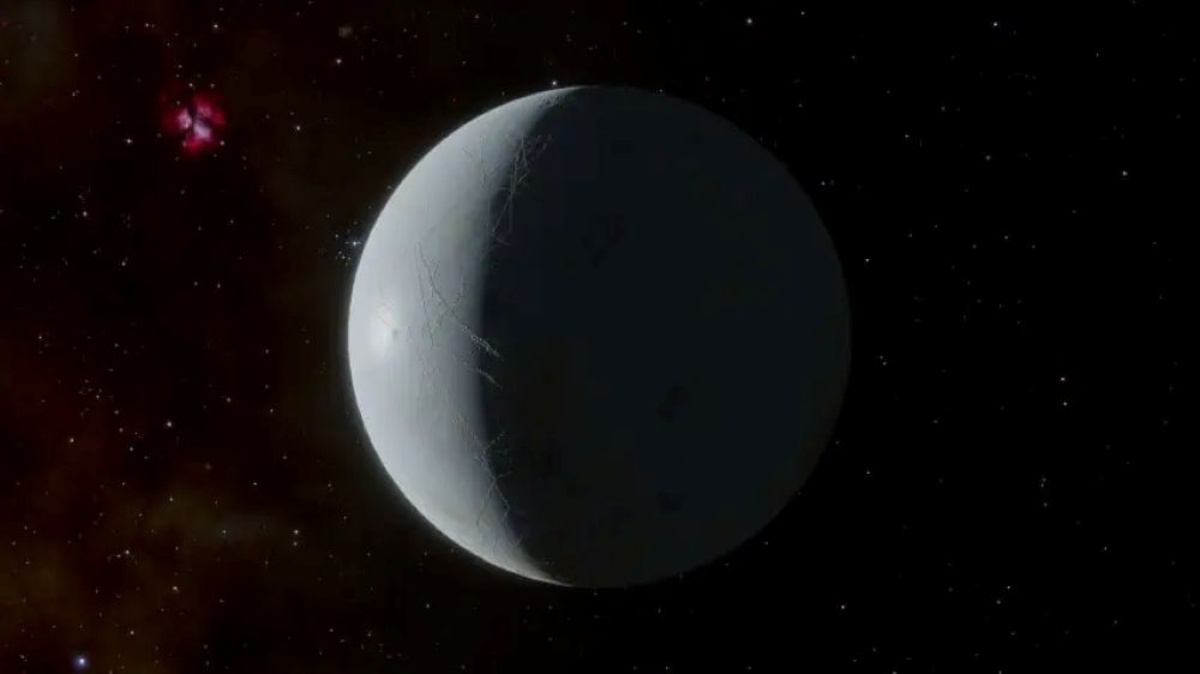
Lykawka said the model reproduces several unusual patterns, “although there are still differences between the model and observations that we need to investigate further.” Horner added, “This isn't a perfect fit. You wouldn't expect it to be.”
Vera Rubin Observatory Will Test the Idea
The hypothesis is falsifiable. The NSF–DOE Vera C. Rubin Observatory in Chile began its ten-year Legacy Survey of Space and Time (LSST). Its enormous camera will return to each point in the sky roughly 800 times over the decade, making it the most powerful solar system discovery machine ever built.
As Rubin maps more of the distant sky, astronomers will get a much clearer picture of extreme TNO orbits. They can then check whether those orbits match the patterns predicted by the X2 simulations. The survey could also reveal the planet itself, though even at its closest approach it would be tens of times fainter than Pluto.
Horner said the observatory provides an important test even if it does not find X2 directly: “It may be that Vera Rubin's observations reveal that such objects are actually scarce, and the ones we've found so far were found serendipitously — in that case, the evidence in support of the hypothesis would fade away.”
Long History of Hidden Planets
The search for a distant planet dates back to the early 1900s, when Percival Lowell hunted for “Planet X” to explain perceived irregularities in the orbits of Uranus and Neptune. That search led to the discovery of Pluto, but Pluto proved too small.
Voyager 2’s improved measurements in 1989 showed the irregularities were artifacts of an inaccurate Neptune mass. The term Planet X then became a generic label for any unseen world beyond Neptune. Lykawka’s “Kuiper Belt Planet” scenario was first proposed in 2008 and revisited in 2023; the current X2 work builds on that lineage.
Researchers Ran N-Body Simulations Spanning Solar System History
Lykawka, Bernardinelli, and Horner ran N-body simulations that spanned the solar system’s full 4.5-billion-year history, according to the study published in Monthly Notices of the Royal Astronomical Society. Each run included the four giant planets, 1,500 Pluto-like bodies, and thousands of smaller leftovers, while testing 18 variants of a distant Earth-class planet with about 10 simulated systems each.
By contrast, the embryo scenario — five versions across 200 simulated systems — failed to match observations.
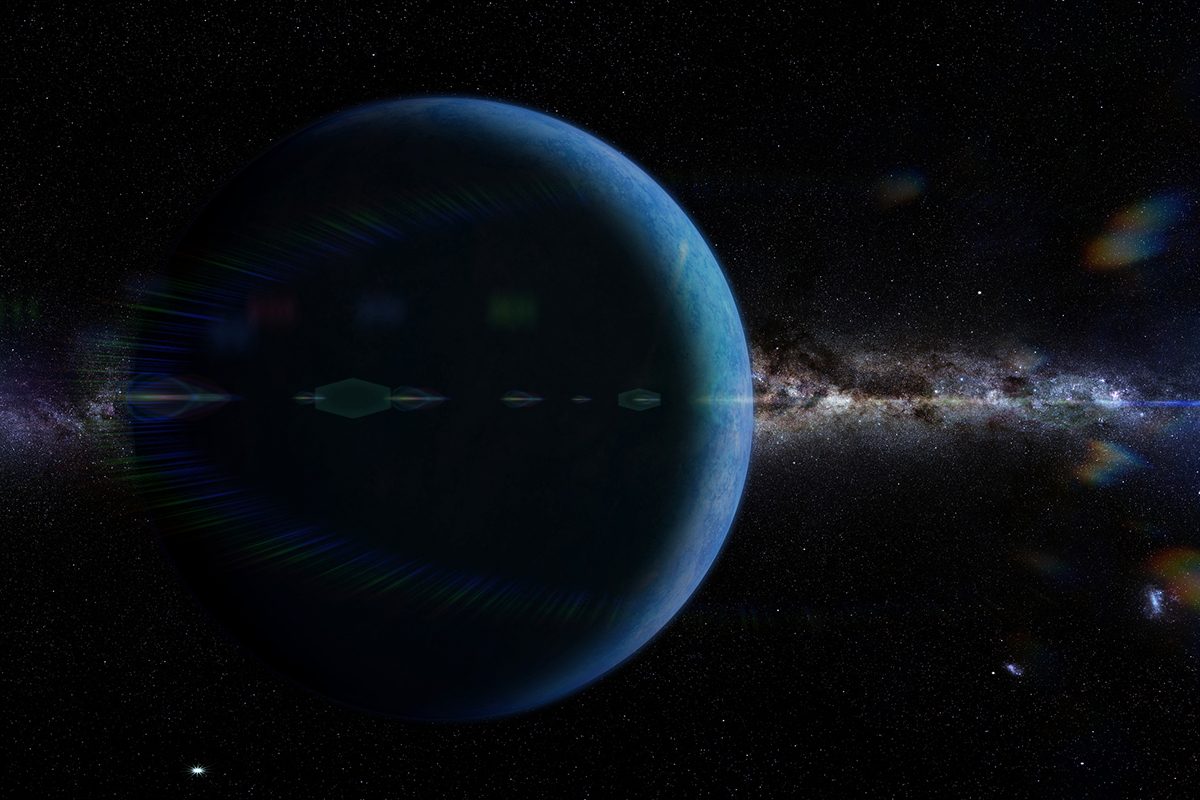
Horner told ScienceAlert the solar system could host both planets, one, or neither, and that future discoveries could strengthen the case for X2, though another explanation without an unseen planet could also emerge.
Authors Acknowledge Imperfect Fit and Outline Next Steps
Horner added that this isn’t a perfect fit and you wouldn’t expect it to be.
Co-author Jonathan Horner said the recently constructed observatory could help prove or disprove PX2’s existence, Skyatnightmagazine reported. He added that we now have an opportunity to put this idea to the test, Universe Space Tech noted, and that as Rubin maps more of the distant sky, astronomers can check whether those orbits match the patterns predicted by the X2 simulations.
Horner said the observatory provides an important test even if it does not find X2 directly: it may be that Vera Rubin’s observations reveal that such objects are actually scarce, and the ones we’ve found so far were found serendipitously — in that case, the evidence in support of the hypothesis would fade away.
A 2025 analysis favored about 4.4 Earth masses at about 290 AU, Tech Times reported, illustrating how different modeling approaches continue to produce distinct predictions.
The study’s lead researcher is Patryk Sofia Lykawka, an Adjunct Associate Professor at the University of Southern Queensland who is based at Kindai University in Japan. He also holds an affiliation with the National Astronomical Observatory of Japan, underscoring his expertise in planetary science and solar system dynamics.
Lykawka spearheaded the N-body simulations spanning 4.5 billion years of solar system evolution, testing whether a distant Earth-class planet could reproduce the observed population of extreme trans-Neptunian objects.
What Happens Next
The study was received August 2, 2026, accepted October 22, and published November 23 in Monthly Notices of the Royal Astronomical Society. The journal lists it in the December 2026 issue (Volume 553, Issue 3). As Rubin’s survey deepens, the number of known extreme TNOs will grow from the current handful to potentially hundreds.
“So with that, we should be able to directly test how well the simulations with Planet X2 (or whatever other mechanism!) reproduce the much larger number of objects,” Horner said. “Once LSST has mapped enough of the sky so that we have a consistent rate of discoveries, we will know really quickly whether this is the right solution or not.”
Worth a look
NSF NOIRLab Releases 570-Megapixel View of Supernova Remnant SNR G295.5+09.7
NSF NOIRLab released the most detailed view yet of supernova remnant SNR G295.5+09.7 on Monday captured by the...
Chalmers Team Finds Magnetic Loop Drives Star’s Stellar Wind
That changes a fundamental part of the origin story of the atoms we ourselves are made of, said...
NASA Webb Maps Cas A Dust, Finds Shells Merged Hours Before Blast
NASA's James Webb Space Telescope has mapped the dust inside Cassiopeia A and found evidence that the star's...

Mars Express Releases Tharsis Tholus Images Showing Double Caldera
Mars Express orbiter has released new images of Tharsis Tholus, an 8-kilometre-high volcano whose summit collapsed twice, leaving...