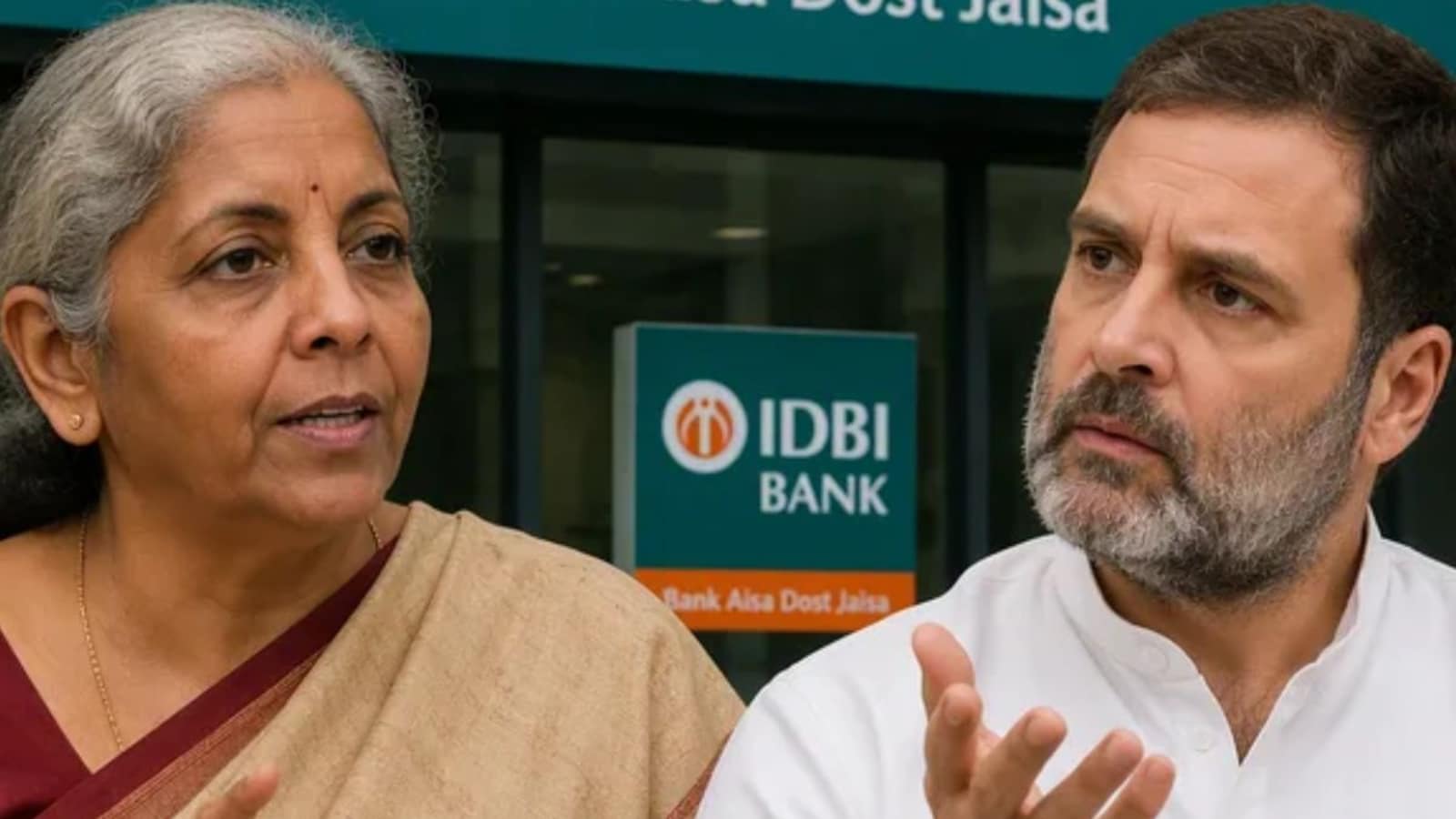
Finance Minister Nirmala Sitharaman on Friday hit back at Leader of the Opposition Rahul Gandhi over the proposed strategic disinvestment of IDBI Bank,, NDTV reported, accusing successive Congress administrations of leveraging public sector financial institutions to benefit politically connected businesses.
The latest clash between New Delhi and the opposition marks a sharp escalation in an ongoing political battle over the privatization of major state-backed assets. The friction follows Gandhi’s decision to publicly oppose the Centre’s move to hand over a controlling stake in the lender to Canadian investment firm Fairfax Financial Holdings, a transaction that has already galvanized bank unions and triggered plans for widespread labor protests.
The Sale Structure and the Path to Fairfax
Under the terms of the transaction approved by the cabinet committee on economic affairs in October 2026, Fairfax Financial Holdings is set to acquire a 60.72 percent stake in IDBI Bank, valuing the deal at ₹52,878 crore. This package comprises a 30.48 percent equity shareholding held by the central government and 30.24 percent equity shareholding held by the Life Insurance Corporation of India (LIC), according to details reported by The Economic Times.
We all know how @INCIndia has used Banks and financial institutions as personal entities and pressured bank employees to extend loans at their whim, bypassing prudent lending norms. Let me list a few instances. – In 1957, Haridas Mundra got money from LIC due to influence by… https://t.co/U3m03zSpMg
Following the completion of the sale, the Centre will retain 15 percent and LIC 19 percent, with both becoming public shareholders and withdrawing their nominees from the bank’s board. This will leave the total combined government and institutional holding reduced to 34 percent.
कांग्रेस के समय में IDBI बना – देश का उद्योग खड़ा करने के लिए।मोदी के समय में पहले बोली देखी गई, फिर दाम तय हुआ।कांग्रेस के time पे बैंक बनते थे। मोदी के time में बिकते हैं।मैं IDBI बैंक के कर्मचारियों के साथ खड़ा हूँ। https://t.co/6dIok1fxV1 pic.twitter.com/uLT7mWTYyr
The Department of Investment and Public Asset Management (DIPAM) defended the bidding process after facing pointed questions regarding the bank’s valuation. In a formal clarification issued on Thursday, the finance ministry stated that the reserve price for the second round of bidding was neither decreased nor increased. The initial round, conducted in the 2025-26 financial year, fell short of the benchmark and became functus officio. Sealed bids for the subsequent best-offer round were evaluated by a core group of secretaries on disinvestment, which confirmed that Fairfax’s bid of ₹81 per share exceeded fair value estimates provided by independent valuation agencies.
Labor Resistance and Opposition Objections
The privatization blueprint has drawn fierce pushback from labor groups and opposition leaders who argue that a profitable financial institution built with public money should remain in state hands. The United Forum of IDBI Officers and Employees has issued a formal strike notice, with workers planning a two-day nationwide hunger strike on November 2 and November 3 to demand statutory protection for their service conditions, pension benefits, and reservation policies, Business Standard reported.
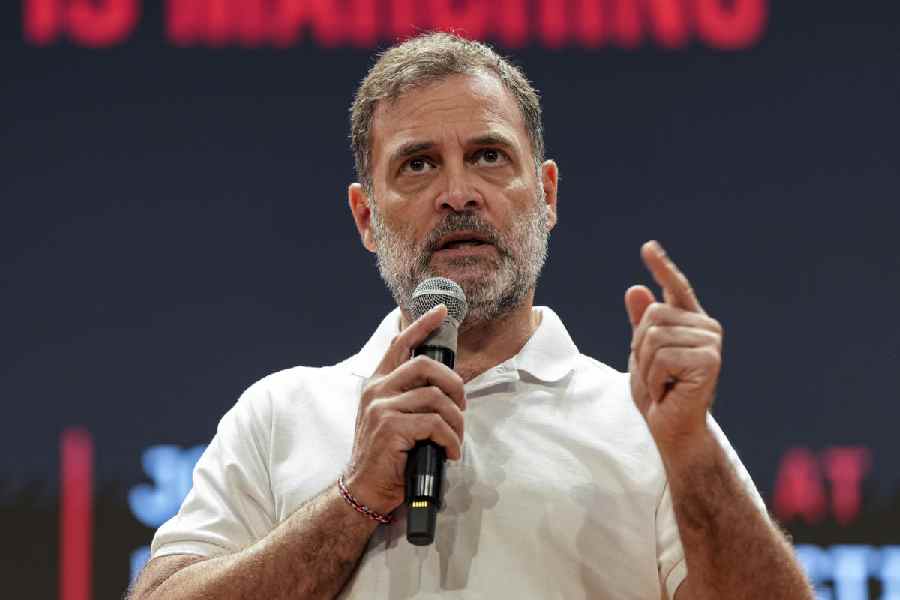
In an open letter addressed to IDBI Bank employees dated October 29, Rahul Gandhi criticized the transaction, pointing out that the lender had completed a remarkable financial turnaround. According to bank financial results, net profit rose 27 percent to ₹9,513 crore in the 2025-26 fiscal year, up from ₹7,515 crore the previous year. Gandhi argued that the institution’s recovery was driven entirely by the sweat and dedication of its workforce.

In his letter, Gandhi wrote that an institution built with public money belongs to the public, adding that when IDBI is privately owned, reservation for SC, ST and OBC candidates will go with it, and that the employees’ service conditions, already weakened, will lose their last protection.
The Hindu noted that Gandhi also reminded the public of a 2003 parliamentary commitment in which the government assured lawmakers it would permanently retain at least a 50 percent stake in IDBI Bank. While that pledge was not formally codified into statute, critics argue that the drop to a combined 34 percent state holding breaches an ethical compact made with the legislature.
Historical Fault Lines and the Minister’s Counter-Offensive
Sitharaman dismissed the opposition’s framing in a detailed response posted on X, asserting that the current government inherited a severely weakened lender hobbled by historical political interference. She stated that IDBI Bank had been forced to extend massive credit lines to politically connected business groups under previous Congress regimes, naming entities such as Videocon, Winsome, ABG Shipyard, and Kingfisher, whose subsequent defaults turned into massive non-performing assets.
To support her arguments regarding historical financial mismanagement, the Finance Minister pointed to multiple past controversies and referenced the official White Paper on the Indian Economy released in February 2024. She contrasted those practices with the Modi administration’s handling of the institution, emphasizing that the NDA government revived the bank through professional management, prudent lending norms, and a recapitalization infusion exceeding ₹25,000 crore.
The exchange over IDBI Bank follows another heated disagreement between the two leaders regarding the Tata Group, during which Sitharaman accused Gandhi of casting baseless aspersions on Indian industry and politicizing routine commercial matters. With labor unions digging in for the upcoming November protests and the government defending its valuation and restructuring methodologies, the privatization of IDBI Bank remains one of the most high-stakes economic battles on the national stage.
Related reading

Teagasc Urges Irish Growers to Monitor Oilseed Rape for Autumn Disease
Expanding Irish Oilseed Rape Acreage Sets Up High-Stakes Autumn Disease Management The acreage of winter oilseed rape planted...

Spike in demand to nurse advice line leads to AI launch – Nursing Times
In response to a 1,141% rise in inquiries to its nurse-led advice line, the Eve Appeal has launched...

Cape Canaveral in its “boom cycle” of launches
SpaceX has paused Florida Falcon 9 launches for at least six weeks following an Oct.

Galway student aims to uncover why bowel cancer resists immunotherapy – Connacht Tribune
Nial O'Reilly, a PhD researcher at the University of Galway, is investigating why colorectal cancer cells evade immunotherapy...