
“After an evening of thunderstorms in Gauteng, with a lot of lightning, thunder, as well as heavy downpours in some parts of the province, residents have woken up to a beautiful picture of a bright and circular type of light around the sun,” said Lehlohonolo Thobela.
A 22-degree solar halo appeared across South Africa on Monday, November 16, 2026, visible shortly before midday and captured in photographs from Gauteng to the Western Cape.
Sunlight bends through millions of six-sided ice crystals suspended in thin clouds 5,000 to 12,000 metres above ground. The crystals refract light at a minimum angle of 22 degrees, creating a circular band with a radius that matches the span of an outstretched hand held at arm’s length.
Professor Jennifer Fitchett, head of postgraduate studies and researcher development at Wits University, estimated the crystals above Johannesburg sat eight to 10 kilometres up, where temperatures ranged between −30°C and −35°C.
Different colours bend by slightly different amounts, giving the inner edge a faint red tint that fades to yellow, green, and pale bluish-white on the outside — the reverse of a normal rainbow.
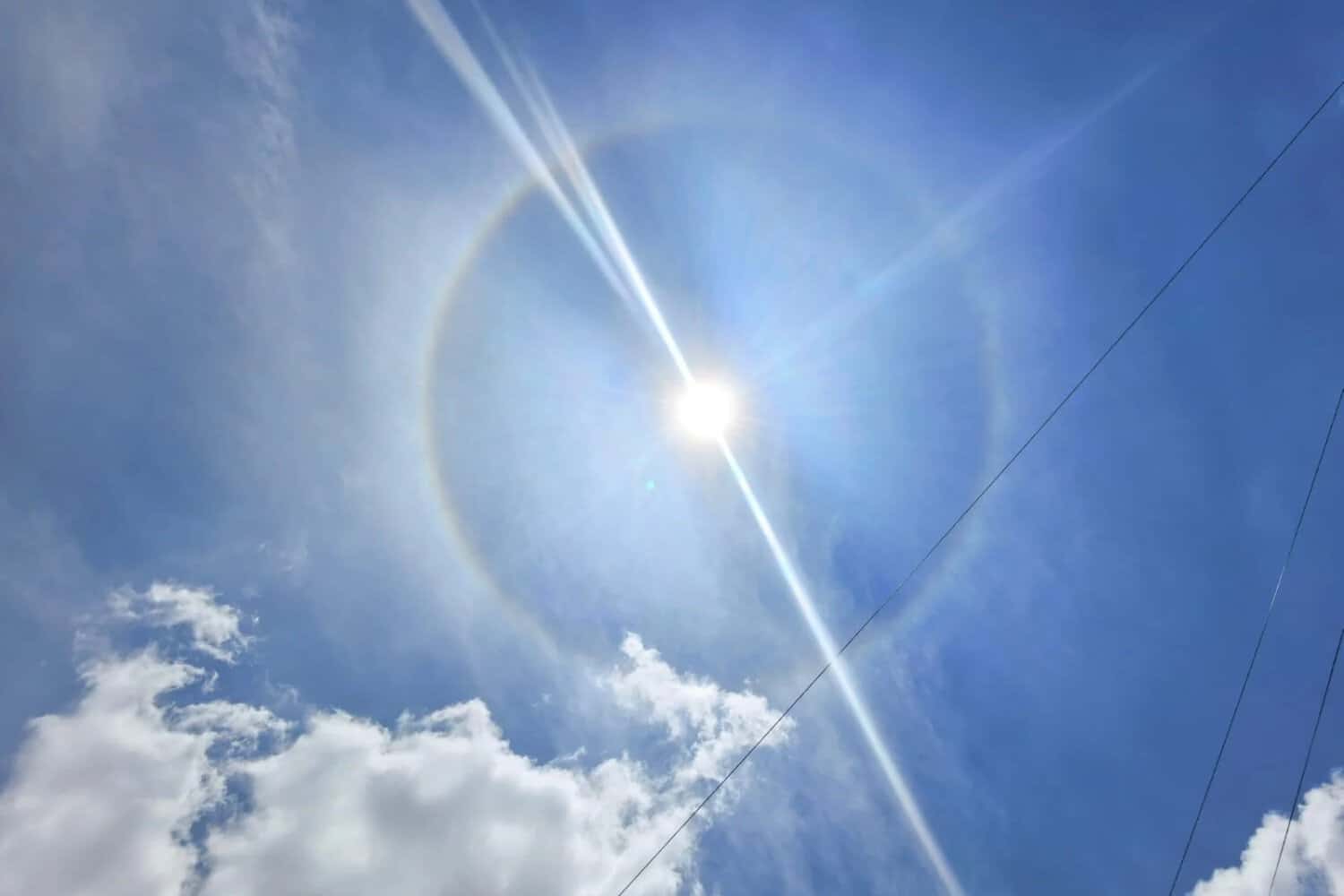
Old forecasting lore holds that a ring around the sun signals rain within a day or two. Thobela said that historically, it would indicate a front moving through the region or a weather shift bringing rain within the next 24 to 36 hours. Cirrostratus clouds often run ahead of an approaching warm front or low-pressure system, meaning moisture is moving in aloft.
But the sign is not foolproof — sometimes the moisture passes over without rain reaching the ground.
The South African Weather Service on Monday predicted fine, warm to hot conditions in the western Cape, with strong to near-gale winds along the west coast and a yellow level 1 warning for damaging winds over the City of Cape Town.
Forecasts from Yr.no and Open-Meteo showed dry conditions through midweek, with highs of 37°C for Cape Town and 39°C for Paarl on Wednesday, and only a slim chance of drizzle from Thursday.
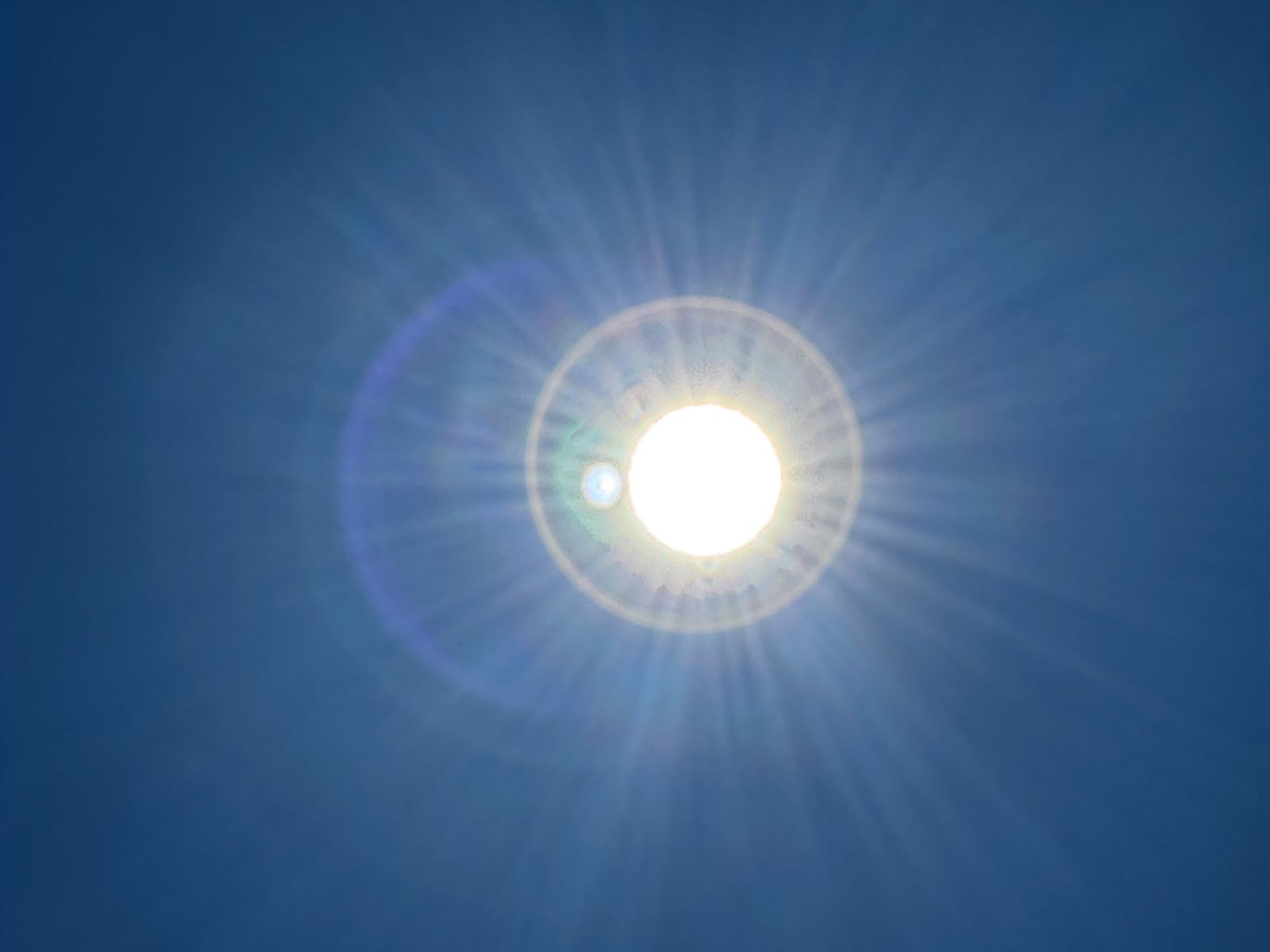
Fitchett noted darker cumulus clouds building over Johannesburg, similar to those preceding Sunday’s thunderstorms, suggesting further rain was possible. However, she said the halo itself was an optical phenomenon, not a direct response to extreme heat associated with the developing Super El Niño.
Multiple authorities warned against looking directly at the sun. The South African Government urged observers to enjoy the spectacle but avoid eye damage. Fitchett advised using a phone in selfie mode: tilt the front-facing camera toward the sky and watch the ring on the screen, keeping eyes off the sun.
It creates very bright light and people who have looked up at the sky. So it is advised not to stand staring at this formation, take a quick picture on your phone and use that for reference, because it is a very bright form of incoming solar radiation.
Professor Jennifer Fitchett, Wits University
People do need to be careful because, similar to a solar eclipse, it creates very bright light.
Professor Jennifer Fitchett, Wits University
Healthline notes that extended sun-gazing can cause watery eyes, discomfort, soreness, headache, blurred vision, decreased colour vision, difficulty discerning shapes, distorted vision, a blind spot or multiple blind spots in the center of your vision, and permanent eye damage. Anyone experiencing symptoms should seek medical attention promptly.


PET: Russian Intel Planned Rapper Assassination; Two Danes Arrested
Danish police thwarted an alleged Russian intelligence plot to assassinate Ukrainian rapper Kyivstoner minutes before his Copenhagen concert...

UK, EU Seal Post-Brexit Reset Deal Worth Up to £17bn a Year, Treasury Says
Prime Minister Andy Burnham sealed a post-Brexit reset deal with the European Union in Brussels on Friday, agreeing...

Commonwealth Shared Scholarships Open 10 November 2026 for 2027 Awards
Nigerian graduates can apply from 10 November 2026 for Commonwealth Shared Scholarships that cover full tuition, a monthly...