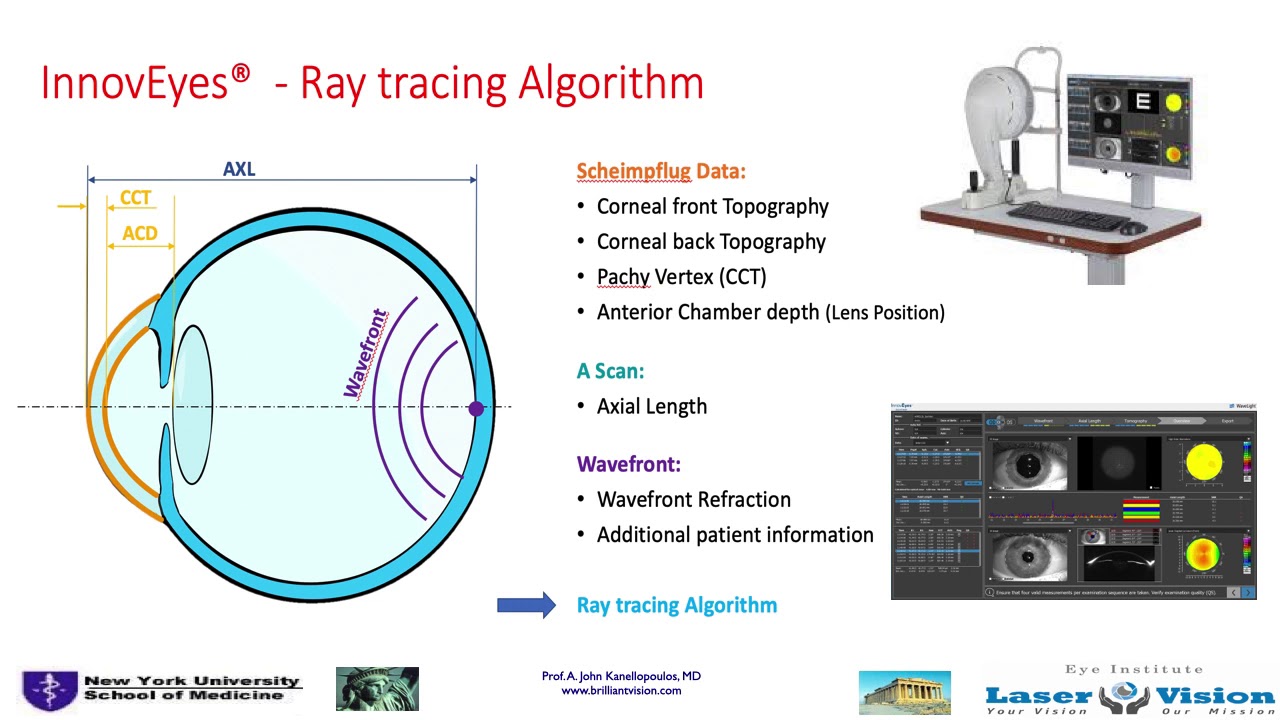
Stanford Eye Laser Center is conducting a prospective, randomized research trial comparing ray tracing-guided LASIK to wavefront-guided LASIK in up to 70 nearsighted patients. Meanwhile, Porter Ophthalmology in Raleigh addresses long-term vision planning for post-LASIK patients approaching cataract surgery age.
As millions of patients who underwent refractive surgery reach their fifties and sixties, eye care providers are facing new clinical questions regarding long-term vision management and advanced technologies. Developments at major centers highlight both the refinement of laser vision correction procedures and the complexities of managing post-LASIK eyes as patients age.
Stanford Eye Laser Center Investigates Ray Tracing-Guided LASIK
Researchers at Stanford are conducting a prospective, randomized research trial involving up to 70 nearsighted patients to evaluate advanced treatment planning. According to Stanford, participants will undergo bilateral surgery, with one eye receiving ray tracing-guided LASIK and the other receiving wavefront-guided LASIK.
The assignment of which eye receives ray tracing-guided surgery is randomized prior to enrollment according to a randomization schedule. While participants know which eye receives which procedure, the randomization determines only whether the right or left eye gets the ray tracing-guided treatment, giving patients a fifty percent chance for either eye. Wavefront aberrometry, a non-contact laser measuring device, measures the eye’s refractive status to calculate treatments that reduce or eliminate nearsightedness with and without astigmatism.
All participants in the Stanford study will be followed for one year after the procedure. The research protocol specifies that re-treatments are not allowed during the first twelve months. Participants undergo thorough eye examinations at regular intervals, including testing of vision, contrast acuity, slit lamp and ophthalmoscope examinations, and inner eye pressure tests. Stanford notes that participants will have at least one additional examination at six months that would not normally occur outside of the study.
Porter Ophthalmology Addresses Post-LASIK Cataract Planning
As patients who received vision correction between 1999 and 2015 reach cataract age, practices like Porter Ophthalmology in Raleigh, North Carolina, are clarifying long-term care options. According to Porter Ophthalmology, previous LASIK does not prevent individuals from undergoing cataract surgery later in life, as the two procedures affect different anatomical structures.
However, calculating the correct intraocular lens power introduces complexities because LASIK alters the curvature of the cornea, disrupting standard measurement formulas. Porter Ophthalmology evaluates corneal shape, refractive history, and visual goals, utilizing diagnostic tools to reconstruct reliable eye measurements even when full pre- or post-operative records from past procedures are unavailable. Isaac Porter, MD, founder of Porter Ophthalmology, emphasized the clinical reality of treating this growing demographic.
We’re seeing more and more patients who had LASIK years ago and are now exploring cataract surgery. While the planning is more detailed, it’s absolutely possible to deliver excellent vision outcomes. Our team has the experience and tools to manage these cases with a high level of confidence.
Isaac Porter, MD, founder of Porter Ophthalmology
Evaluating Clinical Outcomes and Future Care
The primary aim of Stanford’s clinical trial is to compare visual outcomes between ray tracing-guided and wavefront-guided procedures, with all trial interventions considered standard of care for LASIK surgeries. Concurrently, providers managing aging post-LASIK cohorts stress the importance of patient history and specialized diagnostic tools to address post-refractive challenges in cataract care.
>
Worth a look

PPARD Activated in Immune Cells Becomes Cancer-Fighting Tool
Researchers at Cold Spring Harbor Laboratory and the Massachusetts Institute of Technology have discovered that the lipid-sensing transcription...

Salk Institute Finds SRF3 Protein Restores Plant Iron Balance
Researchers at the Salk Institute discovered on October 14, 2026, that the plant protein SRF3 repairs cellular iron...

Vatican announces Pope Leo XIV has lung cancer after successful surgery
Pope Leo XIV underwent successful surgery at Rome’s Gemelli Hospital to remove a cancerous nodule from his right...

Max Planck Researchers Discover How Sequence Changes Prevent mRNA Errors
Researchers at the Max Planck Institute for Multidisciplinary Sciences discovered why ribosomes slip when reading modified mRNA and...