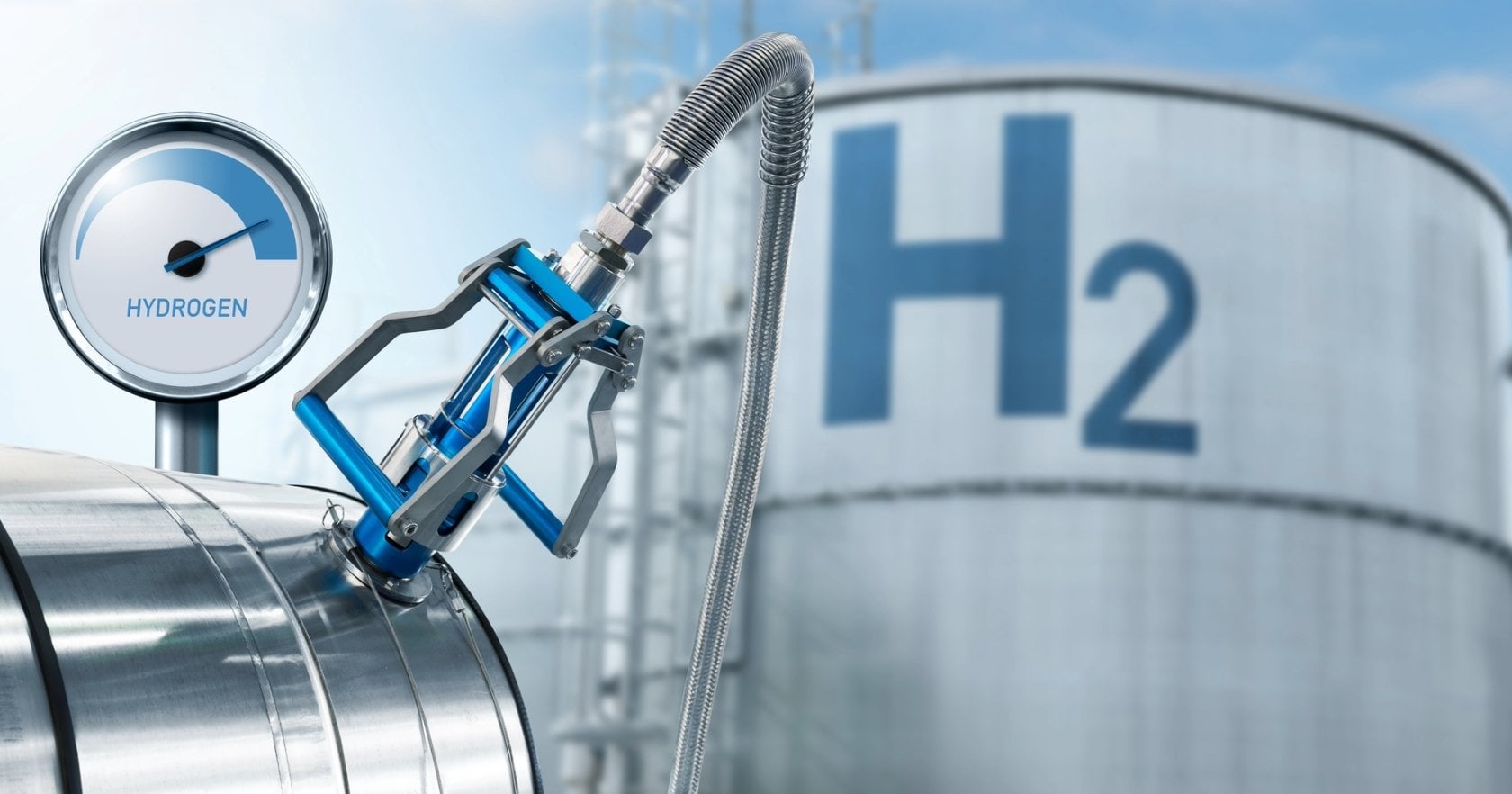
Published online on September 4, 2026, in Applied Physics A, researchers at Tohoku University and the University of Tokyo have developed the Digital Hydrogen Platform, a curated database pairing AI-assisted literature mining with human validation to map the physical relationships governing hydrogen storage capacity and equilibrium pressure.
Published online on September 4, 2026, in Applied Physics A.
Led by Tohoku University in collaboration with the University of Tokyo, the team constructed the Digital Hydrogen Platform, known as DigHyd, to bridge the gap between raw experimental findings and material design.
Building the DigHyd Database Through AI Mining and Human Curation
For metal hydrides—materials that tuck hydrogen atoms directly inside their crystal frameworks—the team manually verified 4,643 storage-capacity measurements alongside 652 pairs of enthalpy and entropy measurements. The research group combined artificial intelligence literature mining with rigorous manual verification, checking extracted details against original publications, standardizing units, and analyzing experimental curves.

The platform contains more than 30,000 data entries drawn from over 4,000 experimental publications and is publicly accessible via the DigHyd platform. These thermodynamic figures allow scientists to predict how storage behavior shifts across varying temperatures, while direct links back to original studies ensure full traceability.
Uncovering the Trade-Off Between Capacity and Release Pressure
In five-fold cross-validation tests, this approach matched the predictive power of leading black-box models while letting scientists inspect the underlying physical mechanisms. The researchers deployed GoodRegressor, an AI method utilizing symbolic regression, to make sense of this massive dataset. Unlike black-box machine learning models that generate predictions without revealing their internal logic, symbolic regression translates data relationships into human-readable mathematical equations.
Researchers have developed a curated database that contains more than 30,000 data entries from over 4,000 experimental publications to help materials scientists understand efficacy of storing hydrogen. #HydrogenStorage #MaterialsScience #TohokuUniversityhttps://t.co/Wn5KXHF6Ml
As hydrogen enters a metal lattice, the structure expands and deforms. Stiffer materials resist this change, driving up the elastic energy required and raising the equilibrium pressure needed for release. Lighter host atoms generally deliver greater hydrogen storage capacity by weight. In interstitial hydrides, where hydrogen slips into spaces between metal atoms, lattice geometry and atomic size dictate performance. Mechanical stiffness plays a critical role during absorption. Additional connections among electronegativity, thermal conductivity, and resistance to compression help explain why improving storage capacity frequently alters release conditions.
Understanding hydrogen storage requires more than finding materials that can hold large amounts of hydrogen. We need to understand why their properties determine how hydrogen is retained and released. By combining reliable experimental data with interpretable AI, we can begin to uncover these underlying physical relationships.
Hao Li, Distinguished Professor at the Advanced Institute for Materials Research (WPI-AIMR), Tohoku University
Guiding the Next Generation of Storage Materials
The important next step is to use these insights to guide the development of new materials and test whether their predicted properties hold up in experiments. By connecting data-driven analysis with the synthesis and evaluation of candidate materials, we hope to accelerate the search for practical hydrogen storage solutions.
Shin-ichi Orimo, of the Advanced Institute for Materials Research (WPI-AIMR), Tohoku University
Comparing real-world experimental results against model predictions will help refine the database framework as work continues. The research team intends to expand the database, pinpoint promising material compositions, and synthesize new candidates for physical testing.
- r/opensource Bans AI Projects, Restricts Solo Developers
- Mobile Pixels Crowdfunds $434,707 from 392 Backers for Prisma 40-inch Curved 5K Monitor
- University of Hull: Duct Tape Reduces Door Flood Leakage by 97-98% (world-today-news.com)
- Joy Cheng commits to Harvard University admissions process (archyde.com)

r/opensource Bans AI Projects, Restricts Solo Developers
Reddit’s massive r/opensource developer community enacted an immediate ban on all artificial intelligence projects on October 24, 2026.

Mobile Pixels Crowdfunds $434,707 from 392 Backers for Prisma 40-inch Curved 5K Monitor
Mobile Pixels has introduced Prisma, a 40-inch curved 5K monitor featuring an integrated workspace hub designed for Apple...

Meta Shares Drop 17% Amid Cash Flow Concerns
Meta Platforms shares have slid 17% from their recent peak as heavy infrastructure spending and a first-ever negative...
As always-on AI wearables flood the consumer market, tech giants and startups are rolling out
As always-on AI wearables flood the consumer market, tech giants and startups are rolling out audio-recording pendants, smart...