
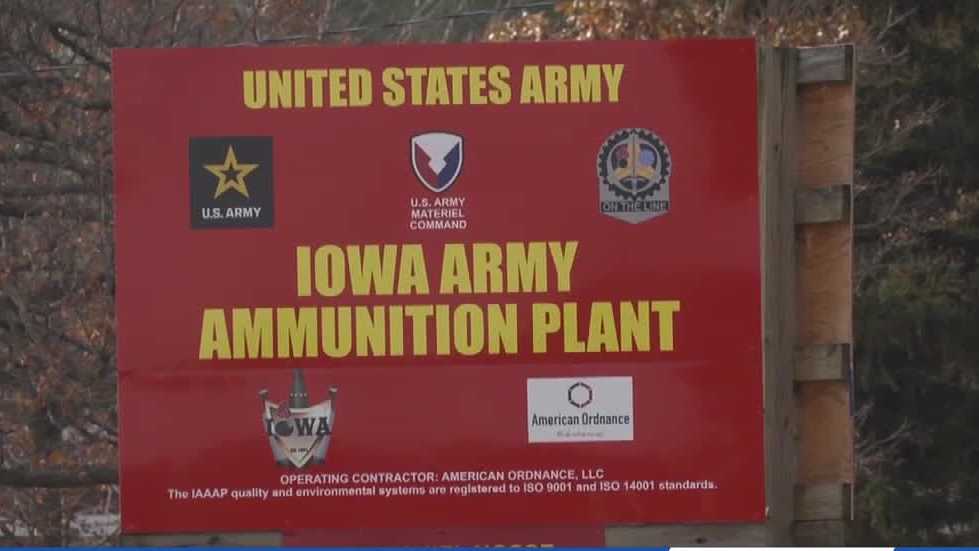
The U.S. Army postponed a controlled detonation of 9,500 pounds of unstable lead azide at the Iowa Army Ammunition Plant near Burlington after public pressure and updated weather forecasts, Iowa Public Radio reported. The blast, originally set for Friday, is now scheduled for Monday as residents and lawmakers demand clearer safety data.
The Army plans to destroy 68 barrels of the highly volatile explosive compound that has degraded in underground concrete tanks over more than 20 years, according to USA Today. Moving the material is impossible because recrystallization makes it too sensitive to friction or temperature changes, and chemical neutralization would require weeks of hands-on handling that the Army says would drastically increase the risk of a fatal accidental detonation, Iowa Public Radio reported.
The science behind the decision
Lead azide serves as a primary detonator in munitions. When it degrades, it becomes unpredictably sensitive. Army spokesperson Justine Barati told Iowa Public Radio that colder winter temperatures would make the stockpile even more volatile, raising the chance of an uncontrolled explosion if disposal waits.
Patrick O’Shaughnessy, professor of occupational and environmental health at the University of Iowa, explained the atmospheric trade-offs. “That means it smears it out more,” O’Shaughnessy told Iowa Public Radio, describing how wind dilutes airborne lead particles across a wider area.
“So whatever amount [of air pollution] there is will have less of an effect in any one given area.” A calm day would drop heavier particles straight down on the installation, which the Army prefers.
Maps shrink, but questions grow
Initial worst-case modeling showed a lead plume reaching Maquoketa, roughly 100 miles north. By Wednesday the Army’s updated maps showed spottier deposition zones ending southeast of Cedar Rapids, Iowa Public Radio reported. USA Today noted the plume could still extend across portions of southeastern Iowa and northwest Illinois depending on wind.
The EPA issued an emergency permit in April and sent technical experts to the plant in June to address the deteriorating drums, according to Iowa Public Radio. The permit and modeling data are public records.
Health stakes and the lead that stays
Lead is a persistent neurotoxin. It does not decompose; it settles. Peter Thorne of the UI College of Public Health told Iowa Public Radio that cancer risk from low-level environmental exposure is not the primary concern — irreversible developmental harm to children is.
“There are people who may have had their children tested for lead in their blood who could follow up with another test in a few months just to convince themselves that there’s nothing to worry about,” Thorne said. “But you know that’s an expense that they would have to bear, and many people might not be able to afford that.”
Drew Latta, a researcher with the Center for Health Effects of Environmental Contamination, said groundwater should stay protected. “There’s just so much between the surface and the groundwater where lead could just stick to,” Latta told Iowa Public Radio.
“My personal thought on that is it’s really almost not a concern.” Surface soil is another matter. Washing play equipment moves lead into dirt where toddlers ingest it through hand-to-mouth behavior, the UI experts warned.
“Once we do it, then it becomes considered a viable option for other situations in other places,” Thorne told Iowa Public Radio. “So, we expose Iowans this time, but how many more times will we think of doing this and think it’s okay now?”
Political fracture over notice and alternatives
State Sen. Scott Webster, R-Davenport, called for a halt until the Iowa DNR independently reviews the plan. State Sen.-elect Nikhil Wagle, D-Bettendorf, said residents have a right to be concerned and shared a military official’s statement that perimeter monitors will track airborne lead.
U.S. Rep. Mariannette Miller-Meeks, R-1st District, backed the Army’s plan, citing public forums held in Middletown earlier this year. Gov. Kim Reynolds’ office said it learned of the detonation Monday, days before the scheduled blast. Democratic Sen.-elect Josh Turek and Gov.-elect Rob Sand both demanded a delay for transparency, with Turek criticizing the short notice to the governor’s office, Iowa Public Radio reported.
What residents should do Monday
Middletown residents are asked to vacate from 8 a.m. to 2 p.m. The Army advises anyone in potentially affected zones to stay indoors with windows and doors closed for 24 to 48 hours, set HVAC to recirculate, and use HEPA filtration if possible, according to guidance shared by KCCI.
Wet-clean outdoor surfaces after visible dust settles, replace vehicle cabin filters, and wash hands before eating. The Army will post updates at its community notifications page.
Andrew Whelton, an environmental engineering professor at Purdue University who has helped communities recover from chemical disasters, told KCCI that high short-term doses can cause acute lead poisoning, while long-term low doses drive neurological deficits in children. The CDC maintains no safe blood lead level has been identified for children.
UI researchers will deploy air and soil monitors Monday. If initial readings are high, extended monitoring will follow; if low, the study may end there. No formal pre- and post-detonation blood lead study is planned due to time constraints, Thorne told Iowa Public Radio.
Keep reading

Tallahassee, Doral Reconsider ICE Deals as GOP Lawmakers Link Enforcement to Losses
After November midterms where two South Florida Republican incumbents barely survived districts they once dominated, city leaders in...

Senate Passes Bipartisan American Affordability and Jobs Act, Sending Permitting Overhaul to House
The Senate passed the Bipartisan American Affordability and Jobs Act on Thursday in a 62‑33 vote, sending the...

Avalanche Host Ducks in Back-to-Back After Utah Loss
The Colorado Avalanche return to Ball Arena on Thursday night to face the Anaheim Ducks at 7 p.m....
NYISO Warns of Statewide Power Shortfalls by 2033; Hochul Releases Nuclear Study
ALBANY — New York's electric grid operator warned Wednesday that unless substantially more energy development occurs, the state...