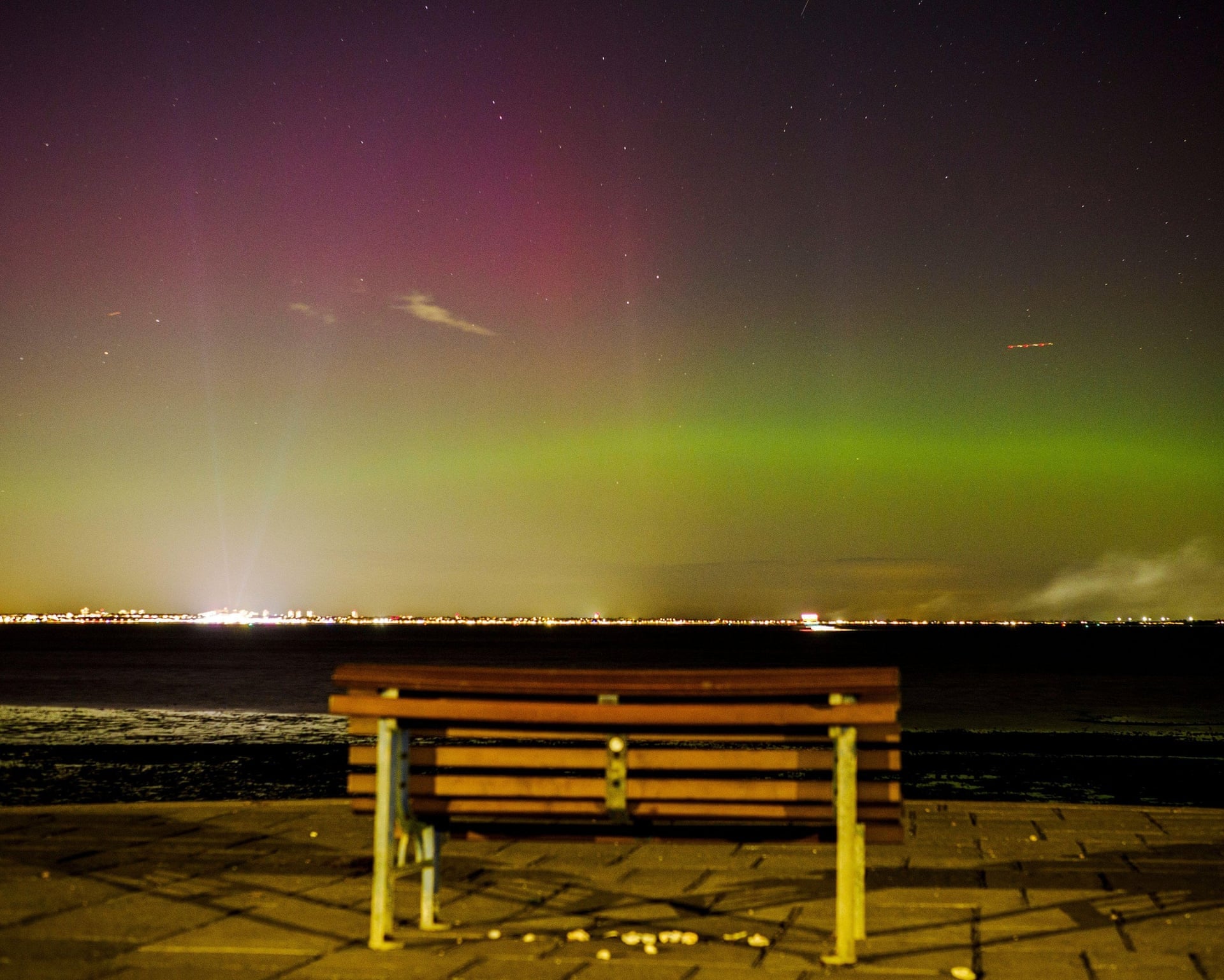
Skies across the UK lit up with the aurora borealis on Friday and Saturday evening as energetic solar particles collided with gases in the upper atmosphere. The Met Office reports that sightings could continue across Scotland and similar geomagnetic longitudes through Tuesday during clear skies.
Sky-watchers from northern regions down to the south coast of England caught views of the celestial display over the weekend. The natural light show reached as far south as Devon, Hampshire, Kent, and Wales where residents witnessed striking colours visible to the naked eye. In Kent, breath-taking displays were photographed from Sheerness despite heavy light pollution in the area.
Such occurrences are mostly visible near the Arctic Circle and northern Scotland, but particularly strong activity levels brought the aurora far south. A red alert was issued by Aurora Watch UK for sightings of the natural phenomena on Saturday night. Lucky residents in Pembrokeshire and sky watchers over Brecon were treated to colourful spectacles, and additional opportunities to view the phenomenon remain available as the weekend continues.
Coronal Mass Ejections Drive Weekend Geomagnetic Activity
Space weather prediction agencies tracked an increase in solar activity triggered by coronal mass ejections erupting from the sun. The UK Met Office and the NOAA Space Weather Prediction Center reported an elevated window for geomagnetic storms following solar explosions that hurled plasma and magnetic fields into space at millions of miles per hour.

Forecasters noted that three distinct coronal mass ejections held the potential to arrive at Earth across October 9, 10, and 11. While timing carried significant uncertainty, the arrival of these charged particles interacted with Earth’s magnetic field to funnel energy toward the magnetic poles at speeds around one million miles per hour. Earth’s magnetic field can intercept these moving charged particles and funnel them downward into our atmosphere, with a particular concentration arriving at the polar regions.
“Two glancing coronal mass ejections followed by a coronal hole high speed stream bring a daily chance of enhancing the auroral oval, with sightings possible across Scotland and similar geomagnetic longitudes where skies are clear between October 10 and 13.”
The Met Office, via Yahoo News UK
Experts have pointed out that 2026 will mark a peak period for viewing the northern lights, as the sun experiences elevated levels of activity through its natural 11-year cycle. Northern Lights are most active during the Equinox and Solstice periods around March, April, September, and October. Viewers are cautioned that heightened geomagnetic activity can cause disturbances to satellite navigation systems such as GNSS and GPS.
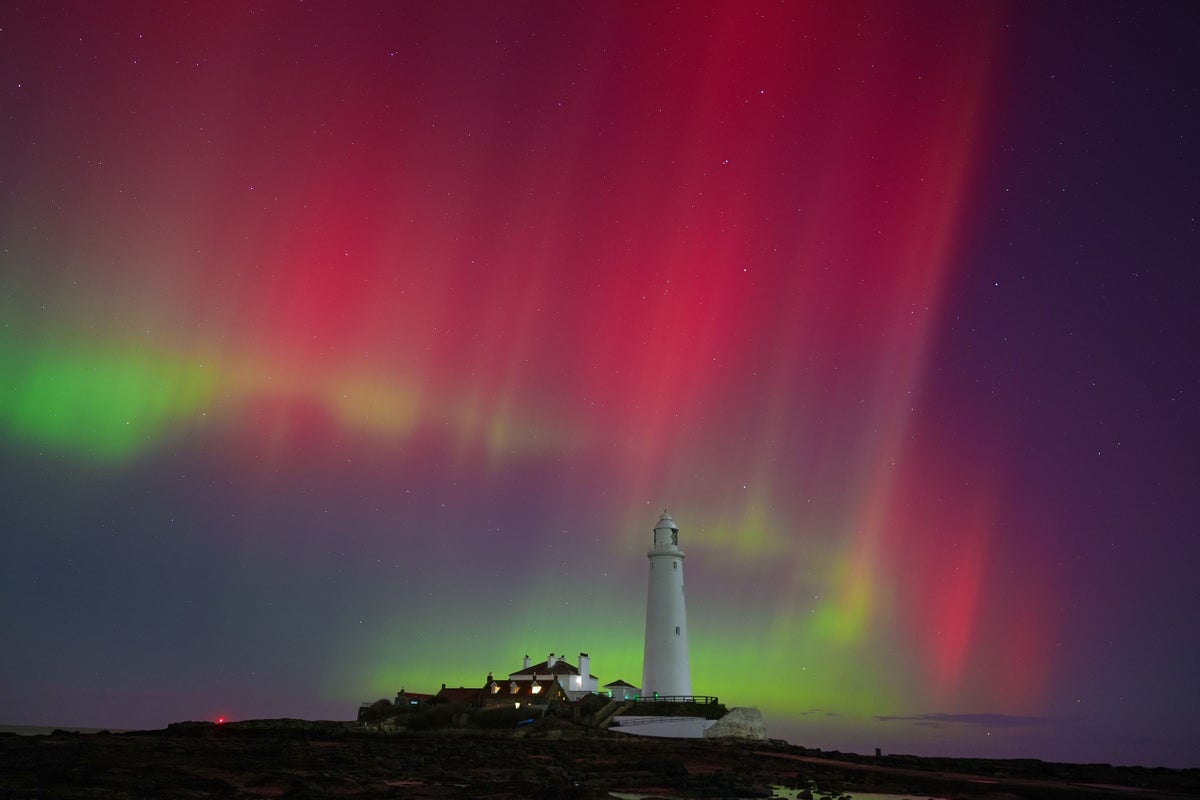
Nanotesla Levels Push Auroras Far South Across the UK
While auroras are usually confined to regions near the Arctic Circle and northern Scotland, activity levels over the weekend made the phenomenon visible across the entire country. When activity reaches 200 nanoteslas, the lights typically stay in the north, but Saturday evening levels surged to reach 600 nanotesla.
The Met Office explained that because the UK sits south of the natural aurora belt found over Norway, Iceland, and Greenland, direct overhead sightings require severe or extreme geomagnetic storms reaching Kp8 to Kp9 levels. Moderate to strong storms at Kp6 to Kp7 often push auroras across southern Iceland or toward the Faeroes, making them faintly visible from the UK at higher altitudes during clear conditions.
Atmospheric Gases and Camera Lens Advice for Viewers
The vivid colours emerge when energetic solar particles collide with atmospheric gases. Oxygen yields green light and, at higher altitudes, rare red hues, while nitrogen produces blue and purple shades. Light is emitted when these high-energy particles smash into gases located in the upper reaches of the atmosphere.
Because human rod cells operate in black and white during low-light night conditions, using a mobile phone camera helps capture colours that the naked eye might miss. The moon is also expected to stay below the horizon during peak hours, providing darker skies that increase the chances of spotting the lights.
Related reading
Hubble Data Points to First Potential Planet Born From Dead White Dwarf Star
Astronomers revisiting decades-old Hubble Space Telescope data have discovered an unusual chemical signature around a white dwarf star,...

Spanish Archaeologists Catalog Neanderthal Wooden Tools at Abric Romaní
Spanish archaeologists have cataloged 597 wooden remains and imprints from Neanderthal living areas at Abric Romaní, dating between...

Curiosity Rover Captures Detailed Martian Dawn Panorama
NASA’s Curiosity rover has captured its most detailed panorama of distant Martian cliffs yet, photographing wind-carved yardangs under...

£15m Spent to Clean Hoads Wood Illegal Waste Site
Roughly 39,500 tonnes of illegally dumped waste have been removed from Hoads Wood in Kent following a 15-month,...