
The conflict has depleted American stockpiles of long-range missiles and “profoundly undermined perceptions of US diplomatic influence both regionally and globally,” the authors said.
Washington’s rating for diplomatic influence fell for a fourth straight year, marking its biggest annual drop on record. Surveyed experts viewed the United States as “distracted and disengaged in Asia,” the report said. The Trump administration’s unilateralist posture — including punitive tariffs, repudiation of the United Nations and the International Criminal Court, and scaled-back military exercises with South Korea — further eroded regional confidence, according to SCMP.
By contrast, China “held steady, deepening its diplomatic and cultural influence across the region, and continued its progressive military modernisation,” the index found. Beijing ranked first in diplomatic influence for the fourth year and topped the economic relationships measure. Chinese artificial intelligence models now rival American competitors in quality, the report noted.
Military gap narrows to record low but U.S. retains key advantages
On the military capability submeasure, the U.S. margin over China dropped to a record low. The report said Washington retains “clear advantages” in defence spending — nearly three times the size of China’s — and maintains a “considerable” edge in ballistic missile submarines, aircraft carriers and amphibious landing vessels.
“However, in the Pacific, China’s military posture and ability to deploy force quickly and at scale outmatch those of the United States,” the index said.
Middle powers underperform as bipolarity hardens
The index classified the regional order as “markedly bipolar,” with the U.S. and China as the only “superpowers,” India and Japan as “major powers,” and Russia in fifth place as a “middle power” ahead of Australia. Middle powers such as Australia, Japan and South Korea have not stepped up to shoulder more security burden, researcher Jack Sato told The Canberra Times.
“I think there were reasonable expectations that countries similar to Canada — which we viewed as Australia, Japan, South Korea — would step up and play a bigger role and none have,” he said. “They’ve been more focused on their own internal issues.”
The Canberra Times also reported that higher fuel and fertiliser prices from the Middle East conflict constrained agricultural production across Southeast Asia, dragging down government effectiveness scores in nearly every country surveyed.
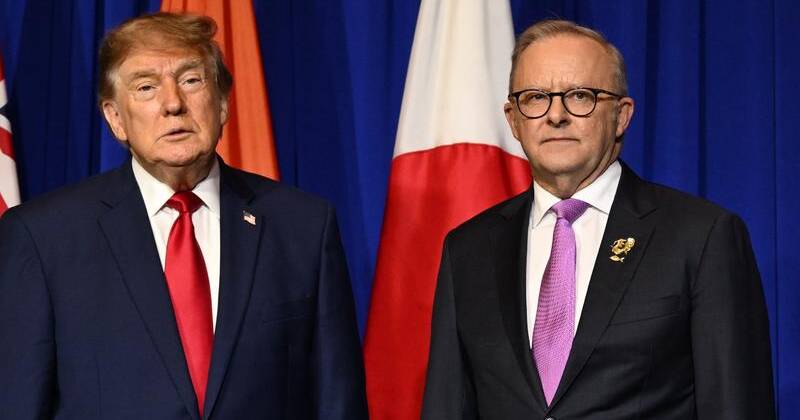
US diplomatic influence suffers record annual drop
Surveyed experts were “especially critical” of Trump’s effectiveness as a global political leader, and perceptions of his leadership within Asia also declined “significantly,” the SCMP said the authors wrote.
Beijing ranked first in diplomatic influence for the fourth year, continuing a rise that began in 2023, according to the SCMP. The report noted China “held steady, deepening its diplomatic and cultural influence across the region, and continued its progressive military modernisation,” while Chinese artificial intelligence models now rival American competitors in quality.
Middle powers fail to shoulder security burden as bipolarity hardens
 Photo: The Sydney Morning Herald
India was noted to have a very strong demographic and economic outlook, holding the third-highest Future Resources score in the region, according to ABC News citing the index.
Trilateral summit highlights authoritarian alignment concerns
Sato told The Canberra Times the authoritarian alignment among China, Russia and North Korea was the finding that concerned him most.
Researcher Jack Sato, who has served as Data Analyst for the Asia Power Index at the Lowy Institute since 2022, also contributed research to the Global Diplomacy Index and played a key role developing the Southeast Asia Influence Index. His background in statistics and regional languages underpins the index’s quantitative framework for measuring power dynamics.
Trilateral summit shows shifting alignments
The index’s release came days after an unprecedented three-way meeting between President Donald Trump, President Xi Jinping and President Vladimir Putin on the sidelines of the APEC summit. In a joint declaration, the three leaders “concurred that the International Criminal Court and other similar bodies must not abuse their jurisdiction.” The U.S., Russia and China are not parties to the court. Sato told The Canberra Times the authoritarian alignment among China, Russia and North Korea was the finding that concerned him most.
“We haven’t seen any trilateral engagement … but if that was to form, I think it could pose a real headache,” he said. Sources report that Xi and Trump held a trilateral meeting with Putin in Shenzhen, not a bilateral meeting, and do not mention an agreement on an action plan for a “constructive relationship of strategic stability on the basis of respect, fairness and reciprocity.”
Related reading

Tanzania Tightens Oversight of Mbamba Bay Port at 78% Completion
Tanzania will tighten oversight of the Mbamba Bay Port project after works reached 78 percent completion, Transport Minister...
SNL ‘Sister’ Sketch Highlights Caregiving Crisis
An Saturday Night Live parody ad for a fictional elder-care service called Sister aired on November 14, 2026,...

COP31 Talks Collapse Without Deal After Fossil Fuel Mention Omitted
“We will not accept an outcome that undermines our security and threatens our future,” said Kathy Jetnil-Kijiner, climate...

Fifteen Years After Comptroller Report, Poland Remains Israel’s Near-Exclusive Holocaust Trip Destination
"We already have strong ties there. We know where to work and how everything is organized," Dr. Yael...