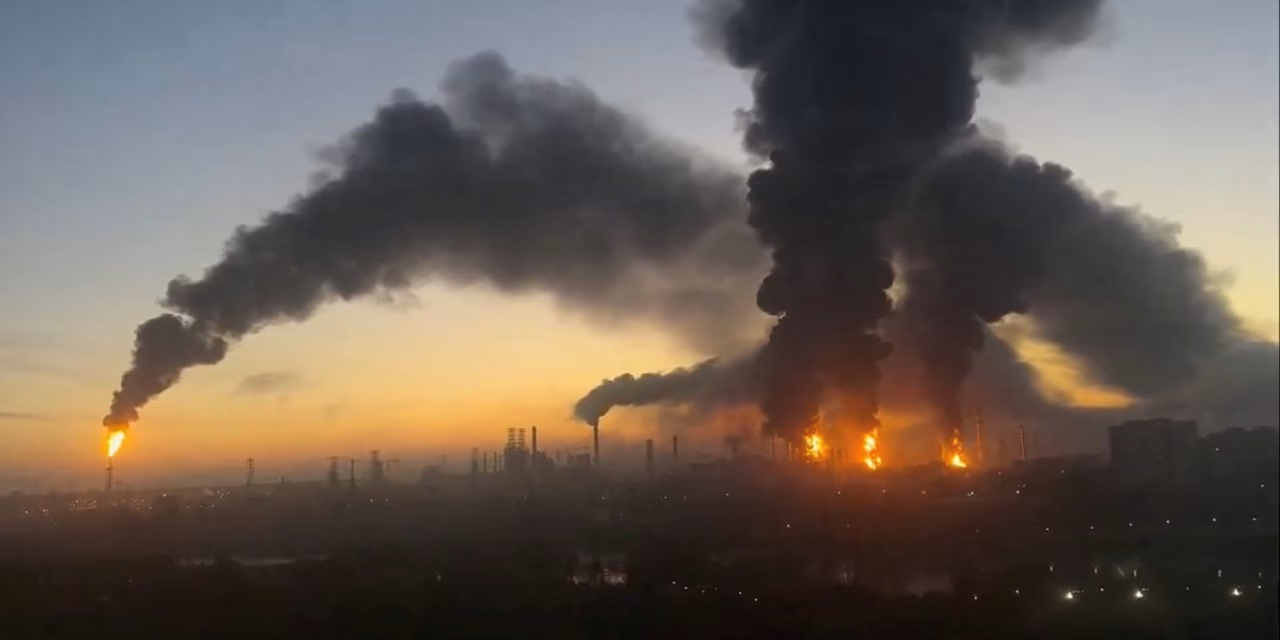
Ukrainian drones struck the Novokuybyshevsk oil refinery in Russia’s Samara region on October 30, marking the end of an unofficial two-week pause in attacks on Russian energy infrastructure. The strike, which caused visible fires, followed intense pressure from the Trump administration for Kyiv to halt operations targeting Moscow’s oil sector.
Resumption of Strikes at Novokuybyshevsk
The attack on the Novokuybyshevsk Oil Refinery, owned by the state-controlled company Rosneft, occurred early on October 30. Local residents reported explosions and air defense activity, with photographs and video footage shared on social media showing columns of smoke rising from the site. Vyacheslav Fedorishchev, governor of the Samara Region, confirmed that mobile fire teams are operating
and advised residents to remain in safe locations, though he did not explicitly name the refinery as the target.
This facility is a significant component of Russia’s industrial capacity, with an annual processing capability of approximately 8.8 million tons of crude oil. It produces various petroleum products, including jet fuel utilized by the Russian Aerospace Forces. The refinery has been a frequent target during the conflict; it was previously struck on August 22, and earlier attacks in April 2025 forced the suspension of two primary crude distillation units.
Pressure from the Trump Administration
The October 30 strike signals a shift in Kyiv’s military strategy, ending a quiet suspension of refinery attacks that began in mid-October. This pause was widely attributed to pressure from President Donald Trump, who had urged Ukrainian President Volodymyr Zelenskyy to stop hitting Russian energy infrastructure. Reports indicated that U.S. officials had even threatened to withhold intelligence support if Ukraine continued the campaign against Russian oil facilities.
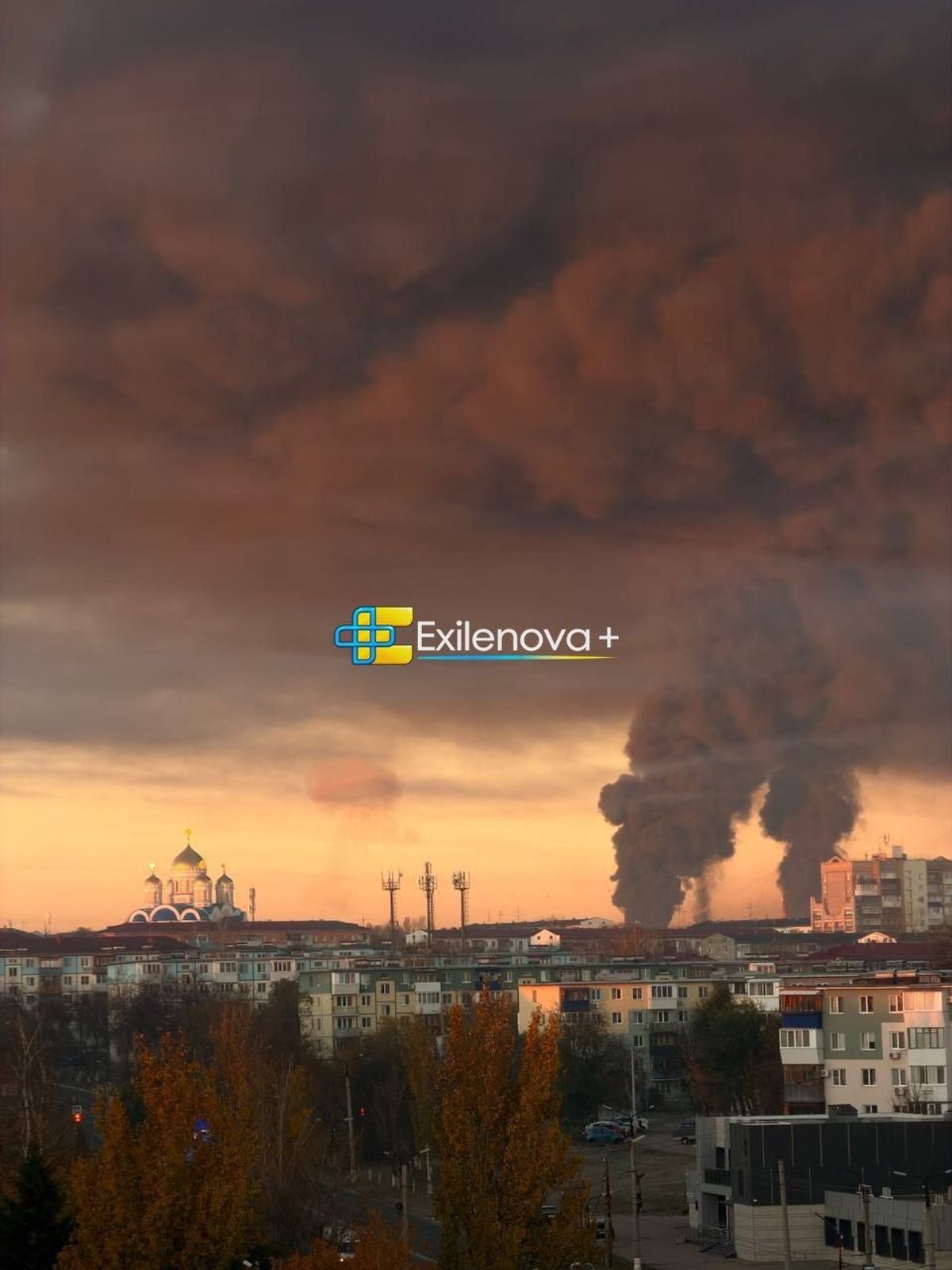
Simultaneous Attacks on Military Logistics
The Novokuybyshevsk strike was accompanied by a separate attack on the Konservsushprod factory in the Bryansk region, a facility known for producing canned food and individual rations for the Russian armed forces. The factory, which holds the rights to the Russian Army
brand, was also set ablaze during the overnight operation. These dual strikes suggest a broadening of Ukraine’s efforts to disrupt the logistics chain supporting the Russian military, moving beyond just the metallurgical and oil sectors.

The intensity of the drone activity was underscored by widespread disruptions across Russian aviation. Russia’s Federal Air Transport Agency closed four major Moscow airports—Domodedovo, Vnukovo, Sheremetyevo, and Zhukovsky—along with Yaroslavl Airport, to manage the threat. Moscow Mayor Sergey Sobyanin claimed that hundreds of drones were directed toward the region during the night, with the majority intercepted before reaching the capital.
Communication Hurdles and Starshield Restrictions
As Ukraine resumes its long-range strike campaign, the military continues to navigate friction regarding satellite communications. Ukrainian officials have reported that Starlink terminals, which are essential for guiding drones, have experienced interruptions when operating on fast-moving platforms. Serhiy Beskrestnov, an adviser to Zelenskyy on military technology, stated that these restrictions affect terminals moving at speeds above approximately 100 miles per hour.
Elon Musk has maintained that Starshield systems are under the control of the U.S. government, stating on X that any limits on speed or usage are decided by the US military and POTUS.
While Ukrainian officials, including Zelenskyy, have suggested these disruptions were a deliberate choice rather than a technical failure, the U.S. administration has faced ongoing questions about how its control over satellite access and intelligence sharing influences the effectiveness of Ukraine’s renewed campaign against Russian infrastructure.
Worth a look

UK Immigration Officials Bar Climate Scholar Andreas Malm From Entry
Swedish climate scholar Andreas Malm has been barred from entering the UK ahead of a scheduled speaking engagement...

Sanrio Cancels Vivant Merchandise Partnership After China Backlash
Hello Kitty manufacturer Sanrio has cancelled a merchandising partnership with the Japanese spy thriller Vivant following intense public...
Housing Secretary Winnie Ho Resigns Following Deadly Tai Po Fire Inquiry
Hong Kong leader John Lee apologized and announced the resignation of Housing Secretary Winnie Ho following an investigation...

Afghanistan opium production jumps fivefold as farmers find ways round Taliban ban
Afghanistan's opium production multiplied fivefold over the past year following a rebound in cultivation, according to a United...