
NASA’s Nancy Grace Roman Space Telescope has arrived at its SpaceX hangar at Launch Complex 39A at NASA’s Kennedy Space Center in Florida on Tuesday, Aug. 25, 2026, ahead of mating to a SpaceX Falcon Heavy rocket and a targeted August 30, 2026 liftoff. Encapsulated in its payload fairing, the observatory travels from the Payload Hazardous Servicing Facility ahead of its journey.
Engineers at Kennedy Space Center’s Payload Hazardous Servicing Facility recently completed fuelling up the observatory, pumping about 290 gallons of hydrazine into the spacecraft. This fuelling step marks one of the last big hurdles before putting the telescope on its launch vehicle. As they get closer to launch, engineers also double-checked and cleaned all six solar array panels to ensure they are spotless and ready to deploy as soon as Roman is in space. Technicians are also getting ready to bolt Roman to the adapter that links it to the rocket’s upper stage, after which the observatory goes into the payload fairing—the protective shell that keeps it safe from heat, pressure, and aerodynamic forces when it launches.
Journey to the Sun-Earth Lagrange Point 2
The hydrazine loaded on board powers Roman’s push to deep space after launch, with the goal to reach the Sun-Earth Lagrange Point 2, or L2, about a million miles from Earth, where the Sun’s and Earth’s gravity balance out. L2 serves as prime real estate for space telescopes: quiet, stable, and far enough out—about four times farther than the Moon—for a clear, constant view of the universe. Roman will be able to keep both Earth and the Sun in the right spot for its operations, while Roman’s thrusters help with orbital tweaks and make sure its solar panels keep facing the Sun so the spacecraft always has power during its mission. Once Roman gets to L2, it will join the James Webb Space Telescope out there, opening up new territory for exploring the universe and chasing down astronomy’s toughest mysteries.
Dark Energy, Exoplanets, and a Massive Field of View
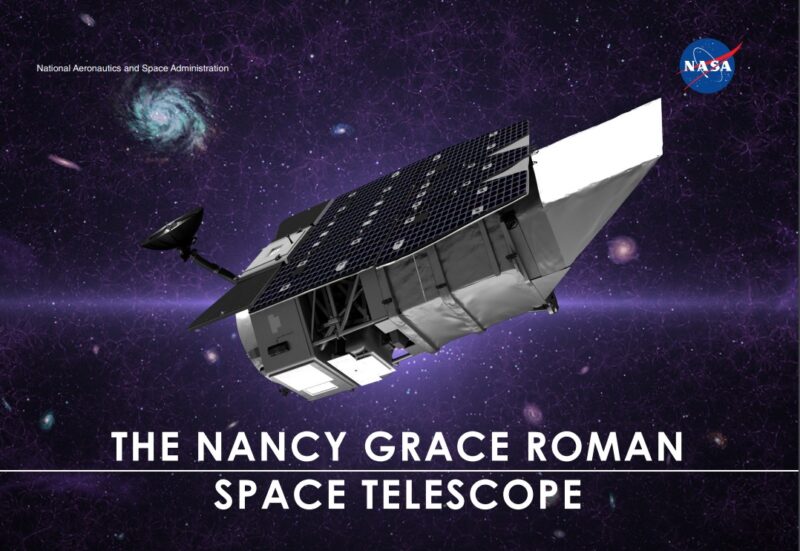
Named after NASA’s first chief astronomer, the mother of the Hubble Space Telescope,
the Nancy Grace Roman Space Telescope will have a field of view at least 100 times larger than Hubble’s, potentially measuring light from a billion galaxies in its lifetime. Roman’s science instruments are designed to help researchers understand dark energy, the mysterious force accelerating the universe’s expansion and causing it to expand faster and faster. The observatory also will map how galaxies form, cluster, and evolve by tracking the influence of dark matter, mapping billions of galaxies, and tracking the universe’s growth over cosmic time. Additionally, the observatory will be able to block starlight to directly see exoplanets and planet-forming disks, complete a statistical census of planetary systems in our galaxy, and settle essential questions in the areas of dark energy, exoplanets, and infrared astrophysics. Scientists expect it to find thousands of exoplanets, which will help determine how common Earth-like worlds really are in our galaxy.
Cargo, Timeline, and Launch Schedule
The whole mission is running about nine months early. Liftoff is set for 7:26 a.m. EDT, August 30, from Launch Complex 39A at Kennedy Space Center in Florida, riding atop a Falcon Heavy. Beyond its primary scientific mission, the space telescope will carry a commemorative plaque with a memory card containing 1,350,144 names submitted by people globally, including astronauts from Artemis II and Artemis III.
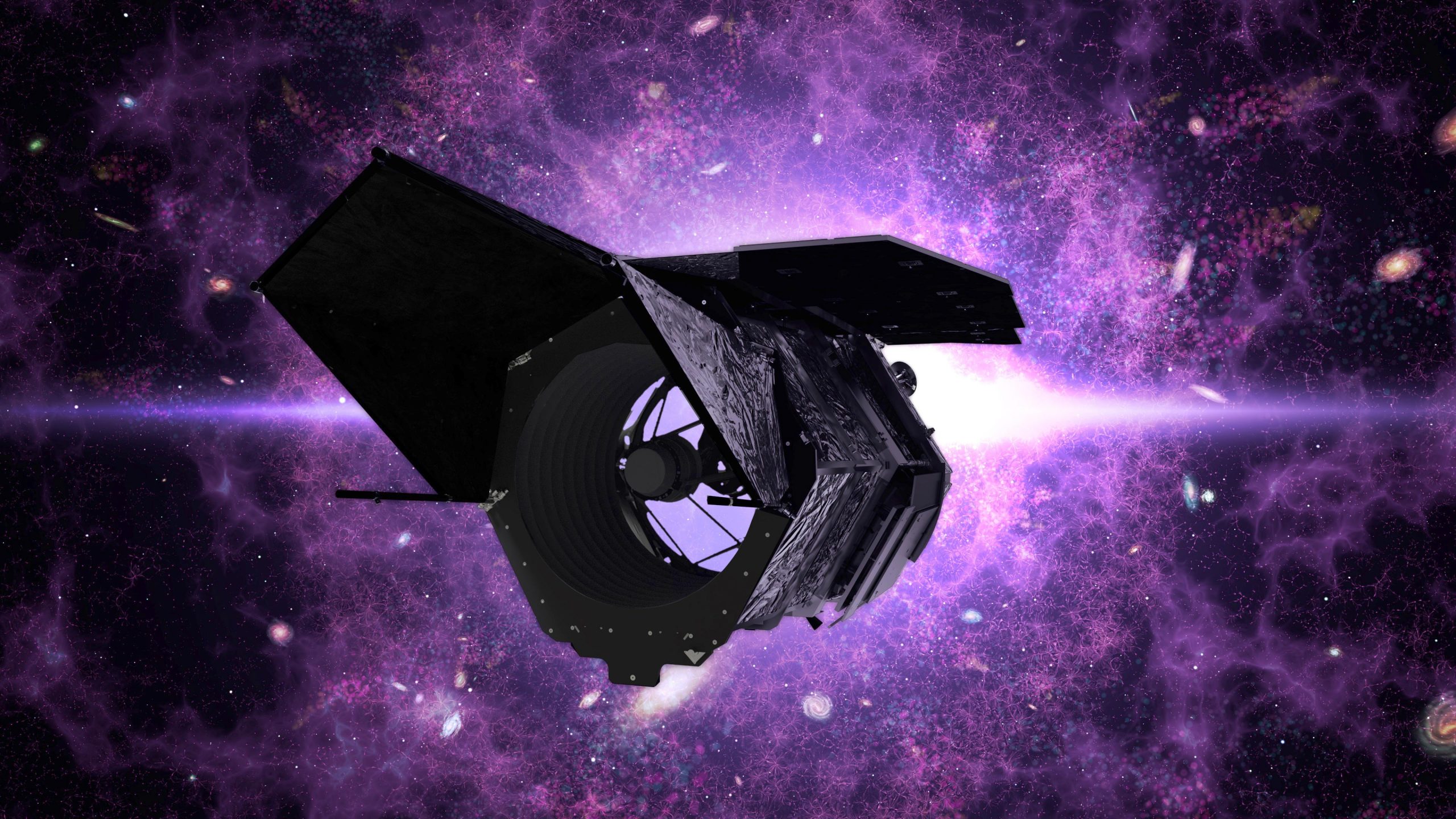
For now, NASA is planning on at least five years of science with the Roman Space Telescope, though there is actually enough fuel on board for another five years if everything stays in good shape and the mission calls for it.
Worth a look
ESA’s Hera Spacecraft Spots Target Asteroid Didymos
Two years after launch, the European Space Agency’s Hera spacecraft has successfully spotted its target binary asteroid system...
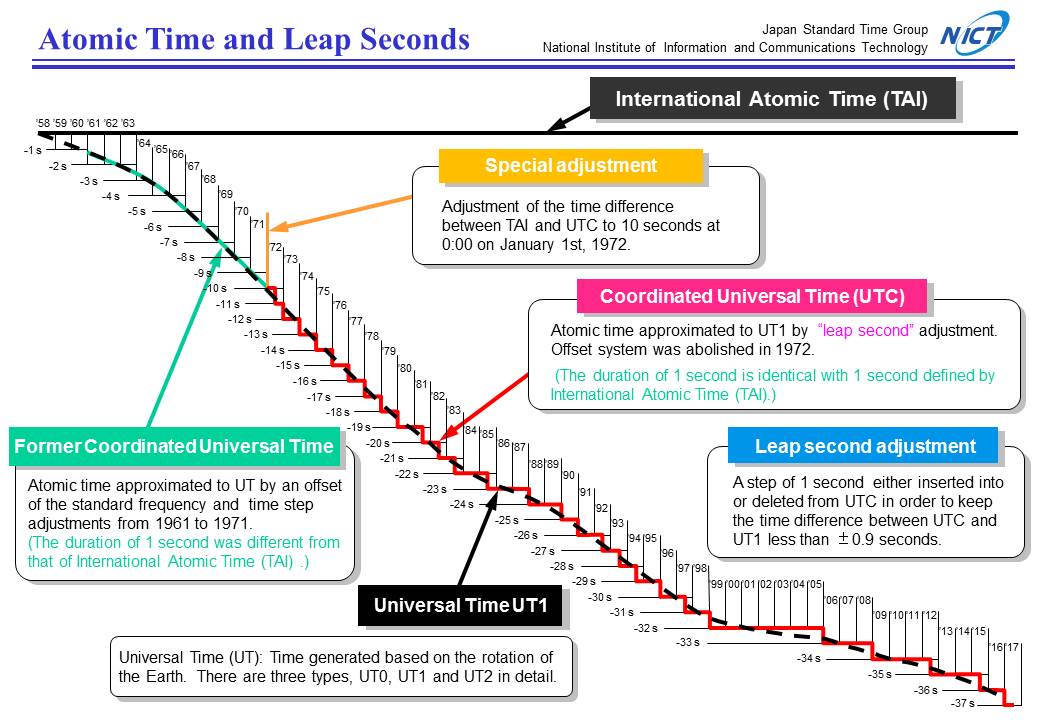
Delegates to Vote on Abolishing Leap Second to Protect Systems
Delegates meeting near Versailles this week will vote on abolishing the leap second, driven by Earth's recent speed-up.
Researchers find quantum systems retain statistical traces of initial states
Researchers at Harvard University, Tampere University, and TU Dresden published findings in Physical Review X on October 11,...
NASA Releases Artemis II Lunar Science Data and Farside Images
NASA released nearly a terabyte of Artemis II science data and reports on Wednesday, featuring 11,000 images, audio...