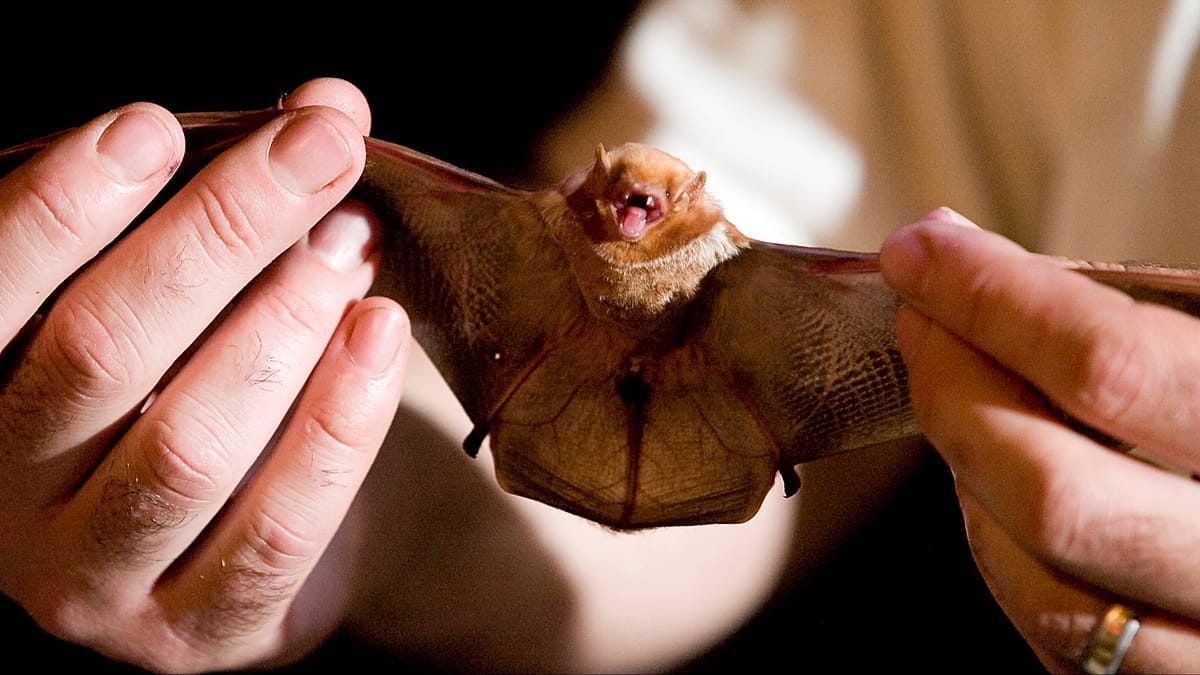
Wind Turbines Have Killed 18.7 Million Bats in the US Since 1981, Major Study Finds
Wind energy remains a foundational pillar in the transition away from fossil fuels, but a comprehensive new assessment reveals a severe ecological cost. Between 1981 and 2024, approximately 18.7 million bats spanning 28 different species perished at wind power facilities across the United States, as detailed in research featured in the Proceedings of the National Academy of Sciences.
Led by the U.S. Geological Survey, the research provides the most robust national assessment to date on the scale of bat fatalities tied to renewable energy infrastructure. While the annual death toll hovered around 100,000 bats per year roughly two decades ago, the boom in wind energy pushed that number to 1.5 million bats annually by 2021.
The heaviest losses are concentrated among migratory, tree-roosting species that cross paths with turbines across entire landscapes. Hoary bat fatalities make up roughly 6.7 million of the total, followed by eastern red bats at 5.8 million, silver-haired bats at 3.4 million, and big brown bats at 1.5 million, with these figures estimated. These animals consume staggering quantities of insects, meaning their decline triggers cascading ecological consequences far beyond the turbine pad.
Understanding the Mechanics of Bat Fatalities
Scientists still face open questions regarding why bats collide with or are otherwise killed by spinning blades. Researchers point to several prevailing theories, including the possibility that bats are drawn to the whirring noise, or that they mistake the structures for trees. Researchers say bats could also struggle to detect the blades or may be “drawn to them for other reasons”.

To capture an accurate picture of mortality, the study’s authors developed a statistical approach that accounted for missing data and unmonitored wind facilities. Traditional monitoring relies heavily on searches conducted by wind farm operators, methods that often leave room for underestimations. Scavenging animals might quickly remove the dead bats, and tall grasses could hide the carcasses.
Throughout the analyzed dataset, higher mortality rates link directly to turbines featuring lower ground clearance and larger rotor-swept areas. Furthermore, geographic placement plays a decisive role. Wind developments placed near rivers, mineshafts, karst formations, or in the Appalachian Mountains experience disproportionately high fatality figures because many bat species rely on these corridors for food, water, and navigation.
Mitigation Strategies and Operational Restrictions
Mitigating these losses relies on smarter site selection and active operational changes. A separate study published this month in the journal Applied Ecology examined 141 wind farms in Europe, where bat species are protected under the EU Habitats Directive. That research demonstrated that avoiding turbine operation when local conditions are “particularly favourable” for bat flight can reduce fatalities by more than 80 per cent.

A specific wind-speed strategy achieves an average decrease of about 62%, according to Fish and Wildlife Service guidelines. Since approximately 2010, certain nations like Germany have made safeguards mandatory. Standard protocols generally encompass pre-construction risk evaluations alongside operational rules, such as halting rotor rotation during peak activity weather or critical times like migration seasons.
In the United States, however, operators are generally not required to curtail for bats unless an endangered species triggers a legal obligation. While the American Clean Power Association supports voluntary conservation measures, Bat Conservation International has pushed for broader requirements.

Wikimedia Indonesia and English Club Project Host WikiLatih Workshop
WikiLatih brings Wikipedia training to the English Club Project in South Jakarta On August 9, 2026, a collaborative...

Brother Told Police Accused Cried When Asked About Pensioner’s Fatal Burglary in Tipperary Murder Trial
A Brother’s Confrontation and the Tears That Shook a Murder Trial The realization hit Justin Harding in his...
Hydrocortisone and Dexamethasone Outcomes in Preterm Neonates
Preterm neonates born at or before 34 weeks of gestation who required respiratory support during their second week...
Education campaign on Endometriosis – Anglo Celt
Seanad Appeal Cites Years of Misdiagnosis Senator Sarah O’Reilly has called for an immediate national education campaign on...