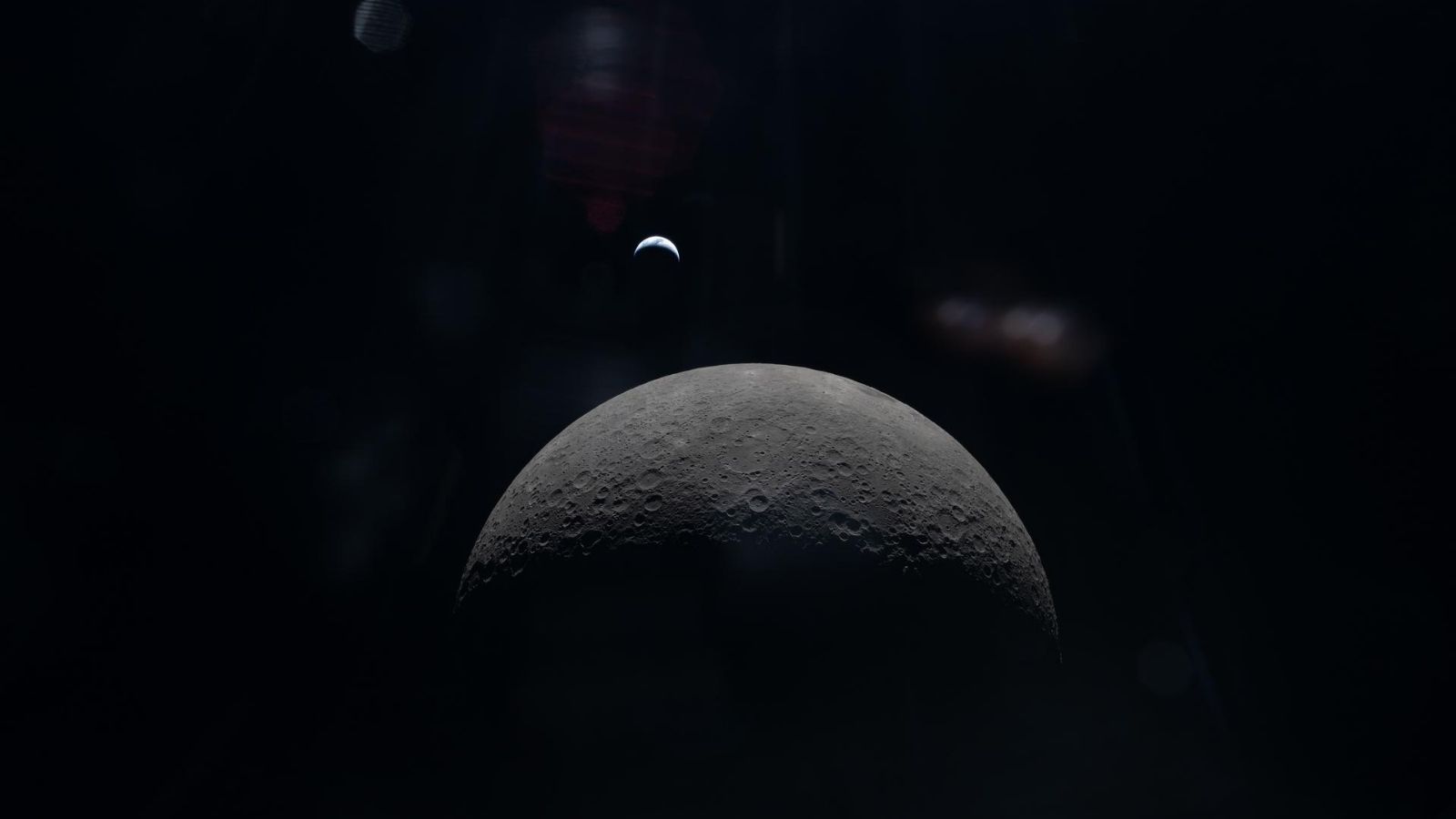
An 8,800-pound, four-tonne SpaceX Falcon 9 upper stage struck the Moon on August 5, 2026, according to Space. The impact sent a massive plume of lunar dust into the surrounding environment, drawing fresh attention from scientists and space-law experts regarding lunar waste.
SpaceX Falcon 9 Upper Stage Strikes Moon Near Einstein Crater
The rocket stage originally launched from Kennedy Space Center’s Launch Complex 39A at 1:11 a.m. Eastern time on January 15, 2025, on a mission catalogued as Ghost Riders in the Sky, according to Space Daily. The expendable upper stage deployed Firefly Aerospace’s Blue Ghost Mission 1 and ispace’s Resilience lander into a high, Moon-crossing orbit. Because the stage lacked the propellant margin required for a controlled atmospheric re-entry over an unpopulated area on Earth, it remained in an elongated Earth orbit catalogued as 2025-010D.
Over an uncontrolled journey lasting about 18 months and three weeks, repeated gravitational nudges and the smaller pressure of sunlight altered its trajectory. The tumbling cylinder ultimately struck the lunar surface near Einstein Crater at approximately 2.43 kilometers per second, or 8,700 kilometers per hour. Orbital imagery confirmed a fresh dark surface change at the predicted site, though precise crater dimensions remain based on pre-impact modeling ranging from the high teens to about 40 meters.
Renewed Debate Over Lunar Debris and Governance
Humanity has accumulated roughly 200 tonnes of material on the lunar surface since the beginning of the space age, including deliberate placements like Apollo descent modules, Soviet Lunokhod rovers, and China’s Yutu rovers, alongside unintended debris such as discarded rocket stages, as reported by Indianexpress. In 2022, a Chinese Long March 3C rocket body struck the far side of the Moon, creating a double crater roughly 95 feet wide.
Astronomer and space historian Jonathan McDowell noted that as lunar activity and the number of distinct players increase, uncontrolled objects ending up on the lunar surface could become more common. Marieta Valdivia Lefort, a policy officer at the Royal Astronomical Society in the U.K., pointed out that lunar activities are governed broadly by the 1967 United Nations Outer Space Treaty. However, Article IX only requires nations to avoid harmful contamination without defining when contamination becomes harmful, setting numerical waste limits, creating approved disposal sites, or requiring objects to be removed.
Environmental Impact and Scientific Risks
Experts emphasize that lunar impacts carry distinct geographical consequences due to the Moon’s low gravity. At roughly 17 percent of Earth’s gravity, the Moon cannot hold onto disturbed dust as effectively as Earth, causing impact plumes to travel significant distances and take a long time to settle.
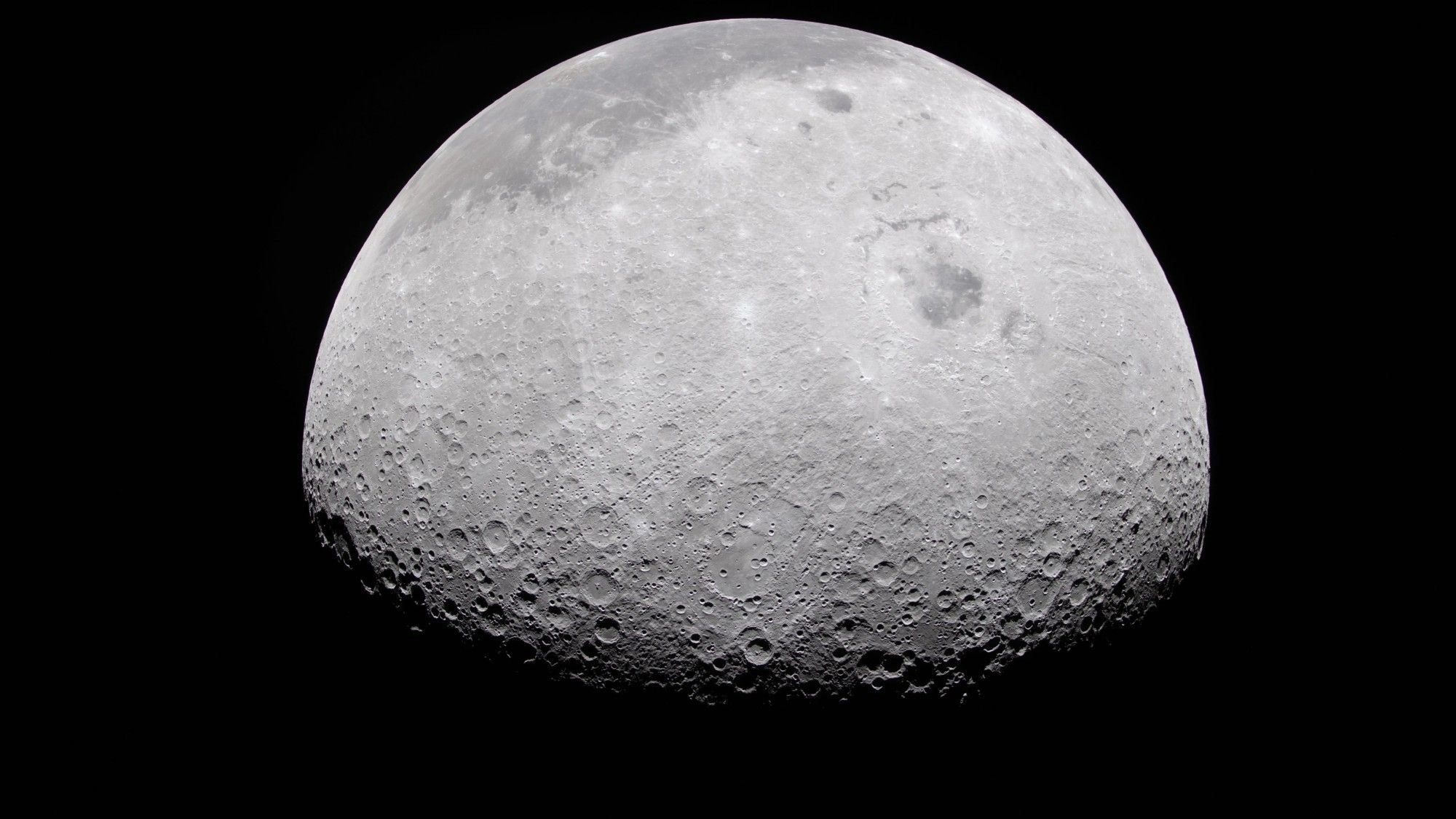
Researchers warn that repeated disturbances could alter the Moon’s physical and chemical environment, potentially damaging or obscuring valuable scientific evidence and natural geological records formed by meteoroids. Gregory Radisic, a space-law expert at Australia’s Bond University, argued that the Falcon 9 impact should serve as a timely warning before lunar activity becomes significantly more crowded, noting that it was largely due to luck that the debris did not strike an important scientific site or experiment.
Worth a look
Lawrence Livermore Researchers Shock-Compress Diamond to Resolve 20-Year Debate
Researchers at Lawrence Livermore National Laboratory used the Omega Laser Facility to shock-compress diamond samples to extreme temperatures...
Antarctica’s Blood Falls Hosts Marine Microbes Sealed for Millions of Years
Sealed beneath Antarctica's Taylor Glacier for more than a million years, Blood Falls discharges a rust-red brine fed...
Exoplanet Spin Measurements Risk Capturing Atmospheric Winds
Astronomers warn that measuring the rotation of distant exoplanets often captures atmospheric winds rather than a planet's true...
NASA Engineers Extend Voyager 2 Mission Life Into 2028 With Power Strategy
NASA engineers running the Voyager 2 spacecraft have successfully executed a power-switching strategy dubbed the "Big Bang," extending...