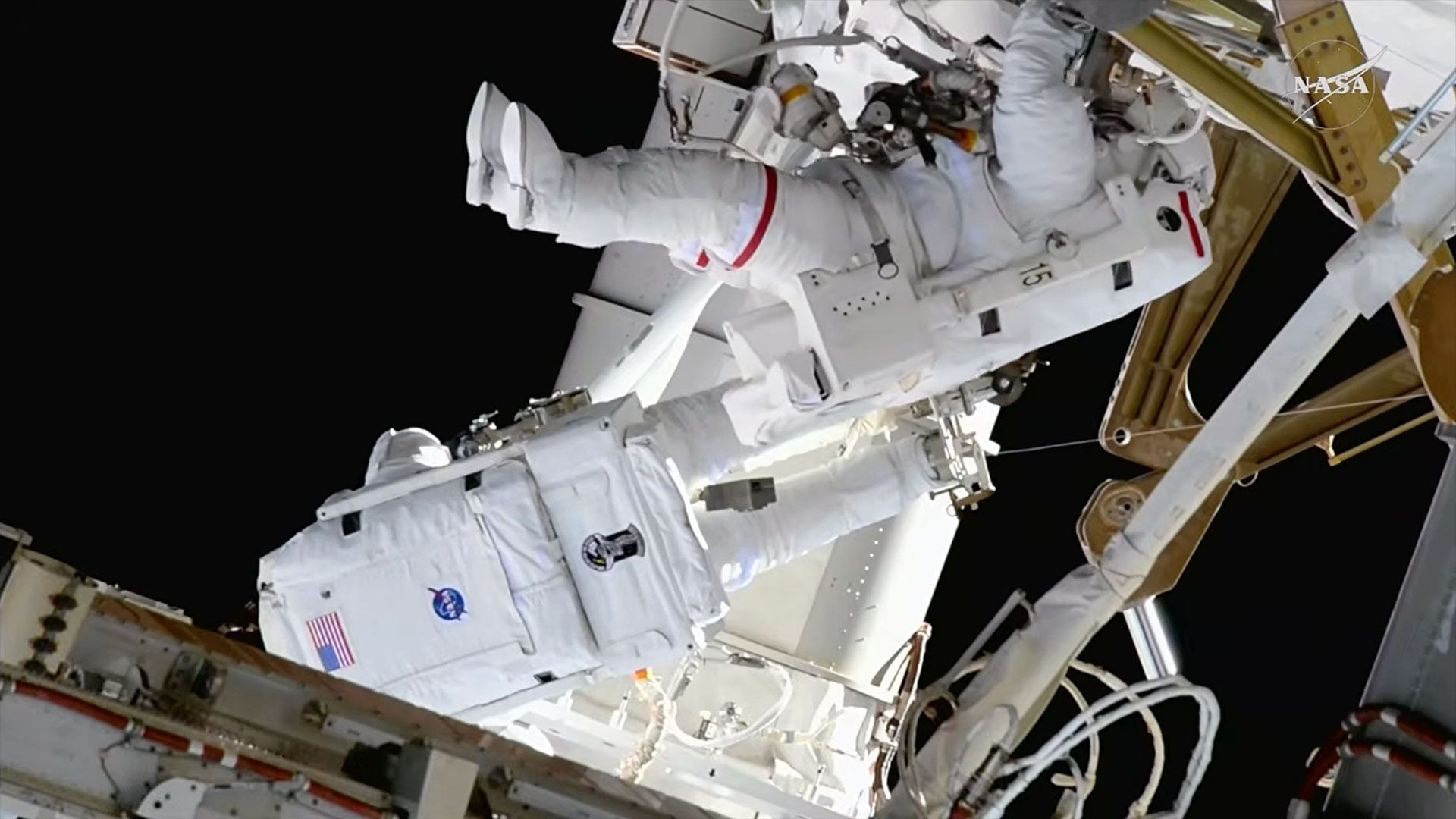
On August 25, 2026, NASA astronaut Anil Menon and ESA astronaut Sophie Adenot ventured outside the International Space Station (ISS) to finish installing a critical communication antenna, marking their third and second spacewalks respectively. The extravehicular activity (EVA) began at 8:35 a.m. EDT (12:35 p.m. The mission aimed to resolve a communication issue caused by a failed antenna, which had been partially addressed during their August 18 EVA when they removed the faulty relay but could not install a replacement due to stuck bolts.
The August 25 spacewalk built on the efforts of Menon and Adenot’s earlier work. During their first EVA on August 18, they successfully removed the failed space-to-ground antenna (SGANT) but encountered delays that prevented them from installing a spare unit. A NASA preview noted that if time allowed, the duo would attempt an additional task to replace a retroreflector on the Harmony module, improving navigation data for visiting spacecraft. The ESA highlighted that Adenot became the first French woman to conduct an EVA during the August 18 mission, a milestone in her career.
The spacewalk’s timeline and roles were carefully coordinated. Menon, designated “crewmember 1,” and Adenot, “crewmember 2,” worked under the guidance of NASA astronauts Jessica Meir and Jack Hathaway, who operated the Canadarm2 robotic arm from inside the ISS. The EVA was the 283rd in ISS history, underscoring the station’s long-term commitment to maintenance and research. Adenot’s participation marked her second spacewalk, while Menon’s third, reflecting their growing expertise in extravehicular tasks.
Watch 2 astronauts replace failed ISS antenna during spacewalk
The mission exemplified international collaboration, with NASA and ESA sharing responsibilities and resources. BST (1:00 p.m. The spacewalk’s success was critical for maintaining high-speed communication between the ISS and Mission Control at Johnson Space Center, ensuring seamless data transmission and operational support.
During the EVA, the astronauts focused on installing the SGANT replacement, a task delayed by mechanical difficulties. The ESA noted that the previous attempt had been hindered by stuck bolts and connectors, a challenge that required careful troubleshooting. The August 25 mission’s outcome would determine whether the ISS could restore full redundancy in its communication systems, a vital component for future crewed missions and scientific experiments.
The successful completion of this spacewalk highlighted the importance of routine maintenance in sustaining long-term human presence in space. With the ISS continuously occupied since November 2000, such missions underscore the technical and logistical demands of space exploration. The ability to address communication failures promptly ensures that the station remains a functional platform for scientific research, international cooperation, and future deep-space missions.
For Adenot, the August 25 EVA represented both professional advancement and historical significance. As the first French woman to conduct an EVA, her contributions added to the growing list of milestones in space exploration. For Menon, the mission reinforced his role as a key figure in ISS operations, with his third spacewalk demonstrating his experience in complex extravehicular tasks.
Expedition 75 is Go for Tuesday Spacewalk to Install
The event also served as a reminder of the meticulous planning required for space missions. From tool configurations to suit leak checks, every detail was scrutinized to ensure safety and efficiency. As the ISS continues its mission, such efforts will remain critical in supporting the next generation of spacefarers and scientific discoveries.
During the preparations for the August 25 EVA, NASA astronauts Jack Hathaway and Jessica Meir assisted Menon and Adenot with tool configurations, spacesuit leak checks, and procedure reviews inside the Quest airlock. The duo also participated in a conference with mission controllers to discuss spacewalk readiness and robotics operations. Meanwhile, other Expedition 75 crewmates conducted experiments, including studies on the human respiratory system and activation of Earth observation gear. Roscosmos flight engineers Pyotr Dubrov and Anna Kikina took turns wearing acoustic sensors to monitor their exhalation rates, while Dubrov packed the Progress 94 resupply ship with trash and obsolete gear in advance of its departure in September.
Adenot’s second spacewalk on August 25 was part of EVA-98, the 283rd extravehicular activity in ISS history. The mission followed EVA-97 on August 18, during which Adenot and Menon removed the failed SGANT 2, which had malfunctioned in November 2025. The replacement antenna was installed during the August 25 EVA, restoring full redundancy to the station’s communication systems. Adenot’s participation marked her 2nd spacewalk by Sophie Adenot, making her the 5th French astronaut to perform a spacewalk (out of 13th spacewalk by a French astronaut). She also became the 32nd European astronaut to perform a spacewalk, according to ESA records.
Watch Sophie Adenot’s second spacewalk live
The EVA-98 timeline included specific roles for the astronauts. Menon, designated Extravehicular Crew Member 1 (EV1), wore a spacesuit with red stripes, while Adenot, as EV2, wore a suit without stripes. Inside the station, Meir and Hathaway operated the Canadarm2 robotic arm to guide Menon along the antenna installation worksite, with Adenot remaining tethered to the Z1 truss segment. The mission also included a potential get-ahead task to replace a retroreflector on the Harmony module, though this was contingent on time availability.

BST (1:00 p.m. NASA’s coverage started at 7:00 a.m. EDT, with live updates from the space agency’s platforms. The EVA-98 marked the culmination of efforts to address the SGANT 2 failure, ensuring uninterrupted communication between the ISS and Mission Control. Adenot’s role in this mission further solidified her legacy as a trailblazer in space exploration, following her historic EVA-97 on August 18.
The August 25 EVA was part of the εpsilon mission, during which Menon and Adenot were joined by NASA astronauts Jack Hathaway and Jessica Meir, as well as Roscosmos cosmonauts Pyotr Dubrov, Anna Kikina, and Andrey Fedyaev. Fedyaev programmed Earth observation hardware to capture multi-wavelength imagery of African lakes and the continent’s Atlantic coastline, while Kikina activated automated photography of islands and volcanoes in the Asia-Pacific region. These activities underscored the ISS’s role as a hub for scientific research and international collaboration.
The spacewalk’s success highlighted the resilience of space agencies in overcoming technical challenges. The initial failure of SGANT 2 in November 2025 required two EVAs to resolve, demonstrating the complexity of maintaining critical systems in space. Menon and Adenot’s efforts ensured that the ISS could continue its mission of advancing scientific knowledge and supporting future exploration. As the station approaches its third decade of continuous human presence, such missions remain essential to the sustainability of long-term space operations.
Related reading
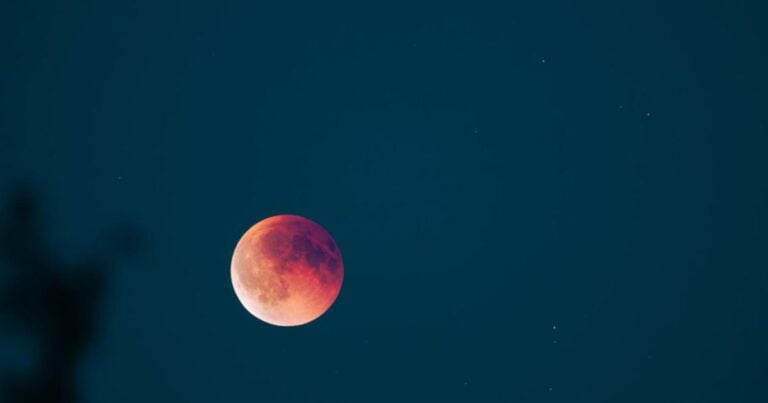
Partial Lunar Eclipse 2026 Visible in North America and the UK
North American stargazers and early-rising British observers can view a rare partial lunar eclipse in the early hours...
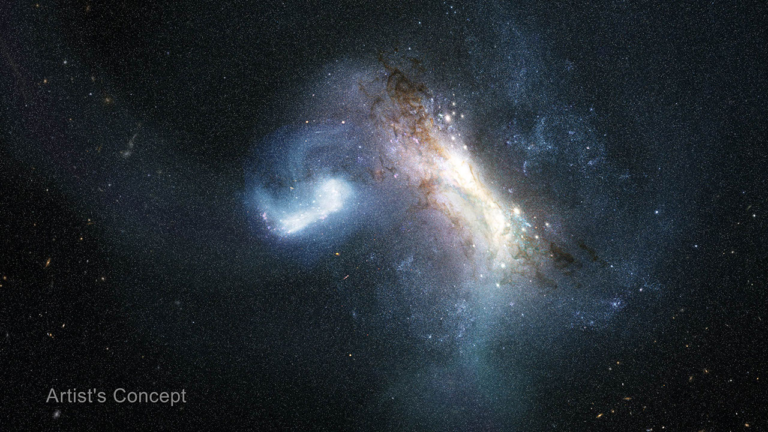
Hubble Telescope Reveals Ancient Dwarf Galaxy Merger With Milky Way
Astronomers using NASA’s Hubble Space Telescope have uncovered definitive evidence that an ancient dwarf galaxy named LKH collided...
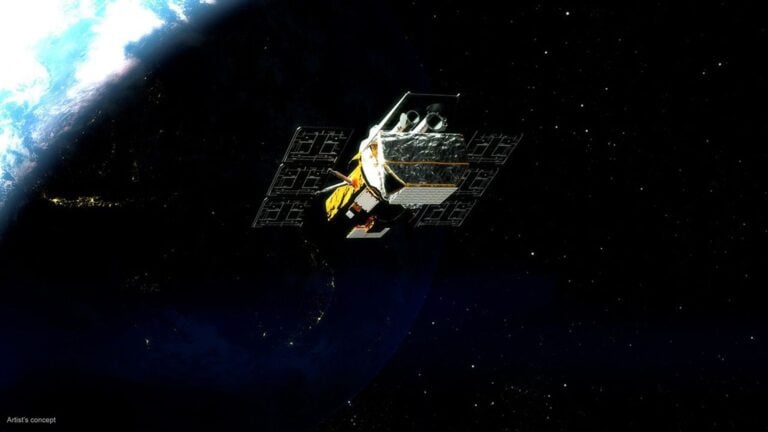
Link Spacecraft Launches to Rescue NASA Telescope from Falling
A rescue spacecraft set to speed toward a NASA telescope to prevent it from falling into Earth's atmosphere...
NASA to Launch Nancy Grace Roman Space Telescope on August 30, 2026
NASA is scheduled to launch its next-generation flagship observatory, the Nancy Grace Roman Space Telescope, on August 30,...