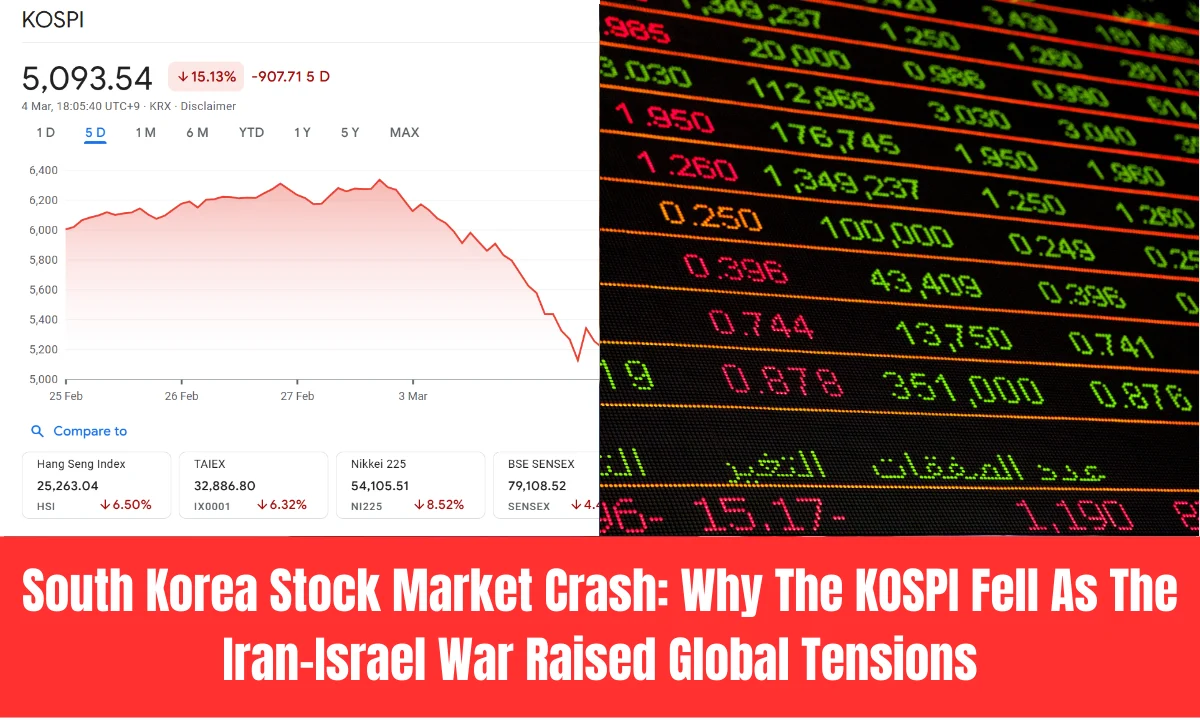
South Korea’s benchmark KOSPI index declined 30 percent from its peak amid extreme retail stock mania, leaving President Lee Jae Myung’s government facing political fallout. Regulators approved single-stock leveraged ETFs in May, helping fuel record margin debt and a subsequent stomach-churning market crash.
From AI Boom Euphoria to Record Margin Debt
South Korea’s financial markets transformed into a high-stakes arena as retail investors, known locally as ants for their tendency to swarm into trades, chased unprecedented gains driven by the global artificial intelligence boom. South Korea, which introduced Squid Game and K-Pop, now hosts the world’s craziest stock market, showcasing a stomach-churning volatility not seen in major markets in years. Memory-chip giants Samsung Electronics and SK Hynix soared to trillion-dollar valuations and became the twin forces pushing record market gains, turning stock trading into a national obsession as sales of books on domestic stocks more than tripled between January and June, according to online bookstore Yes24.
To supercharge their returns, investors took on debt, with margin loans for KOSPI investment jumping about 75% from the start of the year to 30 trillion won by late June. Investors told Reuters they were driven by the belief that leverage was the quickest way to overcome odds stacked against them, amid the country’s widest-ever wealth inequality.
The Policy Catalyst and the Regulatory Backlash
The current turbulence traces back to the government’s push to eliminate the Korea Discount,
the tendency for local stocks to lag global peers due to the dominance of family-owned conglomerates and weak governance. President Lee took office last year with a promise to eliminate this discount. To close the gap, regulators began discussing more sophisticated products in January, including single-stock leveraged exchange-traded funds that use derivatives to multiply a stock’s daily return.
Kim Yong-beom, the presidential chief of staff for policy, told the Hankyoreh newspaper then: Why is something permitted on the NASDAQ not allowed in Korea?
That political backing became the catalyst for regulators’ decision to allow the ETFs to launch on May 27. Concerns were internally raised over whether domestic investors understood the risk of heavy losses, but the products were still approved. The only barriers to entry were an hour-long mandatory training course and a 10 million won ($7,208.25) minimum deposit.
The presidential office and economic ministries said they reviewed the introduction of single-stock leveraged ETFs after thoroughly assessing risk factors. The Financial Services Commission, South Korea’s top financial regulator, said while there was no standardised procedure for reviewing risks, the agency comprehensively examined various risk factors at each stage.
Political Fallout and the Human Toll of Volatility
The subsequent crash has exacted a heavy psychological and political toll. The 30% decline in the KOSPI benchmark since its June 19 peak has hurt President Lee Jae Myung’s government politically and turned the spotlight on an economic system that drove retail investors into poorly understood leveraged products. It has also raised questions about how South Korea, a tech powerhouse, can progress to developed market status when it hosts such extreme behaviour by retail investors.

Ultimately many who entered the market may have suffered severe losses, and a majority of them could become so traumatised that they lose interest in investing altogether,
said Jeon Suk-jae, a YouTuber whose investment channel has 3.7 million subscribers. In the two months since the market’s peak, Jeon has seen the comments on his channel, which hosts videos like the one entitled the entire nation is intoxicated by stocks,
flip from euphoria to gloom, broadly tracking the national mood.
Beyond the losses – some realised, some still on paper – there is a psychological reckoning that the nation’s leaders are dealing with. Demand for psychiatric help is rising and other signs of stress are rattling the public. Police in Busan said they had arrested a man in his 20s who is suspected of attempted murder over the stabbing of a YouTuber he allegedly blamed for his stock losses. The Blue House said in response to a Reuters request for comment: The government remains committed to maintaining market stability.
Worth a look

US Inflation Expected to Rise in September on Higher Gasoline Prices
Higher gasoline prices pushed overall US inflation up 0.6% in September, while core price pressures continue a gradual...

UK Pensions Face Inheritance Tax Overhaul From April 2027
Millions of UK families face a tax policy change as unused pensions and death benefits enter the inheritance...

Indonesia’s House of Representatives (Commission VIII DPR RI) and government ministers finalized
Indonesia’s House of Representatives (Commission VIII DPR RI) and government ministers finalized the Hajj Organising Costs, known as...
Poonawalla Fincorp Posts Fivefold Net Profit Jump in Q2
Poonawalla Fincorp reported a significant increase in net profit to ₹375 crore for the second quarter of financial...