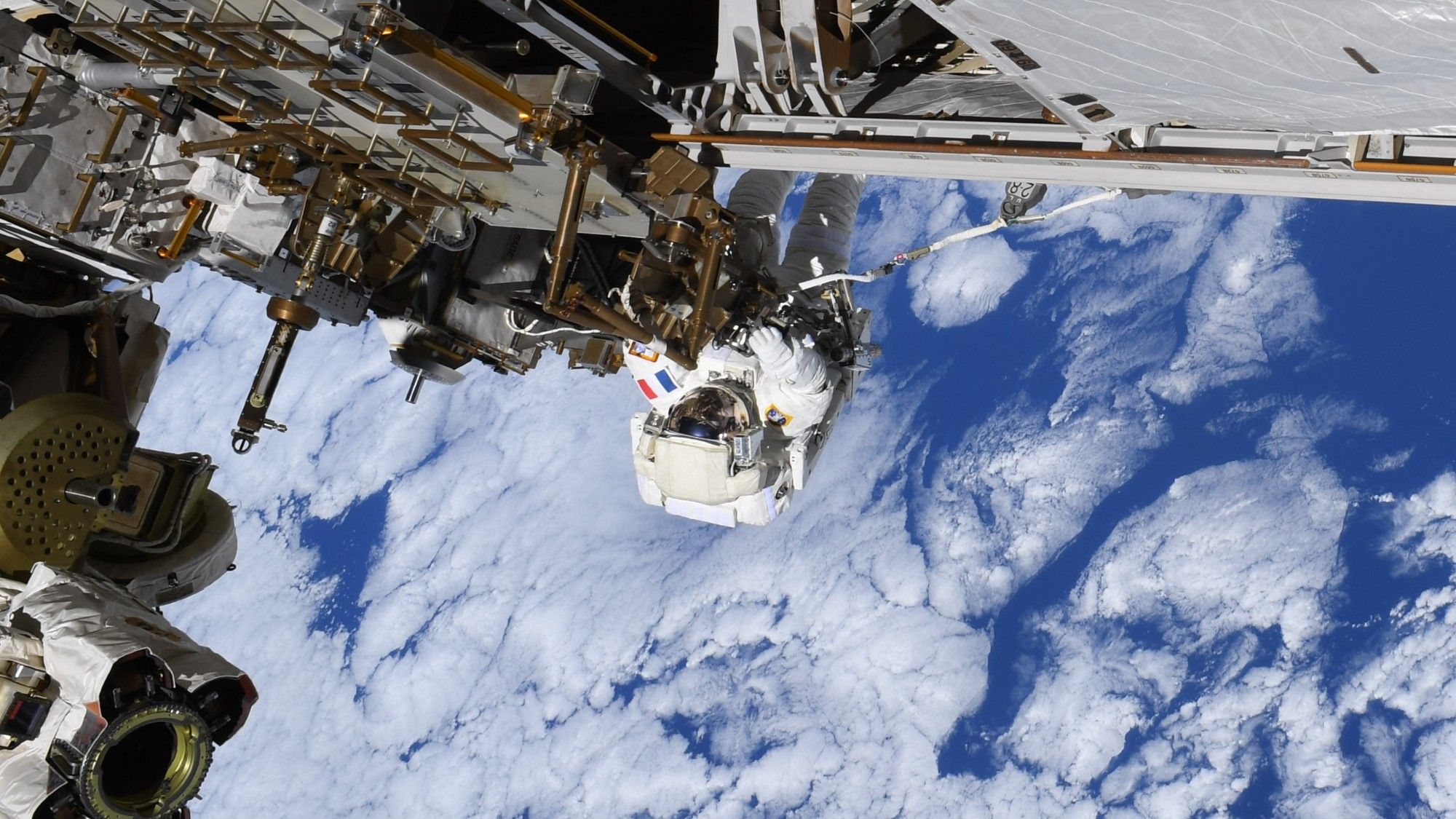
European Space Agency astronaut Sophie Adenot and NASA astronaut Anil Menon completed a six-hour and 30-minute spacewalk outside the International Space Station on August 25, 2026, successfully installing a high-speed space-to-ground antenna after an earlier attempt ran out of time.
Orbital Maintenance 250 Miles Above Earth
Repairing an engineering marvel like the International Space Station is no easy feat by itself, but it is even more impressive when executed 250 miles (400 kilometers) above the planet. The orbital laboratory zips around Earth at 17,500 mph (28,000 kph), meaning it circles the globe 16 times a day. Seeing an astronaut clinging to the exterior structure with the clouds and blue oceans of Earth below puts that altitude into sharp perspective, as few people on Earth have ever flown as high as 250 miles. This photo was taken on day 194, or orbit 3010, of Adenot’s mission, which began in February when she launched to the ISS as part of NASA’s Crew-12 mission.
European Space Agency astronaut Sophie Adenot worked on the exterior of the station during an extravehicular activity on August 25, 2026, alongside NASA astronaut Anil Menon. The pair conducted the 6.5-hour spacewalk to replace one of two Space-to-Ground antennas on the outside of the orbital outpost. This marked a successful conclusion to an antenna replacement effort that began a week earlier, when the duo ran out of time before the new hardware could be fully installed. During that initial spacewalk, Adenot earned the distinction of becoming the first woman from France to ever conduct an extravehicular activity.
Post-Spacewalk Recovery and Scientific Investigations
The Expedition 75 crew members spent Wednesday cleaning up and relaxing the day after a spacewalk to install a high-speed antenna outside the International Space Station. Station commander Jessica Meir and flight engineer Jack Hathaway joined Menon and Adenot to clean out the Quest airlock, refill spacesuit water tanks, and recharge suit batteries. All four astronauts called down to mission specialists for a post-spacewalk conference and set some time aside to relax after Tuesday’s spacewalking and robotics activities.
Recovery did not mean a halt to scientific research, as the crew on Monday also continued a variety of human research to protect crew health. At the start of his shift on Wednesday, Menon filled out a questionnaire documenting his stress level and emotions then collected his saliva and hair samples. The samples will be analyzed on Earth for stress-related hormones and immune markers as part of the RelaxPro investigation exploring mindfulness and relaxation techniques during a long-term spaceflight. Meir also assisted Menon as he collected, processed, and analyzed his blood sample for the Venus Flow investigation that is exploring circulatory system health risks during a long-duration space mission.
Vision health monitoring also took center stage aboard the complex. Next, Meir checked out the operation of components inside a fluorescence microscope. After her battery charging tasks, Adenot guided Menon during an eye exam and imaged his retina, cornea, and lens as doctors on the ground monitored in real-time to detect potential space-caused vision issues. Hathaway began his shift inside the Harmony module setting up the medical imaging gear for the eye exam then powering it down and stowing it at the end of the day. In between, he inspected a research incubator then swapped out ammonia detection tubes.
Meanwhile, Roscosmos flight engineer Pyotr Dubrov finished a 24-hour heart rate monitoring session on Wednesday after maintenance on the Vozdukh carbon dioxide removal device. Roscosmos flight engineer Anna Kikina uninstalled automated, multi-wavelength Earth imagery gear that photographed Asia-Pacific landmarks during the crew’s sleep shift. Afterward, she attached sensors to herself to measure her cardiac activity while working and sleeping over a 24-hour period. Roscosmos flight engineer Andrey Fedyaev spent his shift inside the Zarya module replacing electronic components with upgrades.
Preparation for September Spacewalks
With the high-speed antenna successfully in place, the orbital residents are now turning their attention to another spacewalk in September. The next spacewalk is scheduled for Tuesday, Sept. 1, when Adenot and Meir will exit the orbital outpost for about six hours and 30 minutes of high-altitude maintenance.
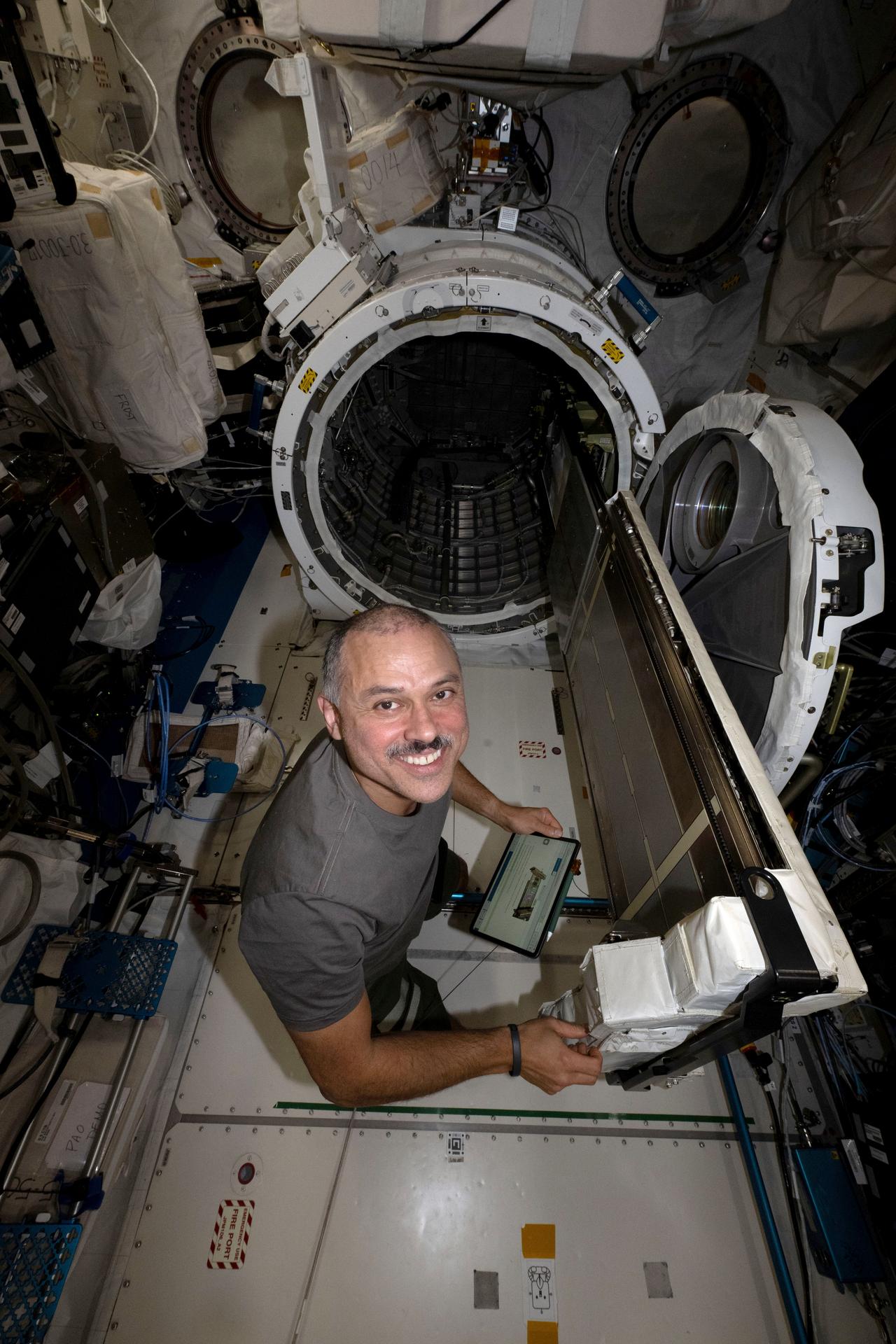
The duo will replace a visiting spacecraft navigational aid, install jumper cables for data-relay systems, prepare the Alpha Magnetic Spectrometer for future upgrades, and replace a high-definition camera. Readers can learn more about station activities by following the space station blog, @space_station on X, as well as the ISS Facebook and ISS Instagram accounts, and get the latest from NASA delivered every week by subscribing.
Keep reading
Interstellar Comet 3I/Atlas Makes Closest Approach to Earth
An interstellar visitor designated 3I/Atlas is making its closest approach to Earth at 167 million miles this week...
Chinese Researchers Complete Two-Way Laser Link Over 400,000 Kilometers
Chinese researchers have successfully completed a two-way laser communications test between Earth and the moon across a distance...
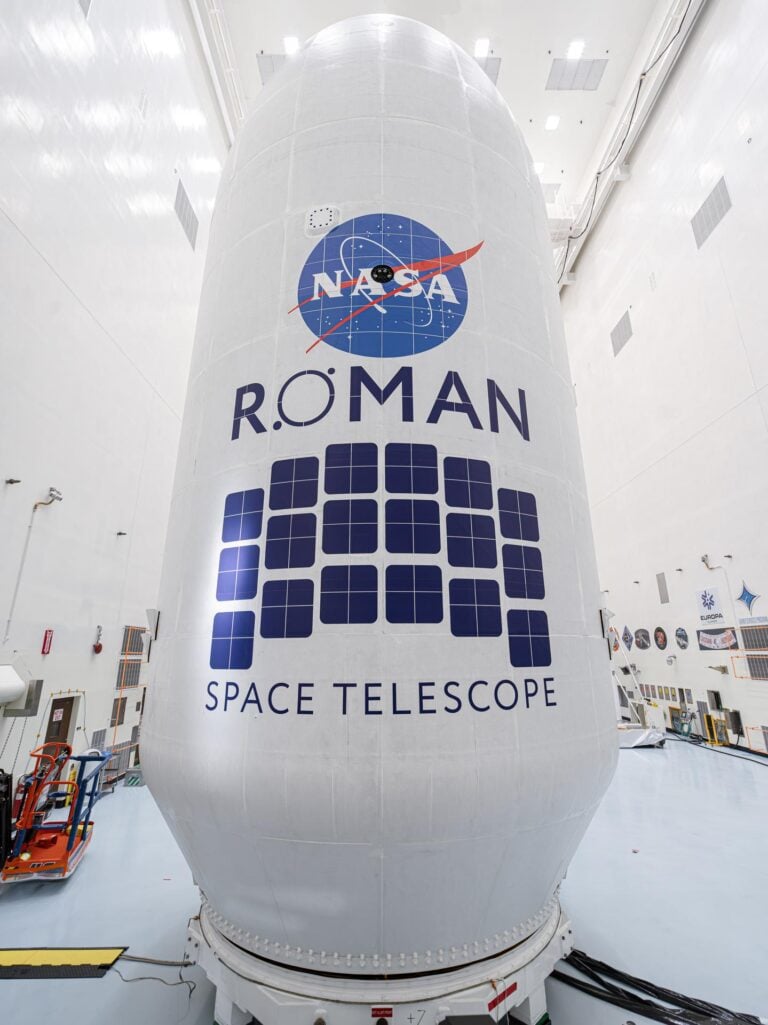
Nancy Grace Roman Space Telescope Reaches Launch Pad for August 30 Liftoff
NASA’s Nancy Grace Roman Space Telescope rolled out to Launch Complex 39A on a SpaceX Falcon Heavy rocket,...

Global Warming Breaks Climatic Link Between Pacific and Indian Oceans
Global warming is breaking the long-standing climatic connection between the Pacific and Indian oceans.