An interstellar visitor designated 3I/Atlas is making its closest approach to Earth at 167 million miles this week before leaving our solar system permanently. Meanwhile, astronomers studying distant star systems have revealed the discovery of trillions of icy exocomets orbiting 74 alien star systems.
Interstellar Comet 3I/Atlas Makes Its Closest Approach to Earth
A stray comet originating from another star is swinging past our planet in what observers describe as one last visible hurrah before it races back toward interstellar space. Discovered over the summer, the comet bears the official designation 3I/Atlas and will pass within 167 million miles, or 269 million kilometers, of Earth. According to reporting from India TV News, this Friday flyby marks the closest point of its grand tour through our solar system.
Scientists estimate the visiting ice ball to be between 1,444 feet (440 meters) and 3.5 miles (5.6 kilometers) in size. NASA continues to aim its space telescopes at the object, though backyard astronomers attempting to catch a glimpse should act quickly. The comet is steadily fading as it exits our stellar neighborhood.
However, it will be the mid-2030s before it finally reaches interstellar space, never to return.
Before reaching that exit, the visitor faces another close encounter. The trajectory will take the comet to make a much closer approach to Jupiter in March, zipping within 33 million miles (53 million kilometers), though it will take until the mid-2030s to completely escape the sun’s gravitational domain.
A Rare Interstellar Interloper With Ancient Origins
Comet 3I/Atlas represents only the third known interstellar object to cut through our solar system. Unlike homegrown comets such as Halley’s Comet, which hail from the icy fringes of our own planetary neighborhood, interstellar comets originate in star systems elsewhere in the Milky Way.
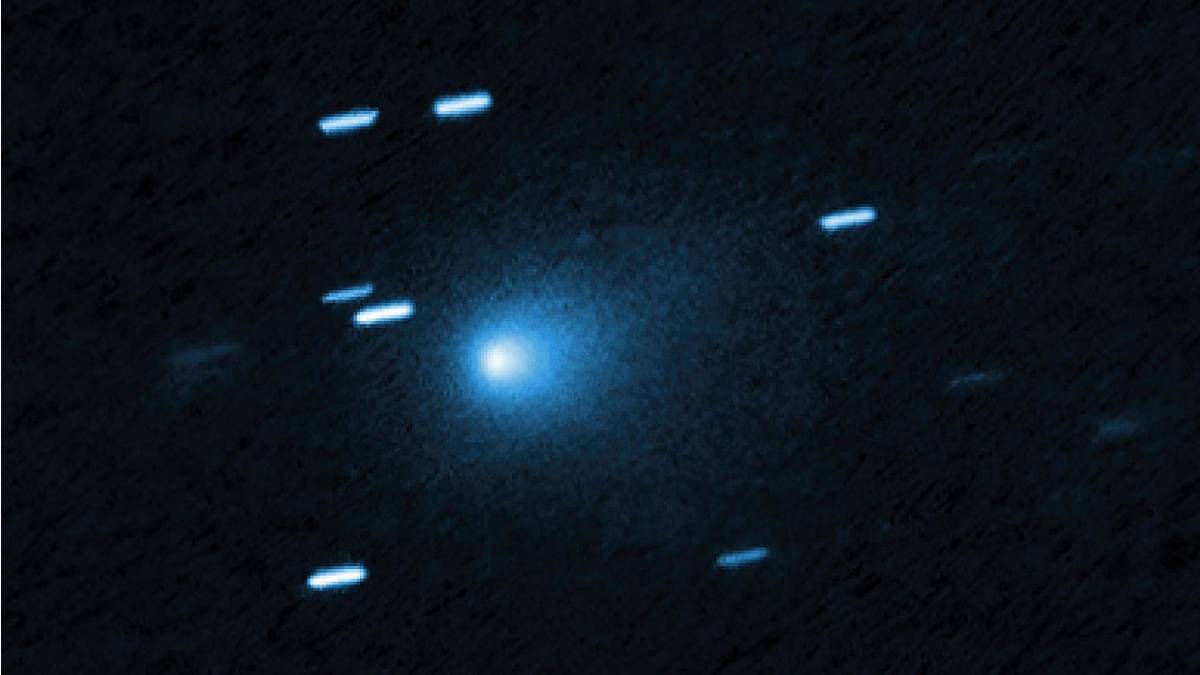
The first confirmed interstellar visitor was discovered by a telescope in Hawaii in 2017. Two years later, a second interstellar comet was spotted by a Crimean amateur astronomer. Comet 3I/Atlas itself was observed in July by NASA’s sky-surveying Atlas telescope in Chile while it was searching for potentially dangerous asteroids. Scientists believe this latest interloping comet, which is also harmless, may have originated in a star system much older than our own, making it a particularly tantalising target for study.
Trillions of Exocomets Discovered Orbiting Alien Star Systems
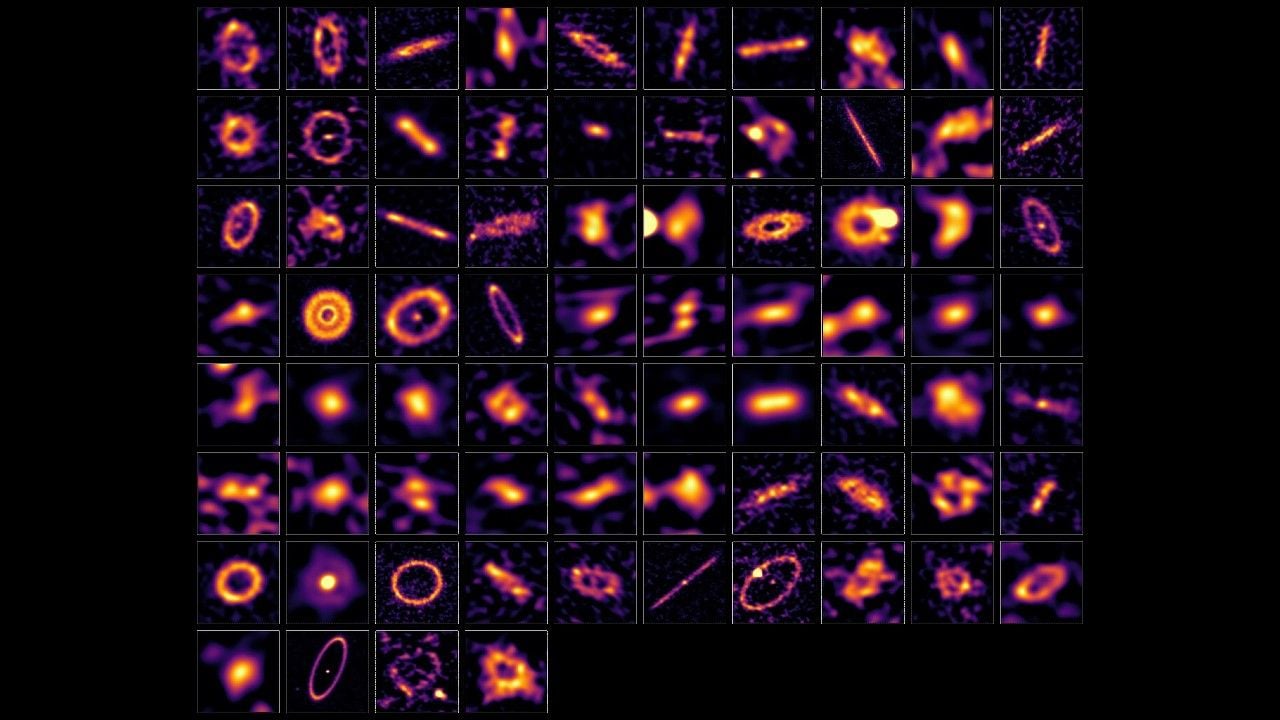
While 3I/Atlas bids farewell, wider surveys of distant star systems reveal that comets are far from unique to our solar system. Joint observations by the Atacama Large Millimeter Array (ALMA) in Chile and the Submillimeter Array (SMA) on Mauna Kea in Hawaii have uncovered rings of comets around 74 alien star systems. These planetesimal belts reveal not only the existence of trillions of icy exocomets, but also the source of most of the water in these systems.

Because the belts are so far away from their central star, they are cold, with temperatures ranging between –418 to –238 degrees Fahrenheit (–250 to –150 degrees Celsius). As such, they mostly radiate light at long wavelengths, hence the need for ALMA and SMA. The submillimeter light ALMA and the SMA detected is coming from uncountable tiny ‘pebbles’, just millimeters in size, which were flung off of larger cometary bodies as those larger bodies collided together over cosmic timescales.
Matrà led the research as part of the REsolved ALMA and SMA Observations of Nearby Stars (REASONS) program. The 74 planetesimal belts are all found around stars within 500 light years of our solar system, possessing a range of ages with some having just formed and others now billions of years old. REASONS team-member Sebastián Marino of the University of Exeter highlighted the physical variety captured in the observations.
“The images reveal a remarkable diversity in the structure of belts.”
These belts are found between tens of AU and hundreds of AU from their star, and some of the belts are tilted or elongated, as though the gravity of an unseen planet or planets is pulling on them. Patterns also emerge showing that the number of pebbles decreases for older planetary systems as belts run out of larger exocomets smashing together, and decreasing faster if the belt is closer to the center. Meanwhile, computer models of our own solar system’s history—which is about 4.5 billion years old—suggest that we lost at least one and possibly two Neptune-sized planets along the way as Jupiter and Saturn shuffled and jostled for position, tossing trillions of icy objects of the Kuiper Belt, the Scattered Disc, and the faraway Oort cloud away from the Sun via gravitational interactions while much more material was lost forever.

President Daniel Chapo Urges Global Action on Climate Justice
Mozambican President Daniel Chapo called for strengthened international climate justice measures at a Maputo conference on October 14.

CHIME Telescope Detects Early Universe Hydrogen Signal Independently
Using only its own data, the Canadian Hydrogen Intensity Mapping Experiment (CHIME) telescope in British Columbia detected a...
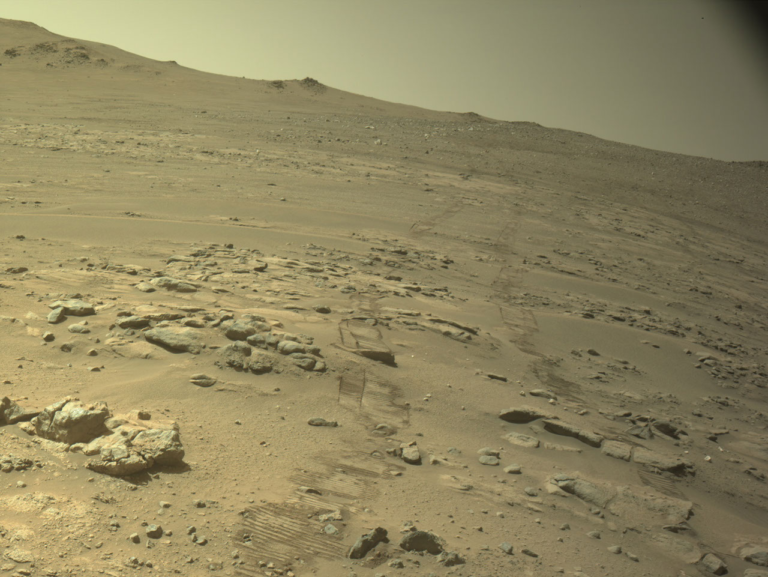
NASA’s Perseverance Rover Breaks Opportunity’s Mars Mileage Record
NASA’s Perseverance rover has set a new off-world driving record on Mars, surpassing the mileage of its predecessor...
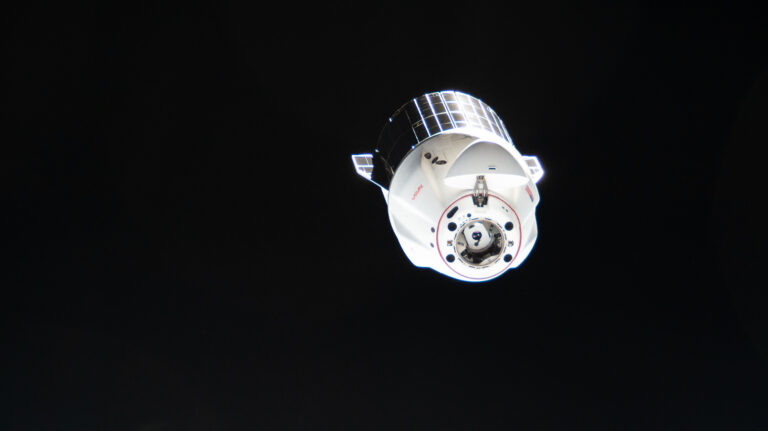
NASA and SpaceX to Launch Cargo and Solar Arrays to Space Station
NASA and SpaceX are targeting Tuesday, October 13, for the launch of the 35th commercial resupply mission to...