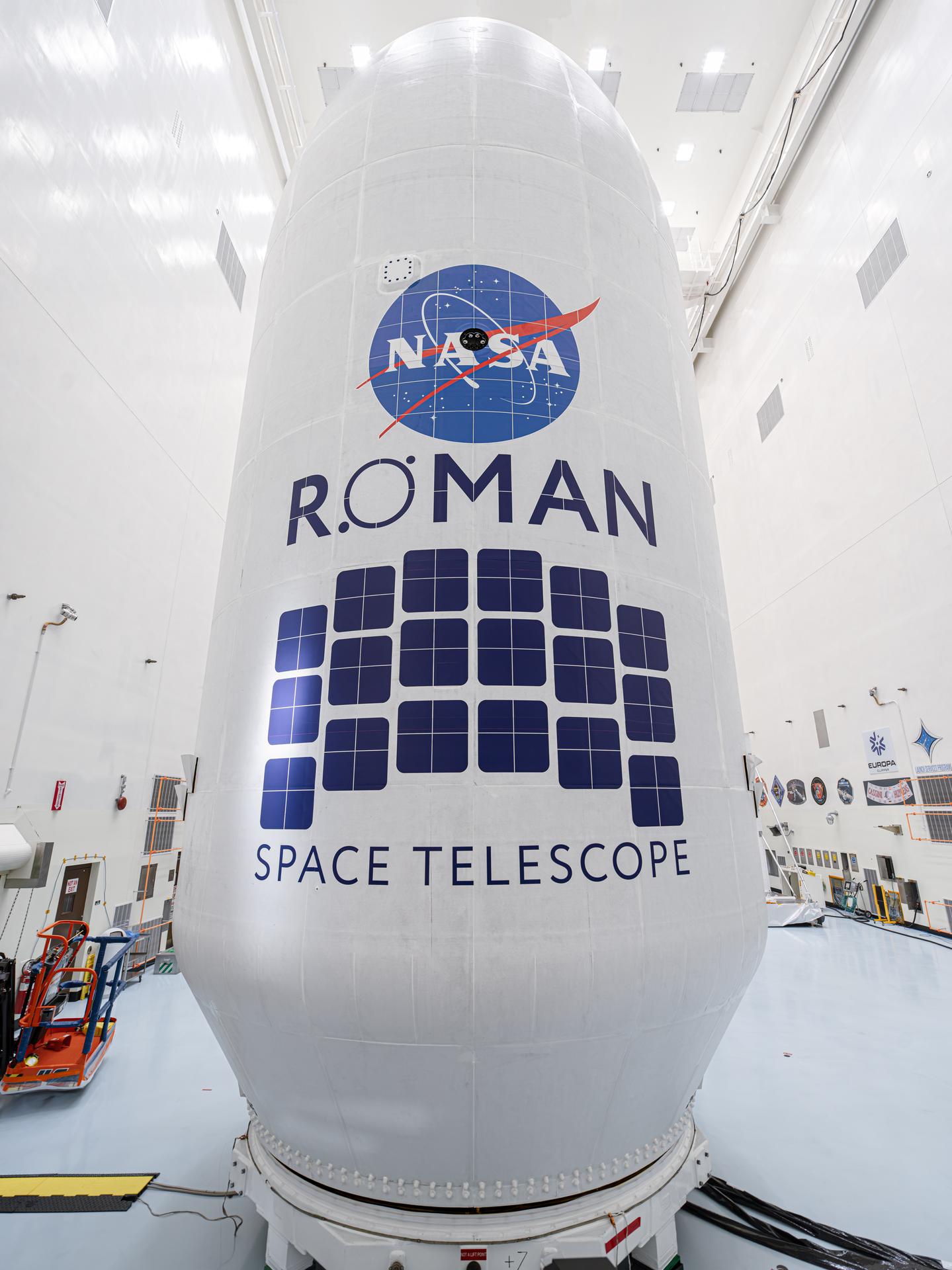
NASA’s Nancy Grace Roman Space Telescope rolled out to Launch Complex 39A on a SpaceX Falcon Heavy rocket, targeting a 7:26 a.m. EDT liftoff on August 30, 2026. The $4.3 billion infrared observatory aims to map billions of galaxies and hunt thousands of exoplanets from the L2 Lagrange point.
The heavy hitters of orbital astronomy are about to welcome a formidable new colleague. On Saturday, August 29, 2026, technicians at NASA’s Kennedy Space Center in Florida rolled out a SpaceX Falcon Heavy rocket carrying the Nancy Grace Roman Space Telescope from its hangar to Launch Complex 39A. Once the nearly 230-foot launcher reached the pad, crews raised it into a vertical position.
Powering that ascent is a Falcon Heavy configuration boasting 27 Merlin engines split evenly between a center core and two side boosters, capable of generating over five million pounds of thrust. That raw muscle is necessary because the Roman observatory is roughly the size and weight of a school bus, and it must travel more than a million miles from Earth to reach its permanent vantage point.
From Surplus Spy Satellite to Flagship Observatory
Roman’s path to the launch pad features a remarkably unorthodox origin story. About 15 years ago, NASA was drawing up blueprints for a space telescope designed to hunt Type 1A supernovas as a kind of cosmological measuring stick to uncover the mysterious force of dark energy driving the universe’s expansion. That exact cosmological discovery earned a Nobel Prize in 2011.
Midway through those planning sessions, an unexpected call arrived from the National Reconnaissance Office, the federal agency operating the nation’s surveillance satellites. Cosmologist Daniel Scolnic at Duke University recounted the pitch from government officials: We have this amazing satellite sitting in a hangar that we’re not using. And what what do you guys think about instead of pointing downwards, we point upwards, and you guys use it?
NASA accepted the hardware donation. Following substantial engineering modifications, that surplus spy satellite transformed into a premier civil space observatory. Scolnic noted that the resulting mission could fundamentally upend current cosmological models, stating that in the last few years, there have been measurements saying that model might be wrong — and that’s something that Roman will absolutely nail, whether the model’s right or wrong
.
Speed, Optics, and the Hunt for Dark Energy
Named in honor of NASA’s first chief astronomer and pioneering executive Nancy Grace Roman—affectionately remembered as the mother of the Hubble Space Telescope
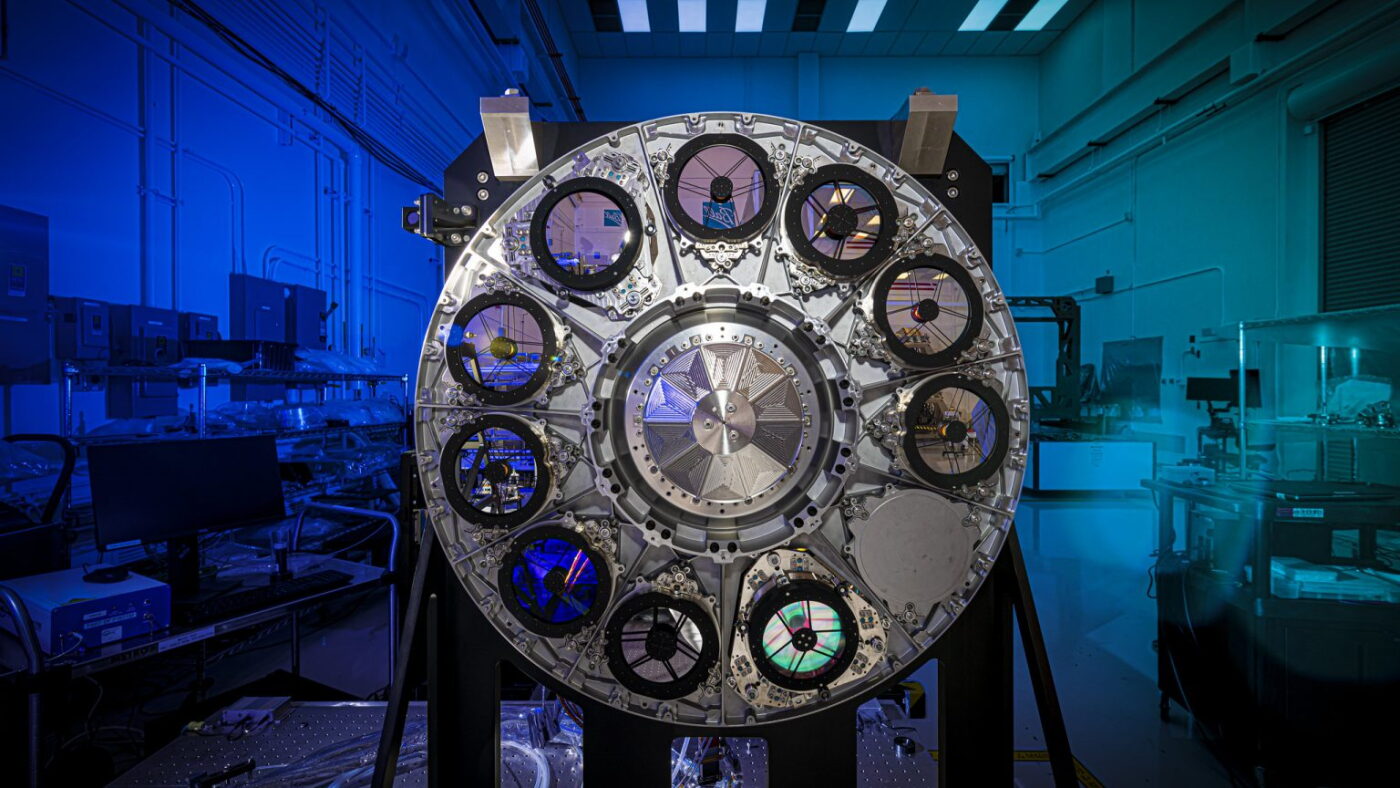
—the new observatory combines optics roughly matching Hubble’s sharpness with a massive architectural advantage. Equipped with a 7.9-foot primary mirror, a 300-megapixel infrared imaging camera, and an advanced coronagraph, Roman features a field of view 100 times larger than Hubble’s.
That expanded window changes how quickly astronomers can survey the cosmos. Julie McEnery, Roman’s senior project scientist at NASA’s Goddard Space Flight Center, explained that that one month of observations to survey our Milky Way galaxy would take about a century with Hubble
. Rather than staring at single targets, the telescope will construct massive public celestial catalogs. As McEnery pointed out, you can be a teacher in a high school in Kentucky and your students have the opportunity to see Roman data at the same time as a professor in Princeton.
Beyond galactic surveys, the observatory will utilize gravitational microlensing—a technique describing how planets bend starlight passing them by—to discover worlds otherwise impossible to detect. Scott Gaudi of The Ohio State University noted that the mission will locate distant planets that are very analogous to our own solar system planets like Jupiter, Saturn, Uranus and Neptune.
Launch Day Logistics and the Journey to L2
NASA and SpaceX are targeting an instantaneous liftoff window at 7:26 a.m. EDT on Sunday, August 30, from Launch Complex 39A at the Kennedy Space Center. Monday, August 31. Spectators across Brevard County can anticipate sonic booms as SpaceX attempts to land the Falcon Heavy’s two side boosters back at Cape Canaveral Landing Zones 2 and 40.
Following separation, the spacecraft will spend roughly 30 days cruising to its operational home: the Sun-Earth Lagrange Point 2, located approximately 930,000 miles to one million miles from Earth. There, gravitational forces will allow Roman to park stably with minimal fuel expenditure. Following a three-month checkout phase, the observatory will begin its five-year primary mission studying dark energy, dark matter, and cosmic expansion, carrying enough hypergolic hydrazine fuel to potentially support a decade of scientific discovery.
- President Daniel Chapo Urges Global Action on Climate Justice
- CHIME Telescope Detects Early Universe Hydrogen Signal Independently
- OpenAI and Rockefeller Foundations Launch $50M Initiative to Fund Municipal AI Projects (world-today-news.com)
- Connecticut Researchers Launch Study on Rising Alpha-Gal Syndrome and Lone Star Ticks (archyde.com)

President Daniel Chapo Urges Global Action on Climate Justice
Mozambican President Daniel Chapo called for strengthened international climate justice measures at a Maputo conference on October 14.
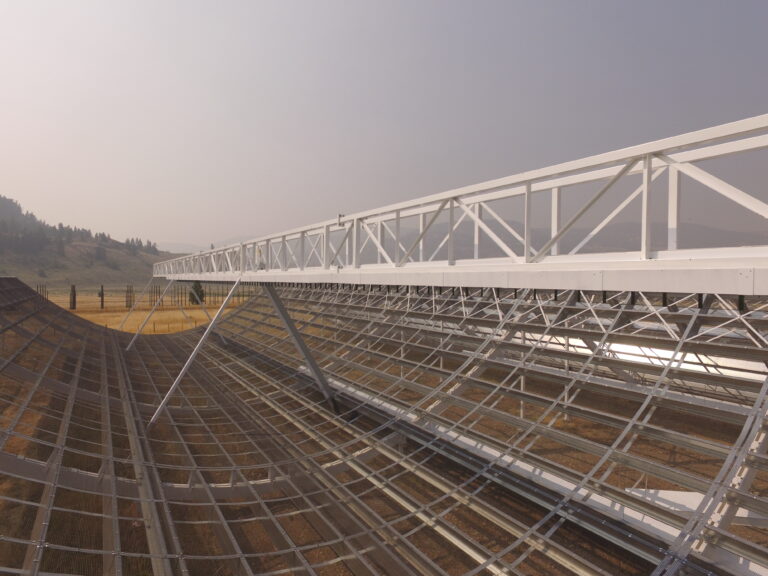
CHIME Telescope Detects Early Universe Hydrogen Signal Independently
Using only its own data, the Canadian Hydrogen Intensity Mapping Experiment (CHIME) telescope in British Columbia detected a...
NASA’s Perseverance Rover Breaks Opportunity’s Mars Mileage Record
NASA’s Perseverance rover has set a new off-world driving record on Mars, surpassing the mileage of its predecessor...
NASA and SpaceX to Launch Cargo and Solar Arrays to Space Station
NASA and SpaceX are targeting Tuesday, October 13, for the launch of the 35th commercial resupply mission to...