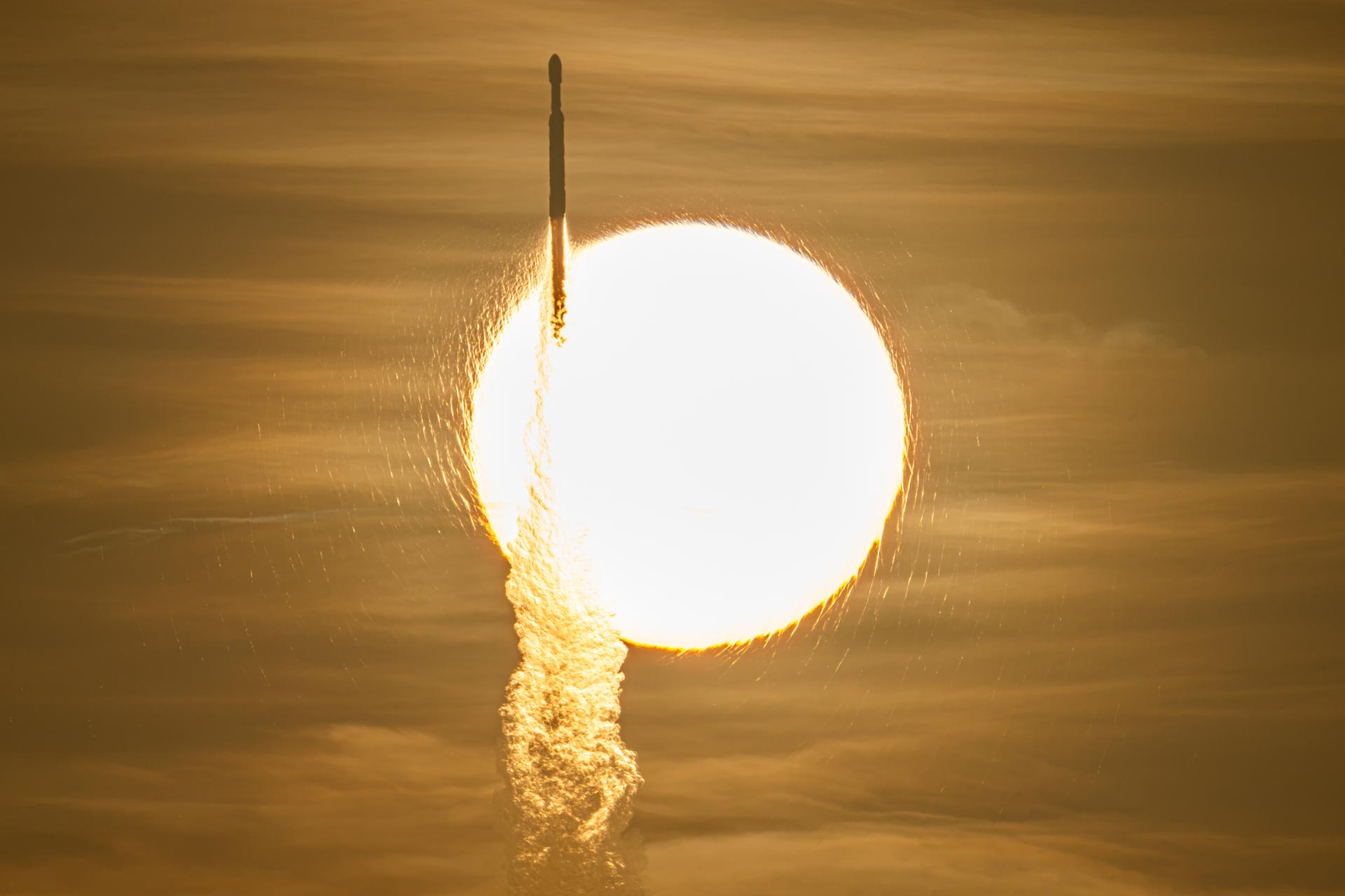
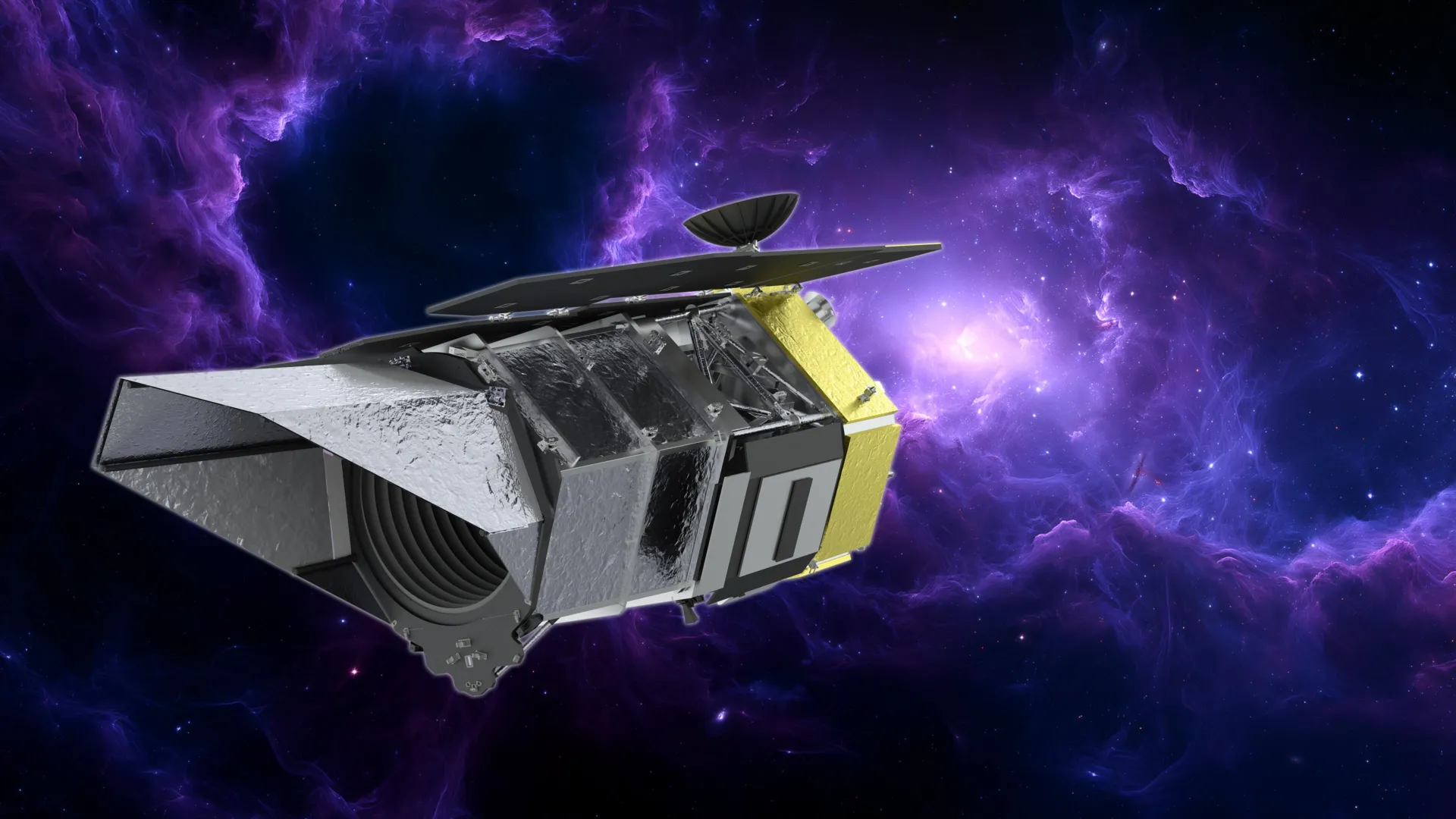
NASA’s Nancy Grace Roman Space Telescope launched aboard a SpaceX Falcon Heavy rocket and has now successfully powered up its 300-megapixel Wide Field Instrument from space, sending back its first test starlight while traveling toward its final operating orbit one million miles from Earth.
The mission lifted off at 7:26 a.m. EDT from Launch Complex 39A at NASA’s Kennedy Space Center in Florida, embarking on a three-month journey to the second Sun-Earth Lagrange point, known as L2. Delivered ahead of schedule and on budget according to NASA Administrator Jared Isaacman, the observatory pairs a large field of view with crisp infrared vision. The spacecraft’s primary objective is probing cosmic history, investigating dark matter and dark energy, and surveying worlds outside our solar system.
Activating the 300-Megapixel Wide Field Instrument
Engineers at NASA’s Goddard Space Flight Center in Greenbelt, Maryland, successfully switched on Roman’s primary science camera, known as the Wide Field Instrument. Before powering up the camera, the hardware spent 10 days drying out and decontaminating while its detectors rested at a relatively warm minus 85 degrees Fahrenheit (minus 65 Celsius).
On the morning of September 11, the team turned off the instrument heater, allowing the Wide Field Instrument to cool to minus 225 degrees Fahrenheit (minus 143 degrees Celsius) before activating its 18 infrared detectors. These detectors form a light-sensitive area roughly the size of a laptop screen, designed to capture sweeping cosmic panoramas.
“After years of effort to build and test the instrument on the ground, we now have confirmation that it is operational in space. This is a huge milestone for the team at Goddard, our industry teams at BAE Systems, Inc. and Teledyne, and our science centers. There is much to do, but we are on our way to groundbreaking science.”
Photo: sciencedaily.com
Josh Schlieder, the Wide Field Instrument scientist at NASA’s Goddard Space Flight Center in Greenbelt, Maryland
The first test image captured by the camera revealed a field of out-of-focus stars appearing as broad, ring-shaped features. Because the detector array remained stowed as it was for launch, the starlight spread across thousands of pixels rather than focusing into a sharp point. The dark hole in the middle of each green ring reflects the telescope’s design, which features a primary mirror and a smaller secondary mirror that blocks the center of the incoming beam. The team will use these initial captures as a baseline to align the telescope optics and tune its focus.
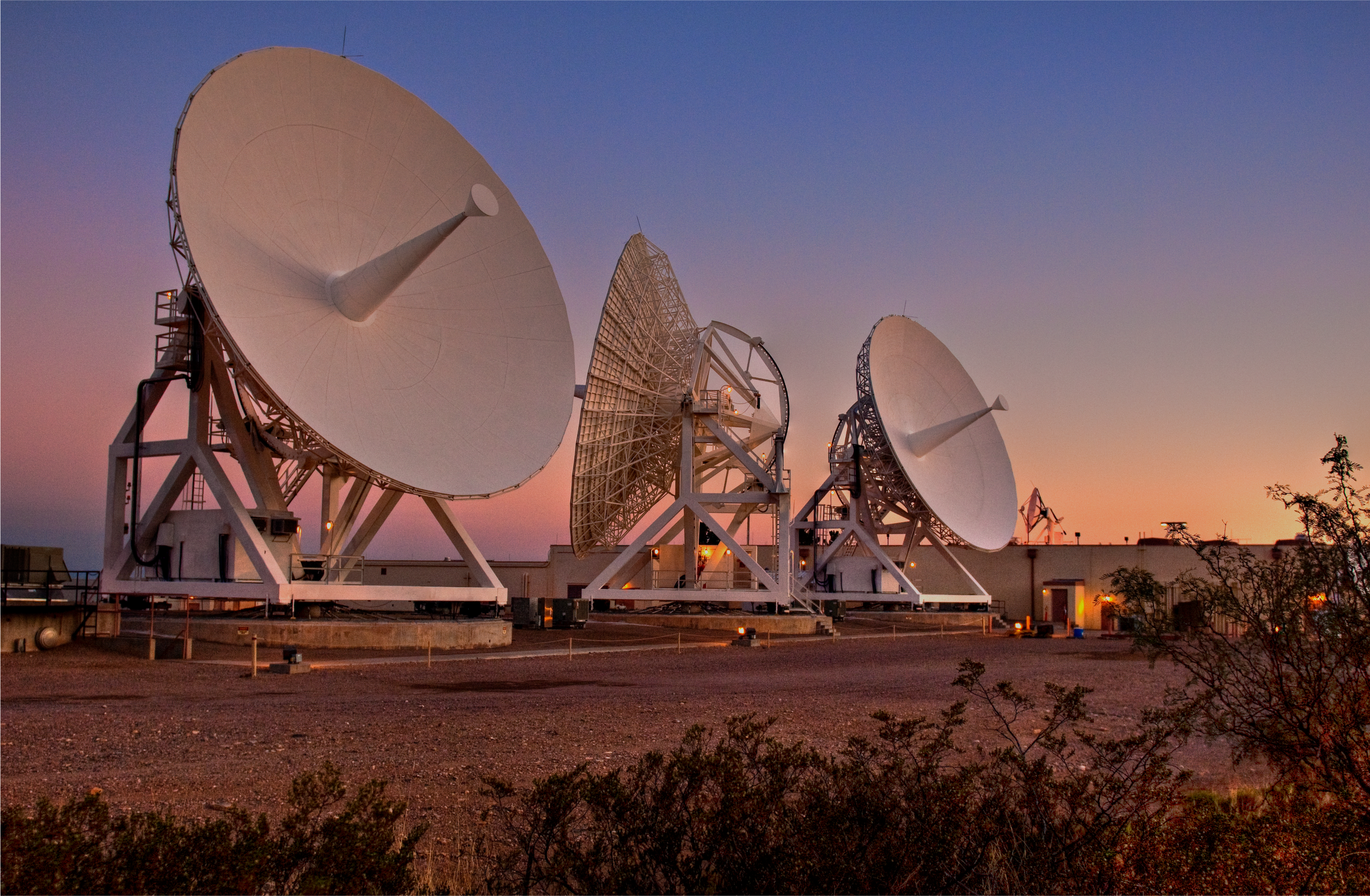
To handle the immense volume of information the observatory will generate, NASA confirmed that all international ground stations supporting the mission are ready for operations. Roman will send back approximately 1.4 terabytes of data every day, representing the highest data rate of any NASA astrophysics mission to date.
Photo: NASA
Engineers tested ground station connections across multiple continents to ensure reliable transmission at speeds up to 500 megabits per second. Testing began with the Japan Aerospace Exploration Agency’s Misasa Deep Space Station in Saku City on September 7, followed by NASA’s Near Space Network ground station and backup in White Sands, New Mexico, and the European Space Agency station near New Norcia in Western Australia.
Weather conditions provided a rigorous test during the downlinks, including a typhoon in Japan. Because raindrops can scatter radio wavelengths, NASA relies on a geographically diverse network of antennas to maintain contact as the spacecraft orbits around L2.
Extended Science Operations and Commissioning Timeline
Beyond its primary camera, Roman carries a planet-imaging Coronagraph Instrument designed to block stellar glare and directly image exoplanets. The coronagraph completed early digital, electronic, and mechanical checks after waking up earlier in September. NASA anticipates releasing Roman’s first science images by early 2027.
Roman Space Telescope: NASA’s New Eye on the Universe
Throughout the remainder of its three-month commissioning period, scientists will run the instruments through rigorous calibrations and tests, activate the fine-guidance system, and focus the optics. NASA anticipates releasing Roman’s first science images by early 2027.