
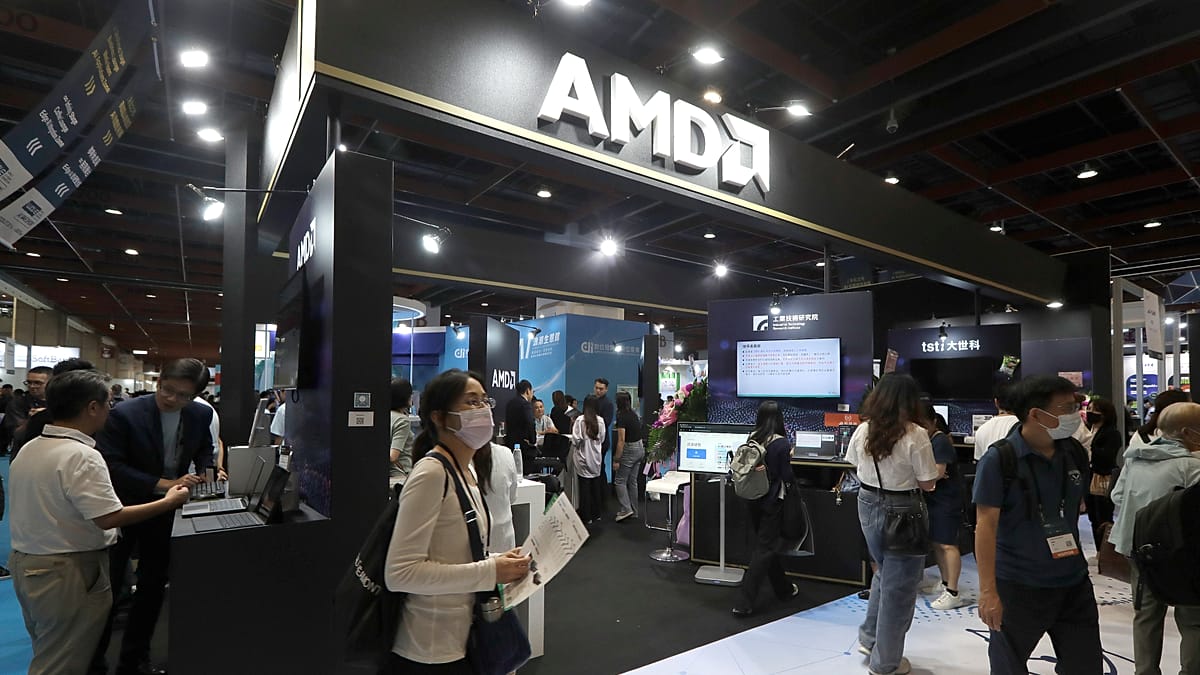
AMD unveiled the Threadripper Halo Station at the Internationale Funkausstellung in Berlin, introducing an ultra-high-performance workstation designed to run trillion-parameter artificial intelligence models locally. Set for release early next year, the system packs up to 96 processor cores and dual data center accelerators to rival enterprise cloud clusters.
The Hardware Architecture Behind AMD’s Desktop Supercomputer
Billed by AMD Senior Vice President Jack Huynh as the most powerful workstation in the world, the newly introduced system is engineered to handle massive computational loads entirely on local hardware. At the center of the configuration sits a 96-core Threadripper Pro 9995WX processor, recognized as AMD’s most powerful desktop CPU to date.
Graphics and memory capabilities are equally formidable. The workstation ships with dual Instinct MI350P accelerators that can scale up to four units, supported entirely by liquid cooling. These accelerators collectively deliver up to 576 gigabytes of high bandwidth memory, supported by up to two terabytes of system memory. The AMD executive gave a brief demonstration of its potential at the event by generating an entire 3D world and flight simulator from a single prompt. Huynh introduced the system on September 4, framing it as the start of a completely new era of computing
driven by artificial intelligence.
“most powerful workstation in the world”
Jack Huynh, AMD Senior Vice President
Challenging Nvidia’s Reign in High-End AI Workstations
The Threadripper Halo Station serves as a direct challenge to the Nvidia DGX Station, the reigning heavyweight in high-end AI workstations that has essentially owned the category since its introduction. While both machines target developers and small teams seeking local deployment, their underlying strategies differ significantly.
AMD’s system focuses heavily on raw memory capacity and bandwidth, offering more than three times as much memory than Nvidia’s offering. This massive local pool enables developers to keep entire large language models resident in memory. Conversely, industry analysts point out that Nvidia retains an advantage through its more seamless integration when moving code from a local workstation to the cloud and its mature CUDA software ecosystem, which developers have built on for over a decade. Crucially, Nvidia’s offering is already available, retailing at around €100,000. To bridge that gap, AMD continues to invest heavily in its ROCm software stack, the open-source alternative to CUDA, to make it easier for developers to port their AI workloads to AMD hardware. The Halo Station builds on AMD’s earlier AI push with the Ryzen AI Halo, a consumer-facing chip designed for AI-accelerated laptops and desktops.
Why Organizations Are Turning to On-Premises AI Hardware
The push toward local AI infrastructure addresses three persistent hurdles associated with cloud-based computing: latency, cost, and data sovereignty. For applications involving real-time AI agents making sequential decisions, sending data to a remote server and waiting for a response adds time that compounds across millions of queries, making that round-trip delay a dealbreaker. Running models of that scale typically requires renting time on clusters of GPUs in data centers operated by the likes of AWS, Google Cloud, or Microsoft Azure.
Furthermore, data sovereignty matters most in regulated industries like finance, healthcare, and defense. Keeping sensitive data on a local machine eliminates an entire category of compliance risk. By offering an alternative to recurring cloud subscription costs, the system aims to give institutional users a platform to deploy large-language models and agentic AI systems themselves rather than rely on increasingly expensive cloud computing.
Pricing Expectations and Projected 2027 Market Release
While AMD is yet to reveal how much it will cost, industry estimates peg the Halo Station’s price in that range, expecting that it could exceed €100,000, geared towards corporate and institutional budgets rather than as personal computers as originally pitched. Investors won’t see revenue impact anytime soon given the expected availability window of 2027, with the supercomputer slated for release early next year. As the deployment window approaches, market observers and analysts will be watching two things closely: whether AMD can deliver the system on schedule, and whether the ROCm ecosystem matures enough to make the hardware accessible to developers who’ve spent years building on CUDA.

Apple iPhone Duo Price Premiums Evaporate in China
Apple’s first foldable smartphone, the iPhone Duo, saw its resale premiums in China collapse this week as supply...

Tohoku University and University of Tokyo Launch Curated Hydrogen Database
Published online on September 4, 2026, in Applied Physics A, researchers at Tohoku University and the University of...

r/opensource Bans AI Projects, Restricts Solo Developers
Reddit’s massive r/opensource developer community enacted an immediate ban on all artificial intelligence projects on October 24, 2026.
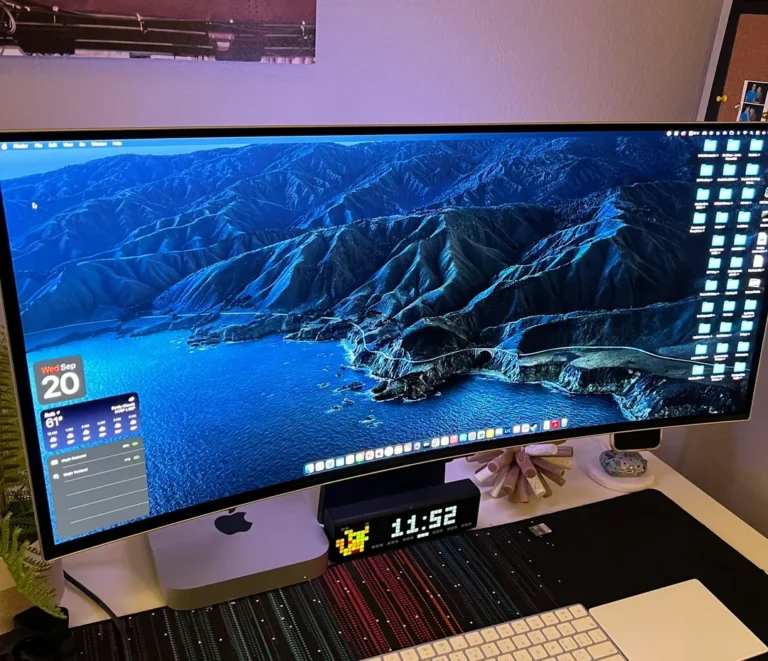
Mobile Pixels Crowdfunds $434,707 from 392 Backers for Prisma 40-inch Curved 5K Monitor
Mobile Pixels has introduced Prisma, a 40-inch curved 5K monitor featuring an integrated workspace hub designed for Apple...