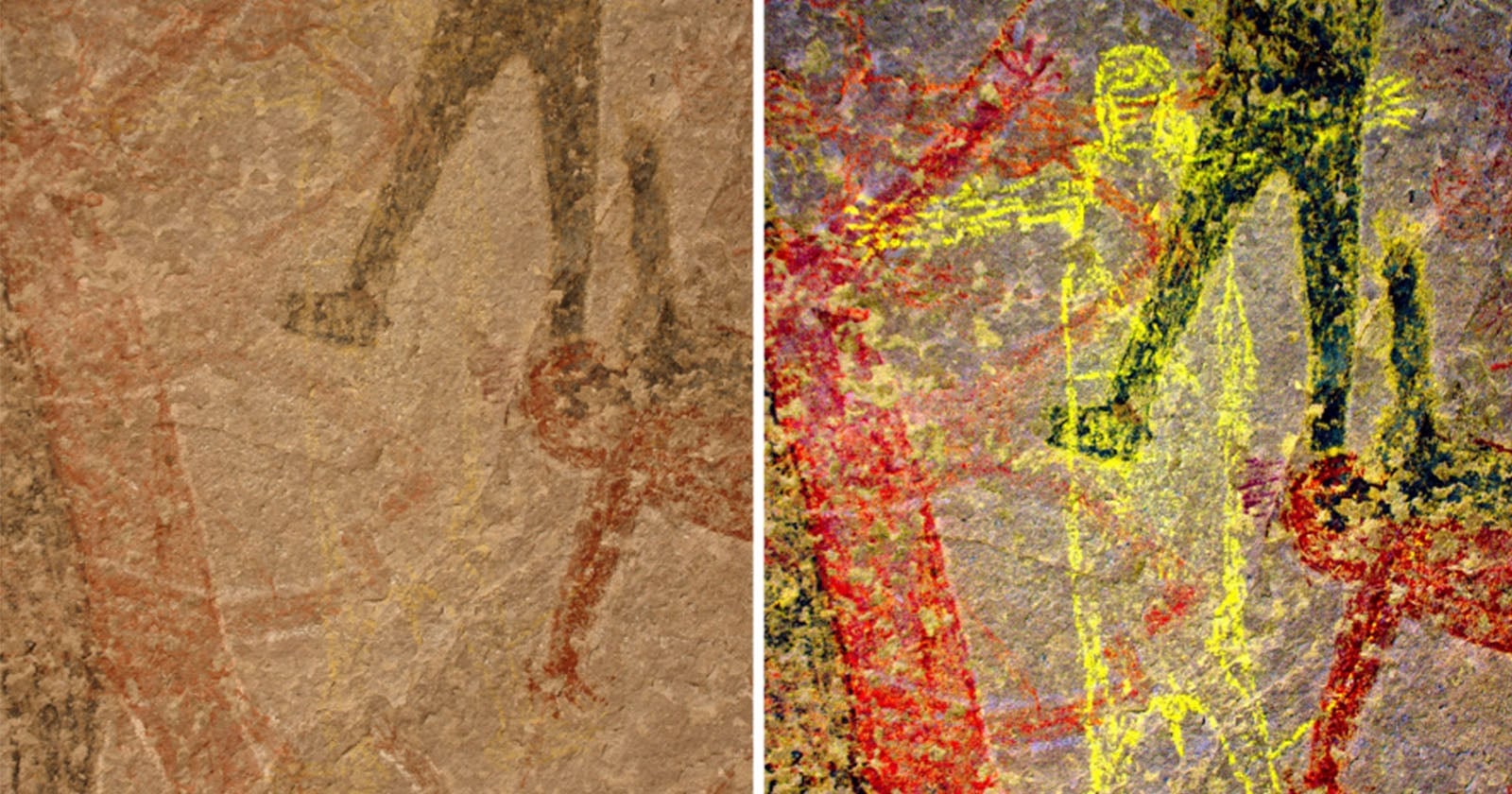
Originally engineered in 1978 for high-correlation remote sensing and satellite imagery, a NASA photo-processing method called decorrelation stretch is now unearthing faded rock art and ancient paintings across Earth. Archaeologists and enthusiasts have adapted the algorithm into software tools to discover hidden archaeological details from Mexico to Cambodia.
A digital image processing technique originally created by researchers at NASA’s Jet Propulsion Laboratory to analyze the Martian surface has found an unexpected second life uncovering centuries-old artwork on Earth.
The method, known as a decorrelation stretch, enhances subtle color variations in digital photography. While it was built to help scientists interpret high-correlation remote sensing data, it now serves as a key tool for archaeologists studying ancient rock art, cave paintings, and faded historical inscriptions.
Origins at NASA and the Algorithm Behind the Mars Trick
The technique traces back to 1978, when a supervisor of a digital image processing group at JPL, Jim Soha, proposed applying the Karhunen–Loève Transform to digital imagery for color enhancement. According to a NASA JPL webpage, a decorrelation stretch functions as a visualization tool to enhance the color variations among objects within a scene.
The process ensures that an output image distributes its pixels well across all possible colors while keeping the relative sense of hue, saturation, and intensity intact. In 1996, Ronald Alley, another member of the JPL group, refined the process to make it faster and more accurate. As Alley noted, someone needed to document the algorithm so users could understand what the method achieved.
Archaeologist Jon Harman encountered the technique at a conference in 2005 while looking at images from the Mars Exploration Rover webpage. Having a PhD in mathematics from Berkeley and experience in medical imaging, Harman recognized its potential for historical study. After searching online, he found a NASA paper detailing the algorithm and set out to build a software plug-in.
Harman added that his medical imaging background gave him the confidence to implement the programming.
Uncovering Faded Rock Art Across Baja California and Angkor Wat
Harman first tested his Dstretch software plug-in on photographs he had taken of rock art in Baja California, Mexico. The adjustment brought a previously hidden yellow figure into view in the Cave of San Borjitas, proving the method’s archaeological viability.
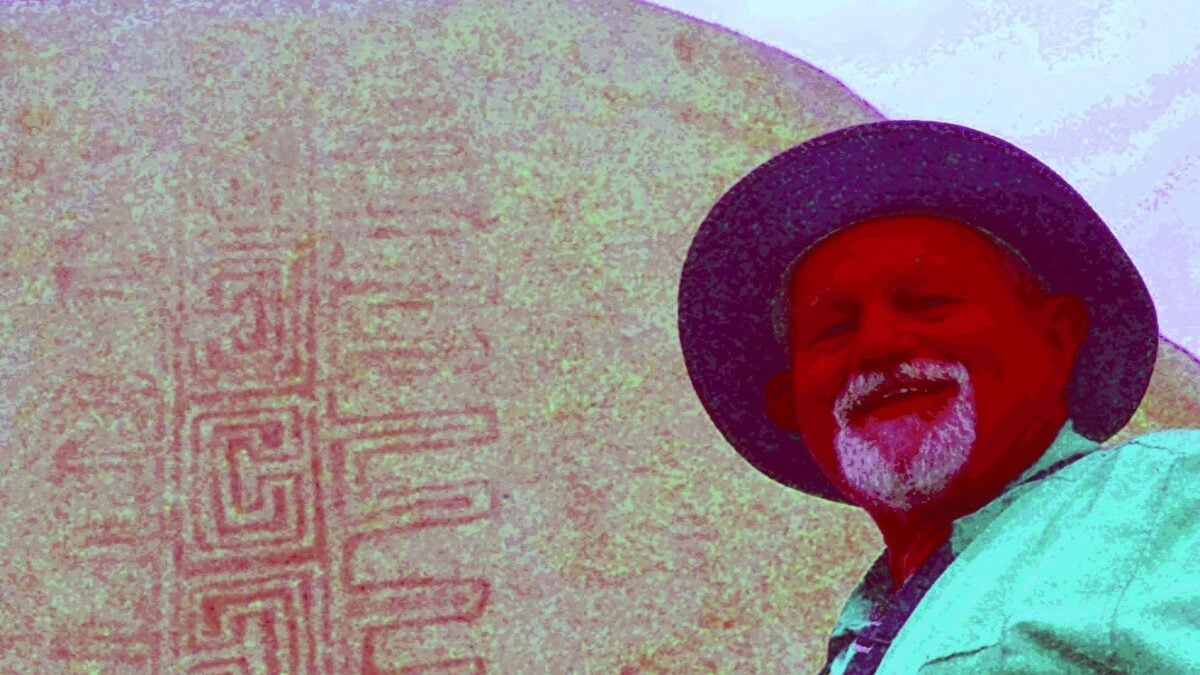
Rather than simply raising standard contrast, the software maps original colors to an expanded range by diagonalizing color matrices and shifting the working color space. The plug-in features custom color spaces tailored specifically for ancient pigments.
Researchers worldwide quickly adopted the tool. Between 2010 and 2012, Singaporean archaeologist Noel Hidalgo Tan used Dstretch to locate more than 200 faded paintings around the Angkor Wat temple complex in Cambodia.
The software has since assisted researchers in discovering rare depictions of bats and pigs in the ancient Egyptian cemetery of Beni Hassan. In Alberta, Canada, at Writing-on-Stone Provincial Park, the tool revealed a pictograph of a horse and rider believed to be a calling card left by a Crow warrior taunting rival Blackfoot enemies.
Expanding Applications in Global Archaeology
Other documented discoveries include roughly 15 previously undocumented figures and new details on 28 others at the Årsand 1 site in western Norway. The plug-in has even been utilized to analyze faded tattoos on mummified remains.
Despite the technological leaps provided by the software, the fundamental purpose behind ancient art remains elusive. As Harman observed regarding his ongoing work with the paintings, No one really knows why people made the rock art they made, at least in many cases,
adding that the symbols are quite strange.

Brown engineers build brain-inspired camera for low-visibility environments
Drawing power measured in only tens of milliwatts, Engineers at Brown University have built a brain-inspired imaging system...

Sun’s Death Shreds Outer Solar System in Billion Years
New computer simulations published in The Astrophysical Journal Letters indicate the Sun's irregular mass loss as it dies...

Vera C. Rubin Observatory Captures Seagull Nebula in 2026 Test Image
The resulting test image, shared in October 2026, captures the head of the Seagull Nebula, officially cataloged as...

ClearSpace UK to capture defunct British satellites
The UK Space Agency signed a £61.3 million contract with ClearSpace UK to build a robotic spacecraft featuring...