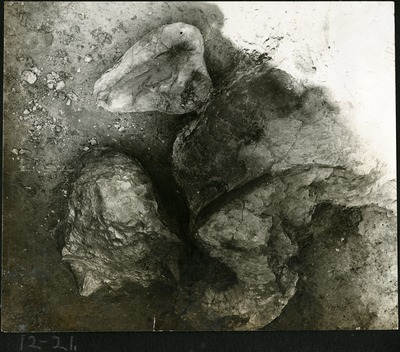
Fourteen shark teeth from at least five extinct species have been discovered in Egypt’s Western Desert. Recovered from the Abu-Tartur Plateau’s phosphate-rich rocks, the Late Cretaceous fossils reveal that a warm tropical sea once covered the region roughly 84 to 72 million years ago.
Fourteen fossilized shark teeth have turned up in one of the driest places on Earth, offering a window into a prehistoric marine ecosystem that vanished millions of years ago. According to reporting published in Cretaceous Research and led by Cairo University paleontologist Tarek Yassin, the fossils recovered from Egypt’s Western Desert belong to at least five extinct shark species that swam through a warm tropical sea long before sand dunes took over the region.
Fossils Unearthed in the Abu-Tartur Plateau
The teeth originate from the Abu-Tartur Plateau within the Duwi Formation, a geological unit rich in phosphates that preserves traces of the ancient sea spanning northern Africa. These rocks date back to the Campanian stage of the Late Cretaceous, spanning roughly 84 to 72 million years ago. During this epoch, global temperatures were much higher and sea levels soared, allowing shallow waters to cover vast continental interiors now buried beneath the Sahara.
All five identified species belong to the order Lamniformes
, a group that includes modern great whites, makos, and goblin sharks. The teeth display distinct shapes that let paleontologists deduce how the animals hunted. While narrow and pointed teeth helped grip slippery prey, broader ones suited slicing.
Reconstructing the Late Cretaceous Marine Environment
By analyzing where different shark species lived on the ancient continental shelf, researchers mapped out the local marine geography. Scapanorhynchus
links with deeper water, whereas Cretalamna
and Serratolamna
point to open-shelf settings. Meanwhile, Squalicorax
indicates shallower or nearshore conditions. Together, these remains suggest the deposit captured materials from multiple marine environments.
Researchers suggest that upwelling—a process where nutrient-rich deeper water rises toward the surface—fueled plankton growth in sunlit waters. This supported small fish and invertebrates that sustained apex predators higher up the food chain. Previous fossil discoveries from the Duwi Formation, including fish and sea turtles, reinforce the picture of a highly productive sea.
Understanding the Abu-Tartur Time-Averaged Assemblage
Although paleontologists call Abu-Tartur a shark graveyard
, researchers note the moniker can mislead by implying the sharks died together in a single catastrophic event. Instead, slow-accumulating phosphate beds concentrated teeth and remains from different moments into the same layers. This time-averaged assemblage means fossils resting side by side today may represent animals that lived hundreds or thousands of years apart.
That concentration ultimately broadens the fossil record. Rather than capturing a single fleeting moment, the site preserves a long-term chronicle of the fauna moving through northern Africa’s ancient waters.
Worth a look
Laurentide Ice Sheet Expansion Began 2,000 Years Ago, But Stopped In The 1960s
Radiocarbon dating of dead moss preserved beneath the Barnes Ice Cap reveals that glacier expansion began around 2,000...
Korean Artists Hyewon Kwon, Boo Jihyun, Eunhae Jung, Eco Orot Explore Water’s Ecological Role
Aqua Paradiso continues as a 2026 touring exhibition at Korean Cultural Centres in India and Australia.

Scientists crack Silicon Carbide Divacancy Discrepancy
Researchers have built a computational framework that captures the complete optical cycle of spin defects in crystals, resolving...

Researchers Study Link Between Early Brain Development and Conditions Like Autism
Researchers using non-invasive tools like EEG and fMRI are probing infant brain development to pinpoint when consciousness emerges.