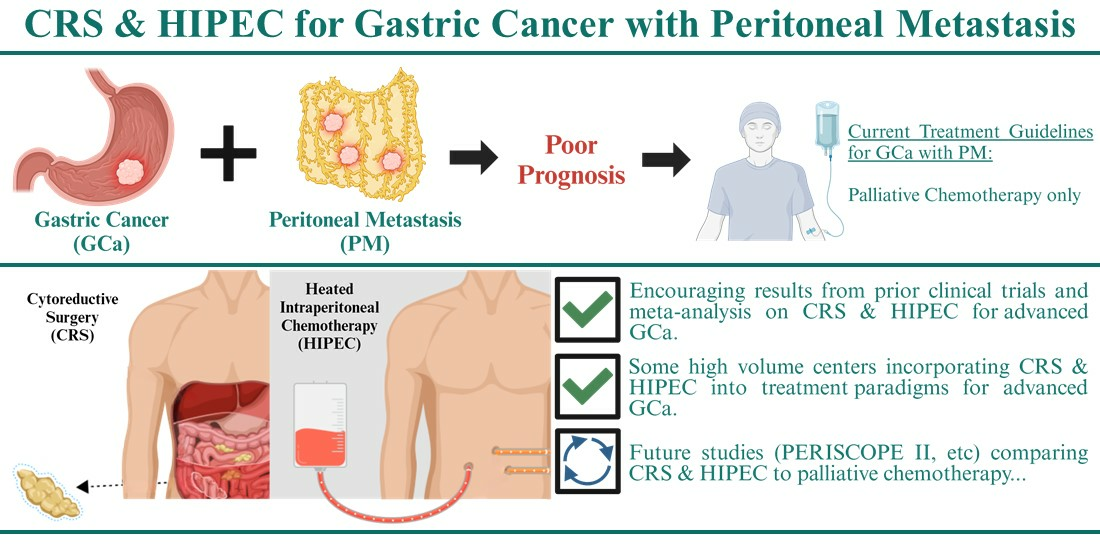
Gastric cancer remains a leading cause of cancer-related mortality worldwide, with peritoneal dissemination representing one of the most clinically consequential and prognostically adverse patterns of disease progression. According to Cureus, gastric cancer is the fifth most commonly diagnosed malignancy and the fourth leading cause of cancer-related death globally, with high incidence rates particularly concentrated in East Asia. Because drug penetration into the peritoneal cavity is limited by the peritoneal-plasma barrier, systemic therapy faces pharmacokinetic restrictions in advanced disease. This limitation has driven interest in locoregional strategies designed to deliver higher effective drug concentrations directly to peritoneal surfaces.
Understanding the Dual Roles of HIPEC in Gastric Cancer Management
Hyperthermic intraperitoneal chemotherapy, commonly known as HIPEC, is a specialized treatment combining maximal macroscopic tumor reduction with regionally intensified chemotherapy under hyperthermic conditions. According to Nature, cytoreductive surgery seeks to remove all visible peritoneal tumor deposits to minimize residual disease, while intraperitoneal chemotherapy complements the approach by delivering cytotoxic agents directly into the peritoneal cavity. However, medical literature highlights that clinical scenarios for HIPEC in gastric cancer span two fundamentally distinct clinical indications: prophylactic and therapeutic.
Prophylactic Versus Therapeutic Indications
The distinction between prophylactic and therapeutic applications is critical in contemporary multimodal management. Prophylactic Cureus notes that prophylactic HIPEC is administered to patients without overt macroscopic peritoneal metastasis who exhibit clinicopathologic features conferring a high risk of future peritoneal recurrence. In contrast, therapeutic cytoreductive surgery combined with HIPEC is applied in patients with established peritoneal disease to improve survival through aggressive locoregional treatment. These indications differ significantly in disease burden, therapeutic intent, biological plausibility, and expectations of benefit.
Recent clinical trials and randomized evidence have shaped how therapeutic applications are viewed in modern practice. While earlier retrospective series generated enthusiasm for cytoreductive surgery and HIPEC in selected patients with gastric peritoneal metastasis, trials such as GASTRIPEC-I and PERISCOPE II have prompted a more critical reassessment of therapeutic HIPEC. Meanwhile, the prophylactic question remains open and biologically attractive within ongoing oncological research.
Procedure Mechanics and Pharmacological Rationale
The HIPEC procedure is typically performed immediately after debulking or cytoreductive surgery, where a heated chemotherapy solution is circulated throughout the abdominal cavity. According to linkos.cz, the perfusion involves cytostatics heated to 42 °C for approximately 90 minutes, though overall circulation times can range from 90 minutes to two hours depending on the protocol. Commonly used cytostatics include cisplatin, carboplatin, oxaliplatin, and doxorubicin.
The application of heat serves a dual purpose: it increases the cytotoxicity of the drugs in killing cancer cells and enhances blood flow and tissue permeability, making cancer cells more susceptible to treatment. From an oncology pharmacy perspective, maintaining appropriate drug concentration, stability under hyperthermic conditions, proper hydration, and premedication are essential. While regional drug concentrations remain high, systemic penetration into the bloodstream generally yields plasmatic concentrations around the lower limit of a therapeutic range.
Survival Data and Clinical Outcomes
Data from systematic reviews and meta-analyses evaluating intraperitoneal approaches—including normothermic catheter-based perfusion, HIPEC, and pressurized intraperitoneal aerosol chemotherapy (PIPAC)—demonstrate varied survival outcomes across cohorts. A systematic review across 999 patients with peritoneal metastases found a pooled median overall survival of 14.5 months, with specific modalities like intraperitoneal paclitaxel achieving up to 18.4 months.

In larger retrospective cohorts involving over 500 patients receiving combined intraperitoneal and systemic chemotherapy, patients who successfully proceeded to cytoreductive surgery exhibited a median overall survival of 27.0 months, compared to 11.8 months in non-surgical cases. Approximately 16% of patients underwent conversion surgery following initial intraperitoneal treatment, displaying acceptable overall toxicity profiles.

Louisa Nicola Outlines Lifestyle Changes to Prevent Alzheimer’s
Neuroscientist Louisa Nicola argues that up to 95 percent of Alzheimer’s cases are preventable through lifestyle choices, pointing...

Marking World Mental Health Day 2026, the Irish government announced an €11 million funding package
Marking World Mental Health Day 2026, the Irish government announced an €11 million funding package to expand youth...

CU Anschutz Study: Horseback Riding Cuts Hyperactivity in Autistic Youth
Therapeutic horseback riding cuts hyperactivity in children with autism and co-occurring psychiatric conditions, according to new research published...

Routine Blood Tests May Predict Long-Term Dementia Risk
Routine blood screening tests and advanced genetic markers are offering doctors new ways to estimate long-term dementia risks...