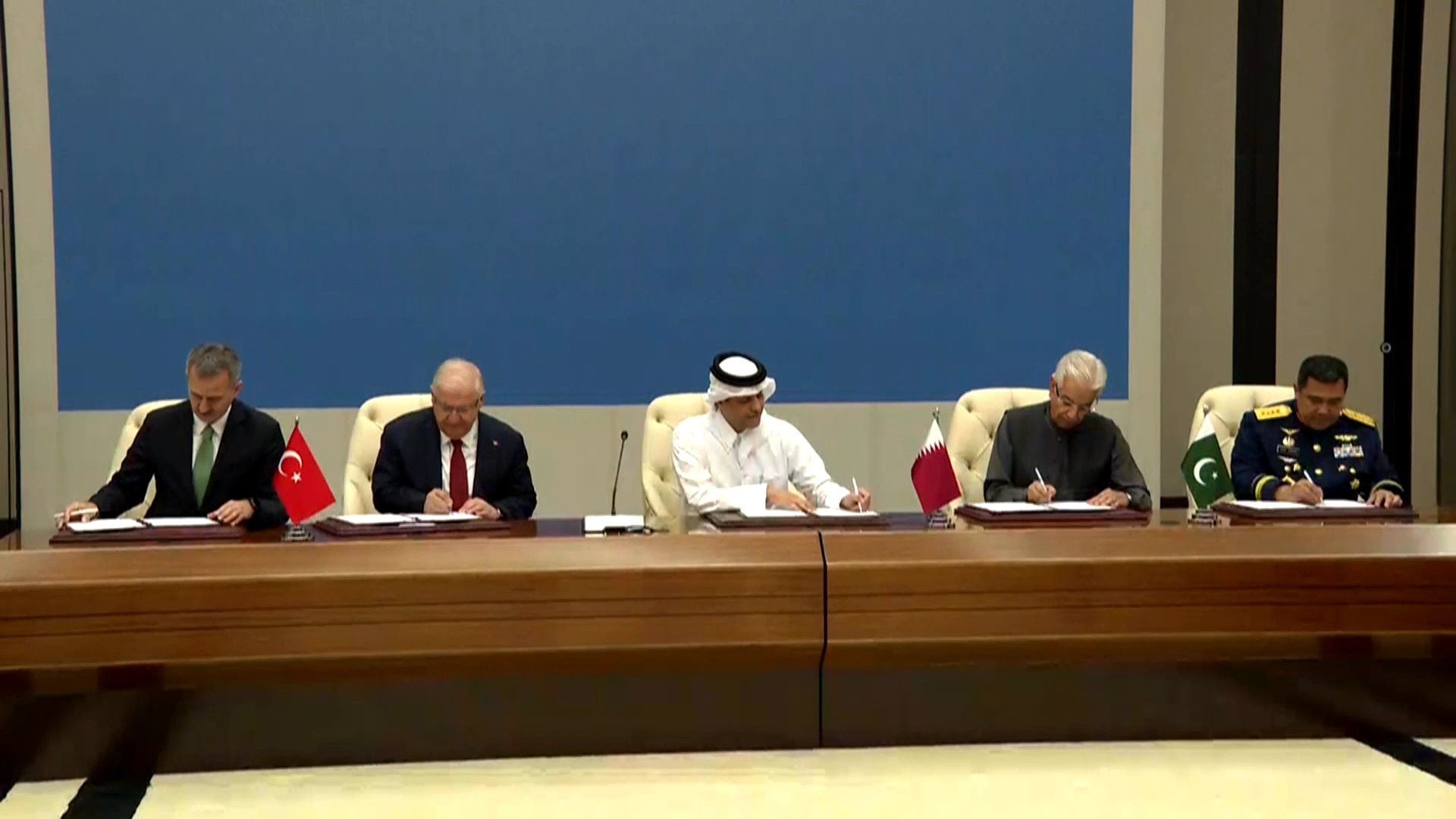
Qatar, Turkiye, Pakistan, and Indonesia signed the Badr Memorandum of Understanding in Doha on October 21, 2026, establishing a multilateral defense pact focused on joint weapons manufacturing, military technology sharing, research and development, and industrial capability building without a mutual defense clause.
Four nations reshape regional military production by signing a multilateral defense pact in Doha. The new four-nation military and industrial framework brings together defense ministries and state-level manufacturing entities across the Middle East, South Asia, and Southeast Asia. The agreement is designed to boost joint weapons production, research, and technology cooperation, providing a mechanism for participating states to reduce their reliance on traditional foreign and Western weapons suppliers.
Industrial Execution and Key Defense Entities
Unlike conventional mutual security pacts, the Badr framework operates as an industrial cooperation agreement.
Prominent defense contractors from the participating countries are slated to drive the execution of joint projects, including ASELSAN, Baykar, Roketsan, and the Pakistan Ordnance Factories.
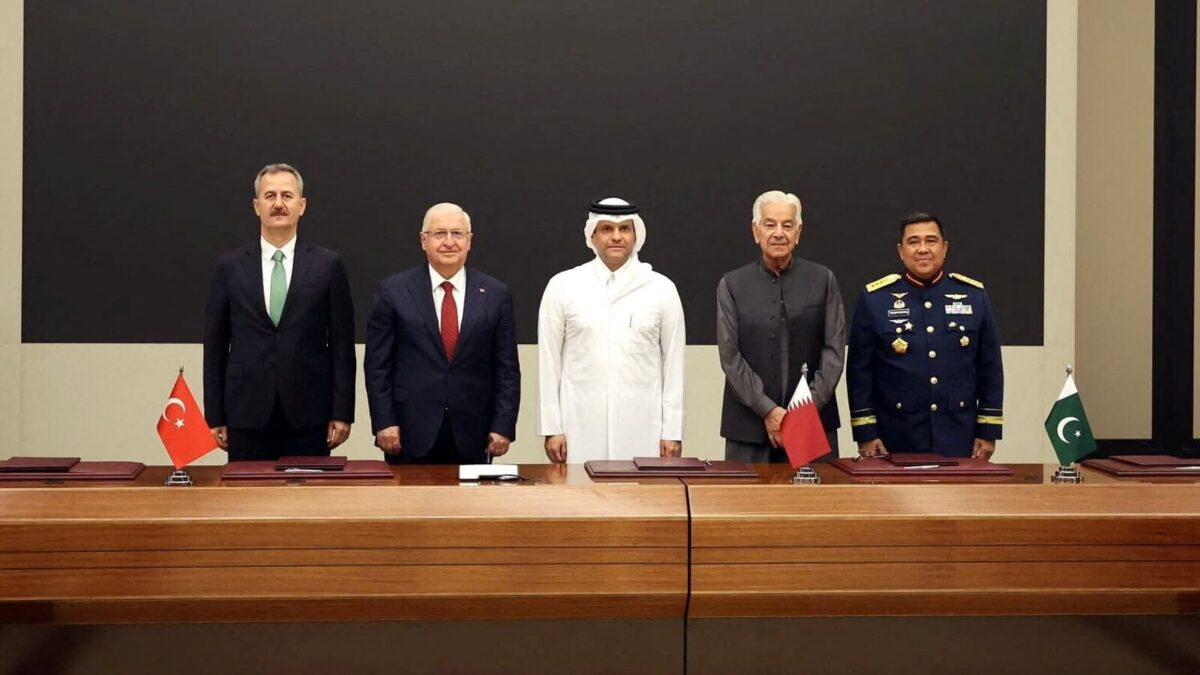
Turkish Defense Minister Yaşar Güler signed the accord alongside Qatar’s Deputy Prime Minister and Minister of State for Defense Affairs Sheikh Saud bin Abdulrahman bin Hasan Al Thani. Pakistan’s Defense Minister Khawaja Muhammad Asif also signed the accord. Indonesia’s Deputy Defense Minister Yusuf Jauhari signed the agreement.
Haluk Görgün, head of Turkey’s Presidency of Defense Industries, and Pakistan’s Minister for Defence Production Raza Hayat Harraj also attended the signing ceremony in Doha.
🚨 BREAKING NEWS | 🇵🇰 🇹🇷 🇶🇦 🇮🇩 Türkiye, Qatar, Pakistan and Indonesia have signed a defense industry cooperation pact called “Badr” in Doha, Qatar.The four countries’ defense ministers signed the memorandum of understanding. The deal covers joint production, research and… pic.twitter.com/b7BOfJ2gz0
Qatar is backing the initiative financially through Barzan Holdings, while Indonesia contributes substantial industrial scale and manpower to the coalition.
The agreement ties together a series of pre-existing bilateral defense programs into a single multilateral structure. Turkey and Pakistan have previously collaborated on the Babur-class corvette program, which involved building warships in Istanbul and upgrading the Karachi Shipyard to construct additional vessels. Badr builds upon prior defense-industrial partnerships, such as the joint venture BARQ established in Qatar by Turkish defense companies ASELSAN and SSTek.
Analysts Examine Regional Security Priorities
Security analysts note that the framework emerges as regional states hold doubts regarding the reliability of traditional security umbrellas, particularly following recent conflicts involving the United States and Iran.
For Gulf states and middle powers alike, the friction of relying on far-flung suppliers for spare parts, software, and maintenance has driven a push toward domestic defense manufacturing.
We look forward to exploring opportunities for strengthening self-reliance, industrial collaboration, joint production and technology transfer while drawing on the complementary strengths of our respective defence industries, in accordance with relevant international and domestic laws and regulations.
Khawaja Asif, Pakistan’s Defence Minister
Turkish officials echoed similar sentiments regarding the move away from off-the-shelf procurement models.
Haluk Görgün, head of Turkey’s Presidency of Defense Industries, emphasized that the arrangement fosters the development of a nation’s own human capital and domestic industrial infrastructure rather than simply importing finished military hardware.
Badr Differs From Makkah Agreement
Strategic observers have drawn clear distinctions between the Badr pact and the Makkah Joint Defence Agreement signed on August 7, 2026, by Turkey, Saudi Arabia, and Pakistan.
While the Makkah pact includes a binding collective-defense commitment stipulating that an armed attack against one member constitutes an attack against all, the Badr MoU contains no mutual-defense clause.
Turkey, Qatar, Pakistan and Indonesia sign Badr pact to deepen defence cooperationSource: Firstpost#Pakistanhttps://t.co/23xLIBaKac
Instead, Badr focuses strictly on factories, engineers, and supply chain integration.
Pakistan participates in both frameworks, while Saudi Arabia remains outside Badr, cooperating primarily through the Makkah arrangement.
According to regional statements, the Badr MoU also includes provisions allowing other friendly nations to join the framework in the future, subject to agreed-upon criteria among the original four signatories.
More on Qatar
🚨India’s BrahMos & Astra at Risk? Indonesia Joins Pakistan, Türkiye and Qatar in New Defence PactOn October 21, 2026, Pakistan, Türkiye, Qatar and Indonesia signed the Badr Memorandum of Understanding in Doha. The agreement covers defence production, joint research and… pic.twitter.com/yfOA19wUzA
Related reading

Houthis’ attacks on Riyadh delay FII conference
Saudi Arabia postponed its landmark tenth Future Investment Initiative conference to 2027 following a wave of Houthi missile...

Rain warning begins in England and Wales as Storm Boelo hits UK
Storm Boelo is bringing high winds and heavy rain to the UK and Ireland this weekend, triggering amber...

Globe and Mail Weekender ‘Mixed Doubles’ Puzzle Features Collaboration Between David Karp and Aidan Brand
Crossword constructors Aidan Brand and David Karp teamed up for a Weekender puzzle featuring a cocktail theme, while...

Namibia cuts 2026 economic growth forecast to 2.3%
Namibia has slashed its 2026 economic growth forecast to 2.3% following a weaker-than-first-half performance.