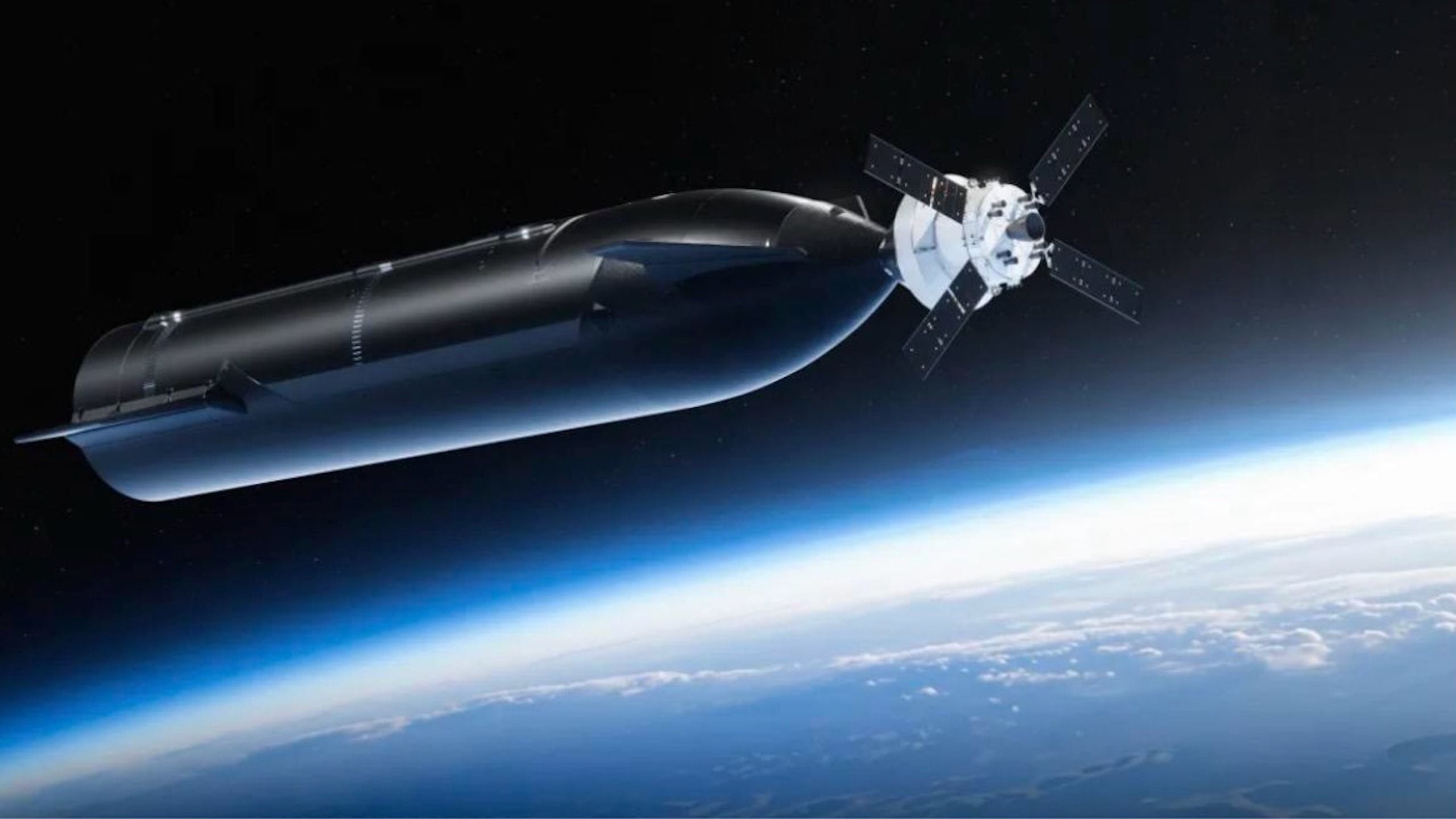
NASA is adopting an urgent, streamlined approach to spaceflight, targeting the launch of Artemis III next summer for low Earth orbit docking exercises with commercial lunar landers while keeping Artemis IV on schedule for a crewed moon landing by 2028.
Chasing Apollo Urgency in Modern Flight
As a rocket nerd, it’s going to be pretty awesome.
Amit Kshatriya, NASA’s associate administrator
Isaacman noted that the current lunar push is much closer than it ever needed to be
due to slow progress in past years. The space agency is embracing the urgency and intensity that defined the 1968 through 1972 Apollo era, when 24 astronauts flew to the moon and 12 landed on it.
That is an approach that Jared Isaacman noted is not tech industry pixie dust or some new
method. Administrator Jared Isaacman stated that the space agency remains on track to launch Artemis III next summer for a docking exercise with Elon Musk’s and Jeff Bezos’ lunar landers. This two-week mission featuring four astronauts will be confined to orbit around Earth with no moon trip scheduled.
The Artemis III Low Earth Orbit Test Flight Plan
Before astronauts return to the lunar surface, NASA laid out a detailed concept of operations for the Artemis III docking test in low Earth orbit. The baseline concept of operations relies on three rockets flying from Florida’s Space Coast: NASA’s Space Launch System (SLS), SpaceX’s Starship, and Blue Origin’s New Glenn.
Assuming everything proceeds according to the scheduled design, New Glenn will initiate the sequence by launching and transporting Blue Origin’s Blue Moon lunar lander into low Earth orbit. Meanwhile, the SLS will deploy Orion into a highly elliptical orbit, one that gets as close to Earth as 18 miles and as far away as 1,122 miles, according to Parsons.
- Blue Origin’s New Glenn rocket carrying the Blue Moon lunar lander into low Earth orbit.
- NASA’s Space Launch System (SLS) launching the Orion spacecraft.
- SpaceX’s Starship megarocket lifting off with a specially built docking adapter on its nose.
Once operations are complete, astronauts will open up the hatch, enter the lander, and evaluate the environmental controls and life support systems. Mission teams will also confirm that the spacecraft can maintain the right atmospheric pressure, test emergency scenarios, dual vehicle control, and put Mission Control teams through their paces. On SpaceX landings, Starship will likely dock with the NASA capsule in Earth orbit and propel it to the moon, referred to as the push.
Preparing the Lunar South Pole with Rover Fleets
While the orbital tests unfold, robotic rovers are preparing the terrain. Astrolab is headquartered in Hawthorne, California. The aerospace enterprise is one of a pair of entities funded with approximately $220 million by NASA to construct a conveyance capable of enduring and traversing the rugged lunar surface at a measured pace.
At the Houston facilities of Axiom Space—a commercial collaborator partnering with Astrolab—NASA crew members recently donned Artemis-style lunar spacesuit iterations to evaluate an operational mockup of the CLV-1. Serving as the company’s inaugural lunar machine, the CLV-1 will actually be preceded by an autonomous robotic rover developed by Astrolab. Affectionately nicknamed FLIP, this earlier unit is scheduled for a Cape Canaveral liftoff aboard Voyager Technologies’ Griffin-1 lunar lander and could touch down on the moon prior to the conclusion of 2026.
| Rover Name | Developer / Affiliation | Mission Objective |
|---|---|---|
| FLIP | Astrolab (Hawthorne, California) | Study environment and test technologies ahead of crewed arrival |
| Unnamed / LTVs | Astrolab and partners | Provide transportation for astronauts to gather geologic samples |
When astronauts reach the moon as early as 2028, the LTVs will provide transportation as they gather geologic samples to bring back to Earth. NASA’s planned moon base near the moon’s south pole should see its first launch by year’s end.
Weighing Optionality and Launch Timelines
Despite accelerated schedules, it remains unclear when exactly Artemis III will launch. The all-important Artemis IV, which will land astronauts near the moon’s south pole in 2028, remains scheduled for 2028 if all goes to plan, marking the first crewed lunar touchdown since Apollo 17 in 1972.
To maximize the probability that both commercial lunar transportation providers are fully prepared for missions prior to the crewed lunar landings slated for 2028, NASA is deliberately maintaining alternative pathways.
We have no intention of surrendering a viable path to the surface before the data and schedule compels us to do so.
Administrator Jared Isaacman
Everything done on Artemis III is designed to reduce risk for future lunar landing missions, maintaining the primary goal of keeping everything on track for Artemis IV. Both Blue Moon and Starship will fly following Florida rocket launches, and officials remain confident in their ability to work through current challenges while moving with real speed and purpose.
Administrator Jared Isaacman stated that One thing I’ve always believed and learned is don’t bet against America.

Laurentide Ice Sheet Expansion Began 2,000 Years Ago, But Stopped In The 1960s
Radiocarbon dating of dead moss preserved beneath the Barnes Ice Cap reveals that glacier expansion began around 2,000...

Egypt Uncovers Fossils of Five Extinct Shark Species in Western Desert
Fourteen shark teeth from at least five extinct species have been discovered in Egypt’s Western Desert.
Korean Artists Hyewon Kwon, Boo Jihyun, Eunhae Jung, Eco Orot Explore Water’s Ecological Role
Aqua Paradiso continues as a 2026 touring exhibition at Korean Cultural Centres in India and Australia.

Scientists crack Silicon Carbide Divacancy Discrepancy
Researchers have built a computational framework that captures the complete optical cycle of spin defects in crystals, resolving...