Delegates meeting near Versailles this week will vote on abolishing the leap second, driven by Earth’s recent speed-up. The change aims to protect GPS and computer systems from timing crashes, replacing traditional clock adjustments with a potential future “leap hour” to keep official atomic time aligned with planetary rotation.
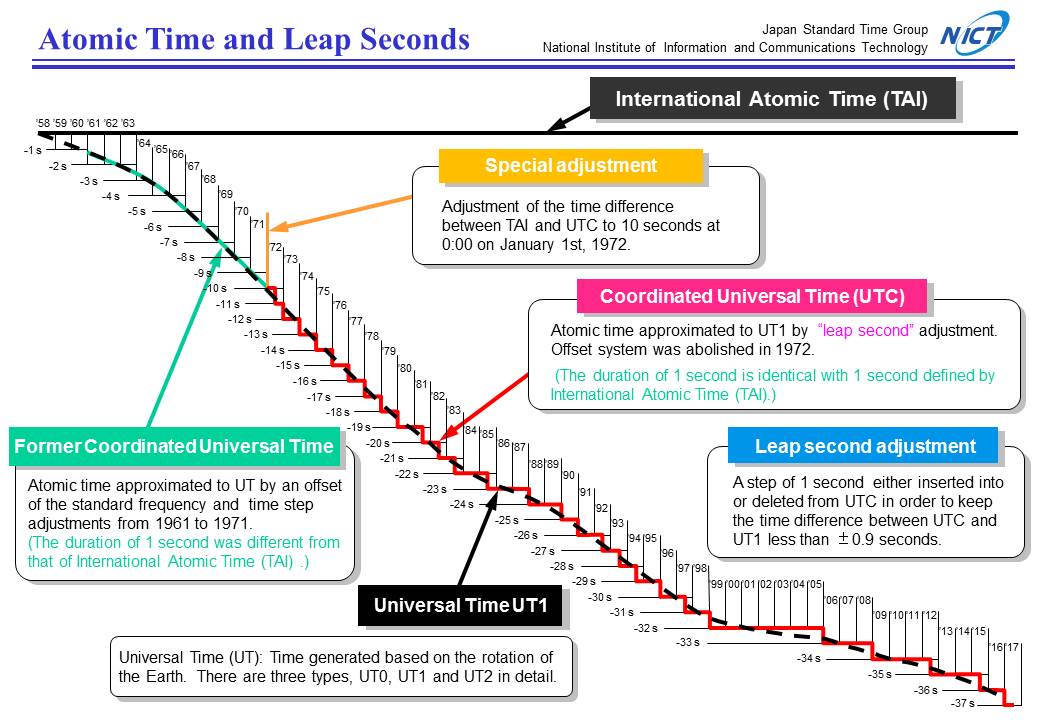
On 27 days over the past century, time has technically gone backwards for a single second. These extra “leap seconds” have been periodically introduced since 1972 to keep ultra-precise atomic clocks in step with the Earth’s slightly less uniform rotation, with the last adjustment occurring at the end of 2016. International timekeepers are now poised to end the practice permanently.
Delegates Gather in Versailles to Vote on Coordinated Universal Time
Delegates are meeting near a French palace in Versailles between October 12 and 15 to decide whether to abandon the leap second for good. The governing body of the International Bureau of Weights and Measures (BIPM), which standardises global measurements, previously decided in 2022 to phase out the leap second by 2035 and explore alternative synchronisation methods.
That timetable was fast-tracked after our planet unexpectedly sped up around 2020. While the Moon and ocean tides heavily influence the slowing of our rotation over long spans, shorter variations are driven by complex factors including the atmosphere, winds, major ocean currents, melting glaciers, volcanoes, and the redistribution of mass within the inner Earth, according to University of Tasmania geodesist Lucia McCallum.
Why Modern Technology Stumbles Over Extra Seconds
By traditional definition, a single second is calculated as an 86,400th of a day. Because planetary rotation fluctuates, that traditional definition lacks the precision required by satellite navigation and other critical modern infrastructure. GPS needs to measure fractions of milliseconds to function correctly.
Coordinated Universal Time (UTC) relies instead on atomic clocks tuned to measurements of caesium atoms, maintained locally by institutions such as the National Measurement Institute. Newer “nuclear clocks” currently in development could soon surpass them, capable of running for 30 million years while losing only a single second.
While atomic time is exact, leap seconds have created severe headaches for software architecture. University of Technology Sydney computer networking researcher Darryl Veitch noted that leap seconds violate basic software assumptions—such as the rules that time only moves forward and that every minute contains precisely 60 seconds. Past insertions have crashed major platforms, including social media site Reddit and internet technology provider Cloudflare.
People forgot about this problem, and they wrote software that then crashed when time went backwards.
Dr Wouters
The acceleration of the Earth’s rotation raised the prospect of needing a “negative” leap second—subtracting a second rather than adding one. Although Dr Wouters noted that a negative leap second would involve jumping time forward rather than backward, Professor Veitch warned that unindexed software might still fail under unprecedented conditions.
It’s never happened before, and therefore the software for that has never been tested,
Professor Veitch said, adding that retiring leap seconds entirely makes introducing a negative leap second an unnecessary risk.
Dr Wouters observed that while some critics raise philosophical objections to disconnecting timekeeping from our direct experience of day and night, clocks themselves remain fundamentally artificial instruments. Ceasing adjustments means our day and night will eventually drift out of sync with official time, but it would take more than a century for even a single minute of difference to accumulate.
Proposing a Leap Hour for the Future
Under the leading proposal up for a vote at the BIPM meeting, Coordinated Universal Time would be allowed to drift away from Earth’s rotation until it is precisely an hour out of sync. At that point, authorities would observe a “leap hour” to bring official clocks back into alignment.
Because the Earth’s rotation currently loses less than a second per year, it would take over a millennium for a leap hour to actually become necessary. Given that our current digital timekeeping systems are less than a century old, experts anticipate that software will be entirely automated by the time such an adjustment is required.
For staff at institutions like the National Measurement Institute, the retirement of leap seconds also brings a practical relief. In previous decades, leap seconds were frequently scheduled for December 31, forcing staff to work through New Year’s Day to verify system stability. Dr Wouters acknowledged he will not miss those shifts.
Researchers find quantum systems retain statistical traces of initial states
Researchers at Harvard University, Tampere University, and TU Dresden published findings in Physical Review X on October 11,...
NASA Releases Artemis II Lunar Science Data and Farside Images
NASA released nearly a terabyte of Artemis II science data and reports on Wednesday, featuring 11,000 images, audio...

UK Skies Illuminated by Northern Lights as Geomagnetic Storms Continue
Skies across the UK lit up with the aurora borealis on Friday and Saturday evening as energetic solar...

Hubble Data Points to First Potential Planet Born From Dead White Dwarf Star
Astronomers revisiting decades-old Hubble Space Telescope data have discovered an unusual chemical signature around a white dwarf star,...